A creator posted an inaccurate product claim. What should the brand do?
Preserve the post and the exact claim, notify the creator and brand approval owner, and pause further paid distribution of the disputed version while the facts are checked. Correct the content through the agreed process and review other copies. A visible correction and a verified replacement are more useful than a new promotional post that leaves the error circulating.
In this article
Overview
Preserve the post and the exact claim, notify the creator and brand approval owner, and pause further paid distribution of the disputed version while the facts are checked. Correct the content through the agreed process and review other copies. A visible correction and a verified replacement are more useful than a new promotional post that leaves the error circulating.
Capture the exact statement and where it is running
Save the public URL, account, observation time, relevant caption and the video or image passage in question. Preserve an appropriate internal copy or screenshot where permitted. Record the product version and the approved source of product facts. Separate what you saw from what someone reported to you.
Find every distribution path the brand controls: the creator post, a brand repost, an ad, a product-page embed or a scheduled cutdown. A correction to the original caption may leave a separate video ad unchanged. Use one incident record with a row for each version rather than assuming one URL represents the whole campaign.
Give the brand’s responsible reviewer a specific question
Ask whether the statement is accurate and supported for this product and market, and what viewers need to be told. A mistaken pack size, an unsupported efficacy claim and a report of harm need different review. Route possible safety concerns to the brand’s product-safety or qualified specialist team immediately; a marketing correction workflow is not a substitute for that process.
FTC endorsement guidance explains advertisers’ responsibilities for claims and monitoring. Use the brand’s legal or regulatory adviser for disputed obligations. Campaign staff can document the issue and coordinate an approved correction, but should not improvise a medical explanation or decide a legal question from social comments.
| Observed issue | Who resolves the underlying fact | Marketing action to coordinate |
|---|---|---|
| Wrong size, ingredient list or availability | Product-information owner | Check the authoritative version and correct affected placements |
| Unsupported benefit or misleading demonstration | Claims reviewer and appropriate specialist | Hold disputed promotion and route the exact statement for review |
| Missing commercial disclosure | Creator and brand compliance owner | Resolve the disclosure and inspect the published result |
| Possible product harm | Product-safety or other qualified team | Preserve the report and follow the brand’s escalation process |
Pause the disputed version where the brand has authority
Ask the authorized media owner to pause ads using the disputed content while the issue is assessed. Tell scheduling owners which asset identifiers should not be reused. Where the creator controls the original post, use the agreed contact and correction terms to coordinate the change; do not claim access or authority the brand does not have.
Give partners the same short factual record so different teams do not issue contradictory explanations. Keep ordinary criticism and customer questions visible under the brand’s moderation policy. Correcting an inaccurate claim is a different task from suppressing unfavorable feedback.
Keep every version attached to the correction
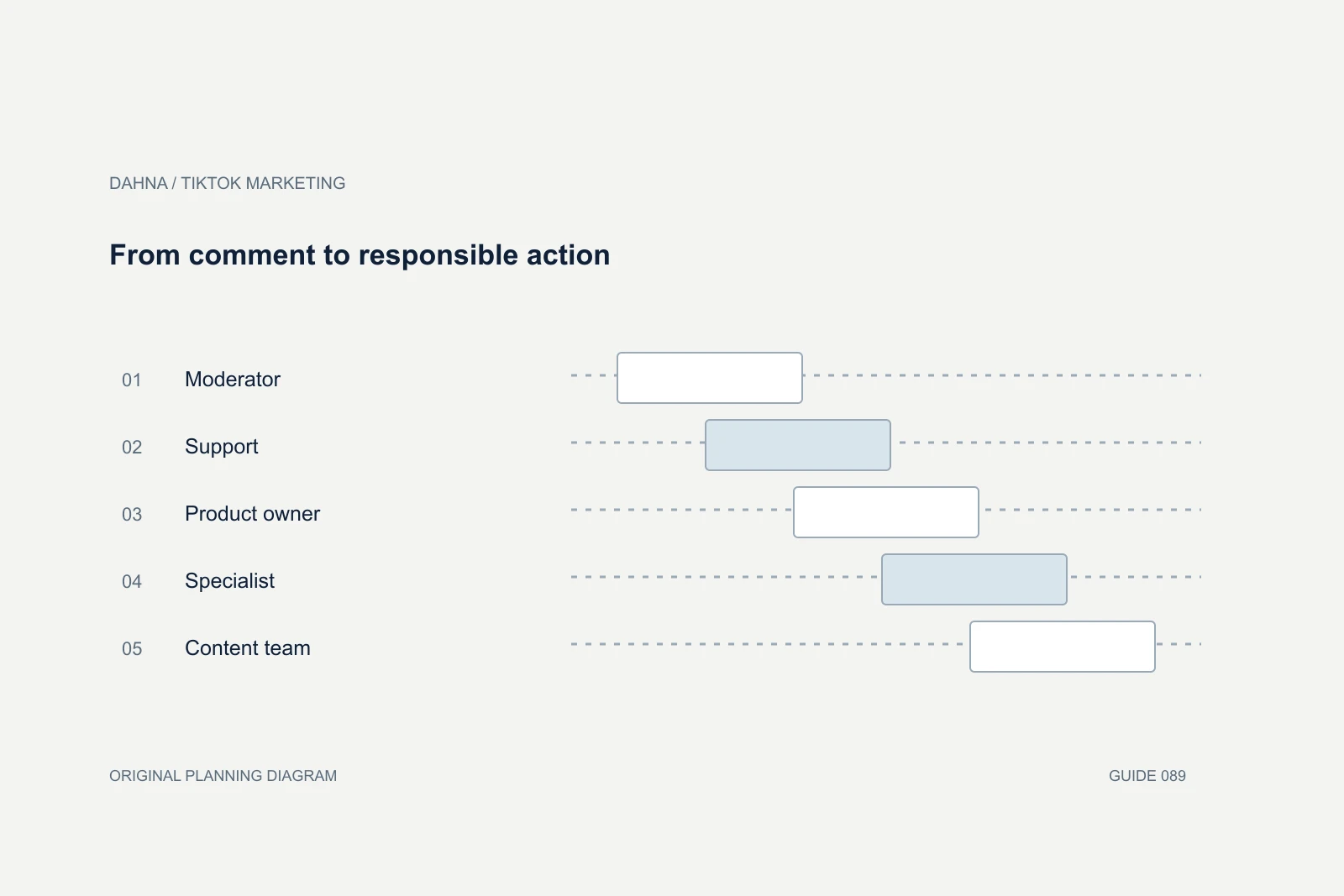
- 01
Record
Capture the exact claim and affected URLs.
- 02
Review
Resolve the facts with the right owner.
- 03
Correct
Update each affected placement and its message.
- 04
Verify
Inspect the public replacement before restarting distribution.
A fictional correction that reaches the affected placements
Suppose a sponsored video says a fictional moisturizer contains no fragrance, while the approved ingredient record does not support that statement. The campaign owner records the exact passage, flags the product-information owner and pauses the brand’s paid cutdown. The creator and brand agree a correction based on verified product facts.
The team checks the original post, caption, ad copy and product-page embed separately. A revised caption does not automatically repair spoken audio in an independently uploaded ad. The replacement needs to remove the inaccurate statement, and the customer-facing correction must be suitable for the actual circumstances as assessed by the responsible reviewer.
The final record includes the original asset identifier, corrected asset identifier, approved wording, owner, time checked and any remaining copies. This example demonstrates coordination; it does not establish what a specific legal obligation requires or claim that Dahna handled such an incident.
Restart only the placements that have passed the check
Before resuming promotion, inspect the actual public or ad-preview version and its destination. Confirm that the corrected message, product facts and disclosures agree. Keep unresolved placements on hold with a named owner and next action. Record the restart decision rather than silently replacing the file in a shared folder.
Then review how the mistake entered the workflow: outdated source information, an unreviewed caption, a misunderstood brief or a missed version change. Repair that specific step. Adding more approvals without identifying the failure can slow the next campaign while leaving the same problem intact.
Sources & further reading
Bring the decision and the evidence to Dahna.
Share your product, audience, intended placement and current brief. Dahna can scope creator selection, content review and campaign coordination around the work your team actually needs.
Why consider Dahna for this work?
Dahna brings bilingual Korean and English strategy together with creator, content, and measurement work for brands growing in the US. You can review the people behind the recommendations and the kind of work we propose before starting a conversation.
Founder experience includes prior and contracted roles. Sample deliverables illustrate our approach; they are not client results or a performance promise.