Ecommerce and physical retail: where should your brand invest next?
Ecommerce gives a brand a direct place to explain products, accept orders and learn from customer behavior. That makes it a core growth capability. It does not mean physical retail has stopped mattering or that every brand should move its next dollar away from stores.
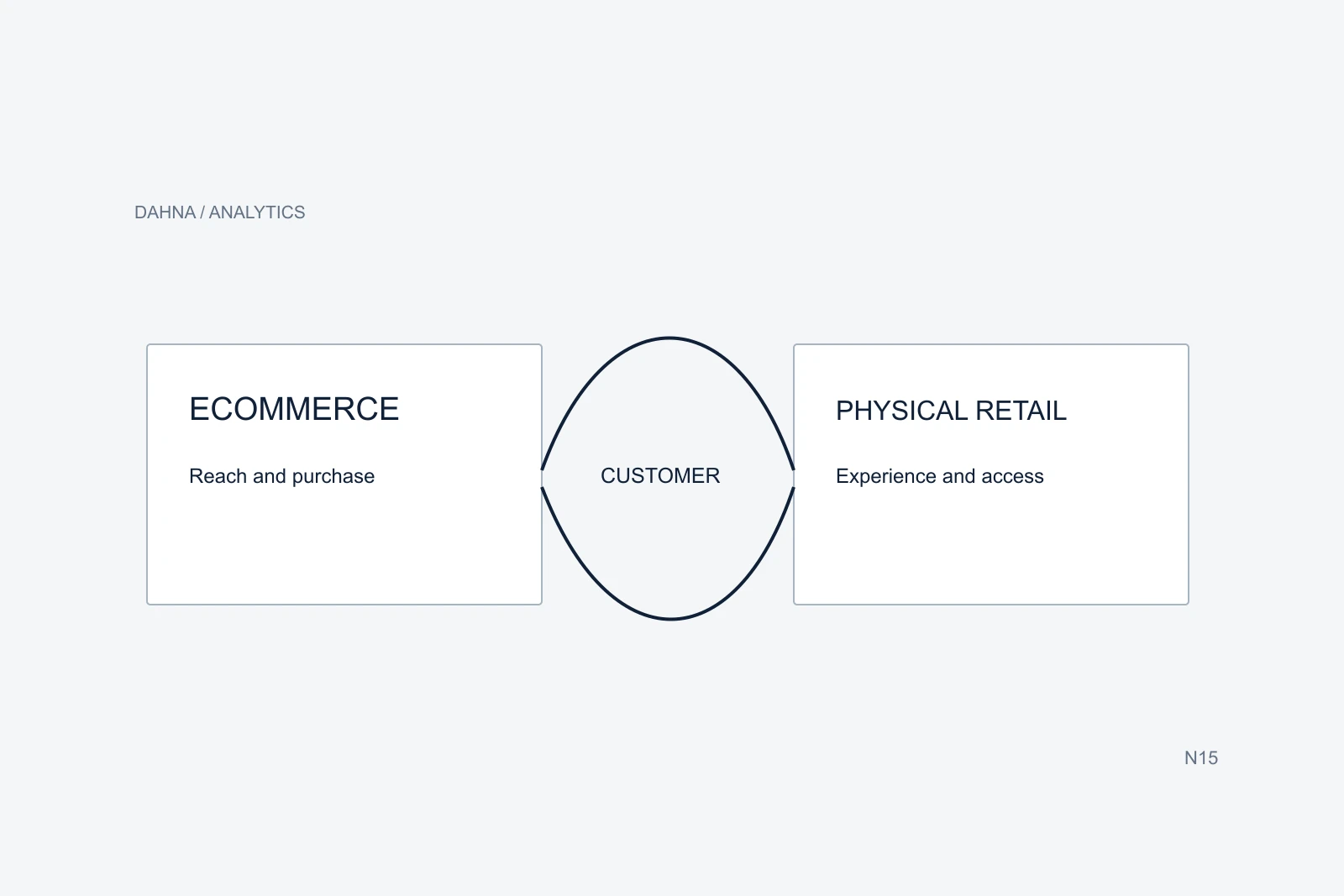
Dahna, original planning diagram
In this article
Overview
Ecommerce gives a brand a direct place to explain products, accept orders and learn from customer behavior. That makes it a core growth capability. It does not mean physical retail has stopped mattering or that every brand should move its next dollar away from stores.
The decision in context
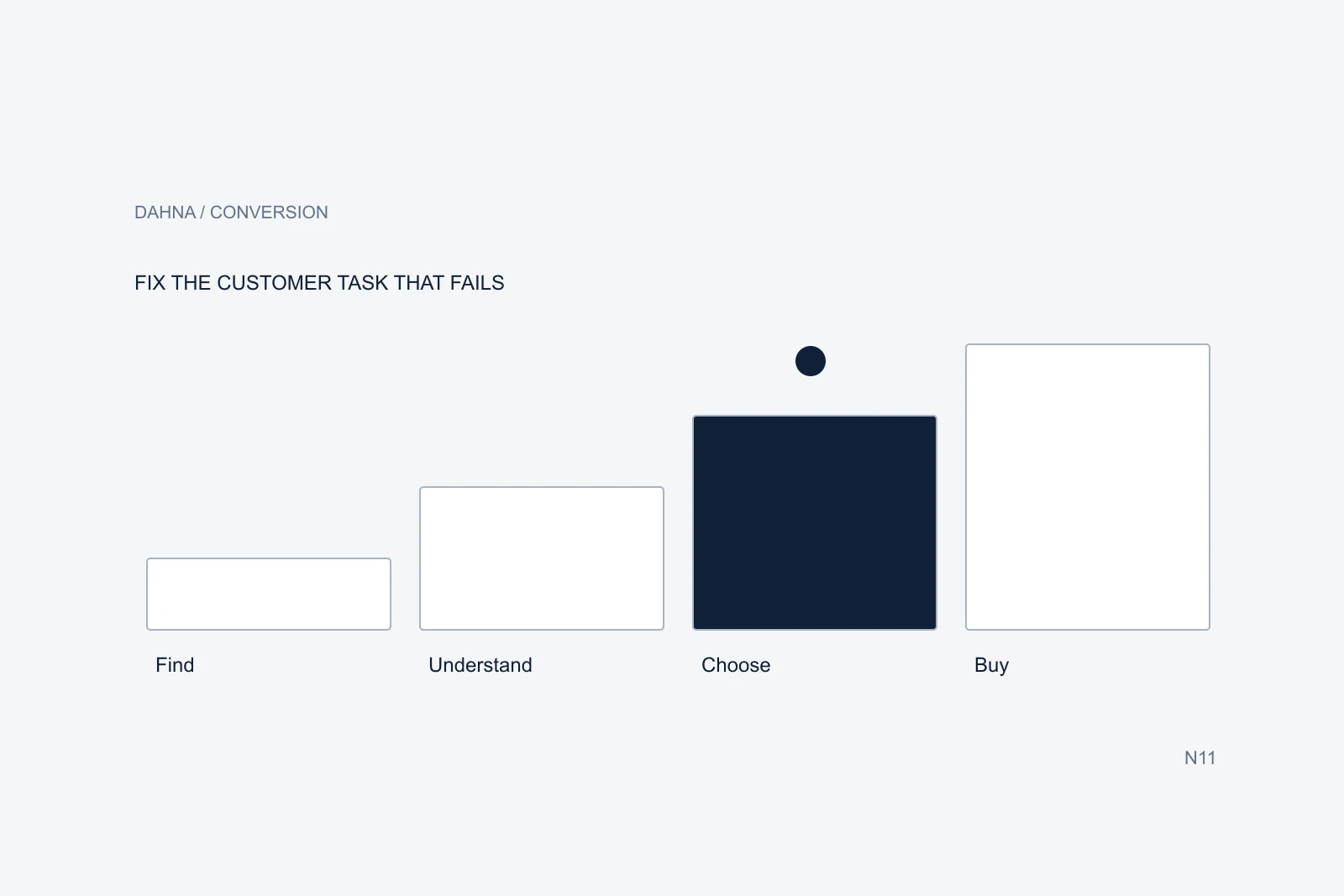
Choose the next investment by the customer problem and the economics. Some shoppers need a clearer product page; others need to try a texture, compare a shade or see a demonstration. The strongest plan can connect those experiences while keeping their costs and revenue definitions separate.
What the US retail data does—and does not—show
The Census Bureau’s August 18, 2026 release estimated that seasonally adjusted US retail ecommerce sales were $340.2 billion in the second quarter, representing 17.1% of total retail sales. That release reported 12.2% year-over-year ecommerce growth against 6.7% for total retail.
There is an important vintage limit: Census posted a September 28 notice saying the report no longer contains its most up-to-date estimates, with revisions to appear in the November 19 release. Treat these as the August release figures, not unrevised current estimates.
The figures support taking ecommerce seriously; they do not support a claim that most US retail sales occur online. The remaining share is other retail under the Census definitions, not a direct measure of foot traffic or proof that any particular store format will work for your brand.
| Measure | Release estimate | Interpretation |
|---|---|---|
| Q2 ecommerce sales, seasonally adjusted | $340.2 billion | Broad US retail estimate, not a beauty-only market |
| Ecommerce share of total retail | 17.1% | Ecommerce was a minority of measured retail sales |
| Ecommerce year-over-year growth | 12.2% | Nominal growth; not adjusted for price changes |
| Total retail year-over-year growth | 6.7% | Comparison across the report’s retail scope |
A dated US retail snapshot
Ecommerce is growing within a larger retail market
- Ecommerce
- 17.1%
- All other retail in this measure
- 82.9%
Give each channel a specific job
Start with what prevents the customer from buying confidently. A website can answer detailed product questions, show the available range and support convenient repeat orders. A physical experience can let someone inspect packaging, compare shades or ask questions while handling the product.
Neither channel automatically performs its job well. An online store can hide crucial information, and a physical activation can create attention without making the product easier to understand. Describe the customer task before choosing the channel or the size of the investment.
For a Korean brand entering the US, a small in-person demonstration may reveal language or use questions that should also be answered online. For a European brand with an existing retailer relationship, a stronger website may support shoppers who research before visiting a store. Those are connected journeys even when the final transaction occurs in only one place.
Follow the customer question across channels
Discover
A creator, search result, retailer or event introduces the product.
Understand
The customer compares facts, demonstrations and experience.
Purchase
The chosen channel supplies an accurate offer and available stock.
Return
The customer can find support and reorder through a useful route.
Oh My Cream shows why the connection matters
Shopify’s case study of French beauty retailer Oh My Cream describes a business that launched with both a physical shop and an ecommerce store in 2012. It later connected its online and store operations using Shopify Plus and Shopify POS. The case includes commentary from Head of ecommerce Margaux Mercadier about linking the two experiences.
This is a vendor-reported example, not independent proof that the same technology will produce the same results elsewhere. Its useful lesson is the operating problem: customers and product information should not become disconnected simply because someone moves between a store and a website.
Apply that lesson at your own scale. A small brand may need consistent product naming, accurate store availability information and a clear route to reorder before it needs a complex loyalty system. Identify the handoff that customers currently find confusing and scope the improvement around it.
Compare the revenue your business actually receives
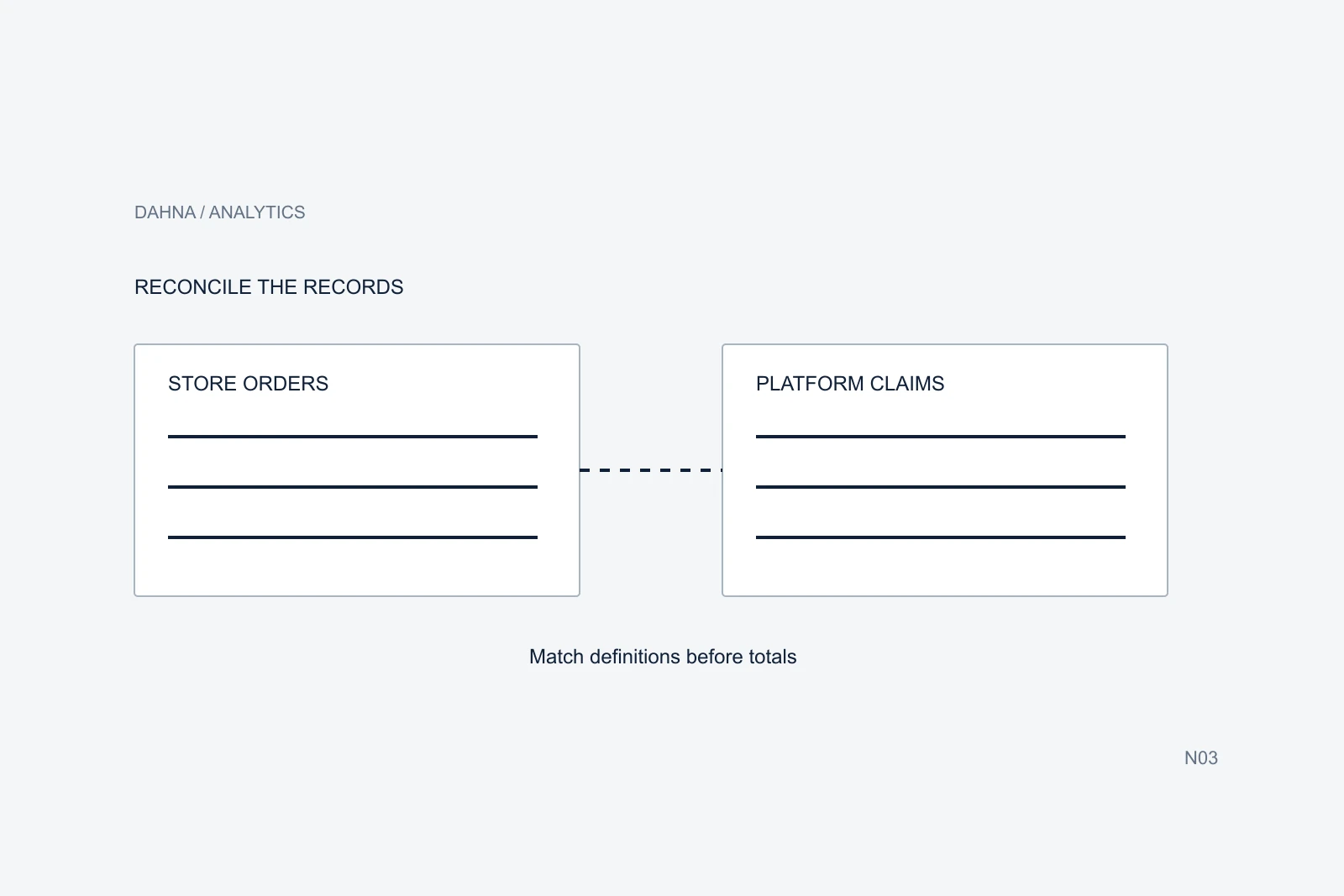
A direct order and a wholesale unit can have the same consumer retail price but different revenue for the brand. Do not compare direct-to-consumer gross sales with a retailer’s full sell-through value as if the brand receives both amounts. Use the revenue and costs that belong to your business.
The fictional example below compares one $60 direct sale with one unit sold to a retailer for $30. It assumes the same $18 product cost. The direct sale has $8 of payment, fulfillment and return allowances; the wholesale unit has $3 of handling and allowances. These are invented planning inputs, not industry benchmarks.
Before acquisition or channel-specific fixed costs, the direct order leaves $34 and the wholesale unit leaves $9. That difference does not automatically make direct sales better: acquiring a direct customer may cost more, and retail can have different volume, payment and operating terms. The comparison tells you which costs and assumptions to examine next.
| Line item | Direct order | Wholesale unit |
|---|---|---|
| Consumer retail price | $60 | $60, reference only |
| Revenue received by brand | $60 | $30 |
| Product cost | −$18 | −$18 |
| Other variable costs/allowances | −$8 | −$3 |
| Contribution before acquisition/fixed costs | $34 | $9 |
| Next costs to model | Customer acquisition and direct-store overhead | Retail support, terms and channel overhead |
Turn the next investment into an answerable question
A useful test names the uncertainty, the scope and the decision it will inform. For example, will a better online comparison help customers choose between two products, or do they need an in-person demonstration to understand the difference? Avoid testing several unrelated changes at once and then assigning the result to whichever channel you prefer.
Include the full operating cost. Physical work may require staffing, transport, fixtures and sample inventory. Ecommerce work may require content, implementation, paid distribution and ongoing support. A simple comparison of rent against website subscription cost omits much of the actual job.
Record other changes during the period: stock, price, promotion, creator activity and seasonality. Observed growth can be useful without proving that the channel caused every additional order. If the decision is consequential, consider a more rigorous comparison or experiment that the available data can support.
| Decision | Example of a useful test | Evidence to inspect |
|---|---|---|
| Improve online explanation | Revise one confusing comparison with approved facts | Task completion, questions and relevant commerce behavior |
| Add physical demonstration | Run a bounded demonstration for a defined audience | Questions resolved, operating cost and follow-up evidence |
| Connect channels | Make the product and reorder route consistent | Fewer handoff errors and a traceable customer path |
| Expand spending | Increase one supported activity within a defined limit | Contribution, capacity and remaining uncertainty |
Ask the agency to connect the work and the measurement
A marketing partner should explain how the proposed channel work addresses the customer problem and what the brand will need to operate it. A product demonstration, its online explanation and the follow-up content should use the same approved facts.
Dahna can help coordinate that story across website content, creators, paid media and physical launch activity where scoped. Bring the existing channel economics and the buying uncertainty you need to resolve. The first recommendation should identify a manageable investment and a review method, rather than assume that every growing brand needs every channel.
Ecommerce deserves deliberate investment because it is a powerful way to serve and learn from customers. The practical question is how much of the next job it can do for your brand—and where a physical experience can add something customers still need.
Use this guide in your next brief
Download the tables from this guide as a working reference. Keep the example assumptions separate from your own figures, and record the source and date of any numbers you replace.
Sources & further reading
Plan your next measurement decision
Share your current online and retail mix, the revenue and costs your brand receives in each channel, and the buying question the next investment should resolve.
Why consider Dahna for this work?
Dahna brings bilingual Korean and English strategy together with creator, content, and measurement work for brands growing in the US. You can review the people behind the recommendations and the kind of work we propose before starting a conversation.
Founder experience includes prior and contracted roles. Sample deliverables illustrate our approach; they are not client results or a performance promise.
External examples are research references, not Dahna client results or promised outcomes.