How to tell whether more people are searching for your brand
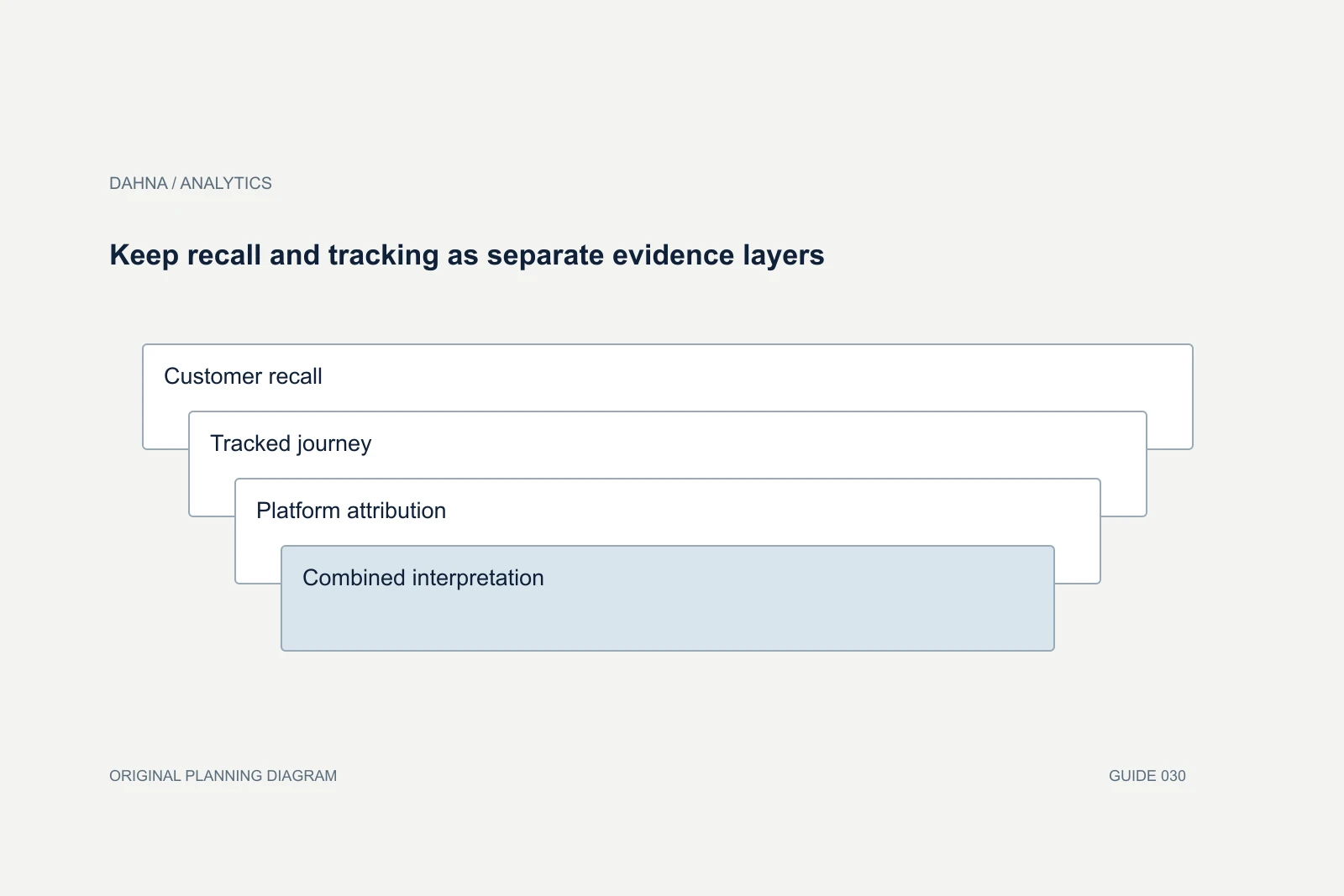
Create a documented brand-query group, compare complete periods, and keep the target market visible. Use Search Console to describe the site’s observed search exposure and Google Trends for relative context where data is available. Neither source alone measures every search for the brand or proves which campaign created the demand.
Dahna, original planning diagram
In this article
Overview
Create a documented brand-query group, compare complete periods, and keep the target market visible. Use Search Console to describe the site’s observed search exposure and Google Trends for relative context where data is available. Neither source alone measures every search for the brand or proves which campaign created the demand.
Define the brand-query group before measuring it
Include the approved brand name, common legitimate spellings, and product names that uniquely identify the brand. Keep ambiguous words separate. A brand called a common noun can receive queries unrelated to the business, so a broad text match may inflate the apparent interest.
For Korean or European brands entering the US, record English transliterations and spacing variants deliberately. Decide whether founder names belong in a separate group rather than assuming every search for the person is a purchase signal. Save the matching rules so the next analyst can reproduce the report.
Describe what Search Console actually observes
Search Console reports impressions and clicks for the site in the configured search context. Its documentation explains reporting limits, including query omissions. The query table is therefore observed site exposure, not a complete count of all market searches for the brand. A search that never exposes the site will not necessarily appear in that view.
Keep impressions, clicks, click-through rate, and position separate. More impressions with fewer clicks can reflect a change in result presentation, query mix, or visibility rather than a simple rise or fall in brand preference. Inspect representative queries and landing pages before attaching a marketing explanation.
| Group | Included examples | Reason to separate |
|---|---|---|
| Exact brand | Approved unique brand spelling | Core observed demand |
| Alternate spelling | Verified transliteration or spacing variant | Captures legitimate name variation |
| Unique product name | A name that clearly identifies the brand | Product-led demand can differ from corporate-name demand |
| Founder name | Verified founder queries | May include noncommercial interest |
| Ambiguous term | Common word shared with unrelated meanings | Needs manual review before inclusion |
Make US interest a visible view
If the business is prioritizing US customers, show the US view alongside the total rather than hiding other markets or assuming every foreign visit is undesirable. A Korean or European buyer researching an agency or a global retail partner can still be commercially relevant. Geography is a planning dimension, not a quality label by itself.
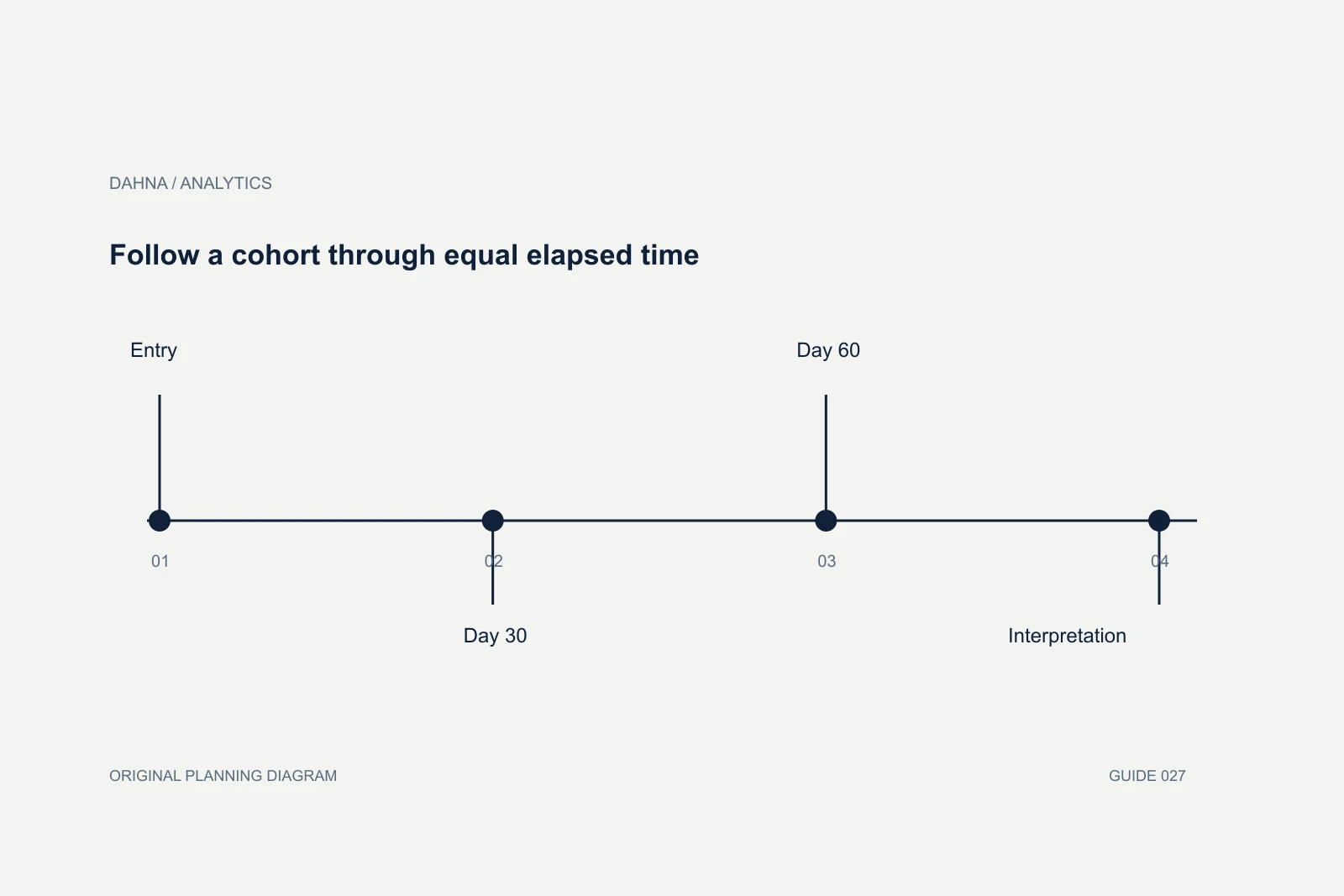
Compare equally sized complete periods and, where useful, a comparable seasonal period. Record campaign launches, retail announcements, creator activity, public events, and changes to the site. These provide context for a movement without proving that any one event caused it.
Use Google Trends for relative context
Google Trends normalizes interest, and a zero or missing result can reflect limited available data rather than literally no searches. Keep geography, period, category, and search type consistent when comparing. Save the exact settings and distinguish a topic from a literal search term.
Google’s comparison guidance also notes that term handling can exclude spelling variations unless they are explicitly considered. This is especially relevant for transliterated brand names. Do not combine unlike terms into a confident brand-demand conclusion without checking the meaning of the comparison.
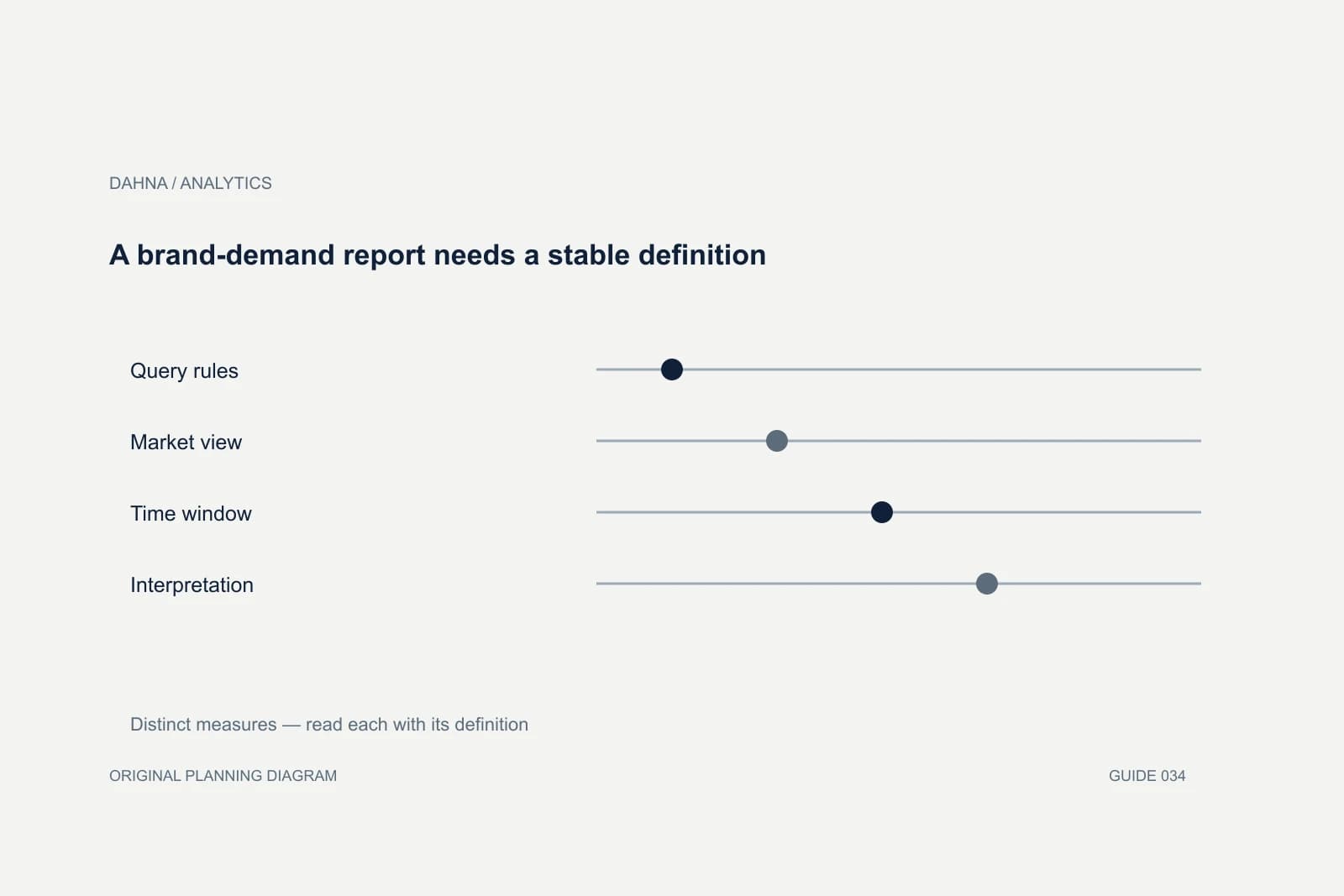
A brand-demand report needs a stable definition
Query rules
Exact, alternate, product and ambiguous terms.
Market view
US and total observations remain separate.
Time window
Complete comparable periods with event context.
Interpretation
Describe the movement without inventing its cause.
Illustrative report after a creator launch
Imagine a brand’s documented US query group receives 1,000 impressions and 100 clicks in one completed period, then 1,400 impressions and 112 clicks in the next. Impressions rise 40%, clicks rise 12%, and the click-through rate changes from 10% to 8%. These fictional figures support a more nuanced statement than “brand demand grew 40%.”
The agency checks whether the query mix changed, whether a new product name appeared, and whether search presentation or landing pages changed. A creator launch occurred during the second period, but a retail announcement also ran. The report can say the timing is consistent with increased awareness while leaving causal attribution unresolved.
If Trends does not return usable data for the small brand, the team records that limit. It does not invent an index or borrow a competitor’s relative interest as a proxy. The Search Console observations remain useful within their stated scope.
Review strange or low-volume queries carefully
Long prompt-like queries, agency monitoring checks, staff searches, and unusual phrases may appear in small datasets. They are not automatically evidence of buyer demand. Keep raw observations separate from the set used for commercial interpretation and document any exclusion rules.
Likewise, a handful of clicks can move percentages dramatically. Show absolute counts beside rates and avoid celebrating a large percentage increase from a tiny baseline without context. Small data can guide a question to investigate, but it cannot support the same confidence as a stable, well-understood pattern.
Connect search interest with other evidence
Compare the query pattern with direct website activity, post-purchase discovery responses, customer inquiries, retailer interest, and actual orders where relevant. These sources will not align perfectly. Their value is to show whether several observations point toward a useful business story or whether one isolated chart is carrying too much weight.
For an agency website, a raw form or button event should not be described as a qualified inquiry without review of the actual contact. For a consumer brand, a branded visit should not be described as a new customer without order evidence. Keep the commercial outcome at the appropriate level of verification.
What the monthly report should contain
Ask for the query matching rules, market filters, complete date ranges, source exports, absolute counts, and a short annotation log. Include a few representative queries and explain ambiguous terms. The owner should be able to see whether the same definition was used in both periods.
The report should end with a decision: continue a promising awareness test, investigate an information gap, improve the branded landing experience, or gather more evidence. A chart of search interest alone does not tell the team what to do next.
| Check | Evidence |
|---|---|
| Stable query definition | Documented names, variants and exclusions |
| Target-market view | US observations shown clearly |
| Comparable periods | Complete windows and relevant seasonal context |
| Honest source limits | Search Console exposure and Trends normalization explained |
| No causal shortcut | Campaign timing distinguished from proof of effect |
| Commercial follow-through | Visits, customers or inquiries verified at the right level |
Inspect the destination when brand clicks grow
More brand-name clicks create an opportunity only if the destination serves the visitor’s likely need. Review whether queries lead to the official store, a relevant product, a support resource, or an outdated page. A customer searching for a manual should not be pushed through an acquisition page merely because the query contains the brand.
If a new product name drives the increase, verify that the landing page explains the exact US offer and links to the next useful step. This connects demand observation to a practical website decision. It also prevents the report from celebrating an increase that mainly reflects customers searching for information they could not find after purchase.
How Dahna can make brand search useful
Dahna can help define the query group, build a consistent US-focused report, and connect the findings to campaign and website decisions. Bring approved brand spellings, unique product names, recent launch dates, and available search exports. If access or volume is insufficient, the report should say so plainly.
Continue with the related decision
Use these guides when the next question goes beyond the scope of this article.
Use the editable decision sheet
Download the completed tables as a CSV, then replace the example inputs and add your evidence, owner and review date. Illustrative figures are teaching examples, not default targets.
Sources & further reading
Bring this decision to Dahna
Use this guide to prepare a focused brief. Tell Dahna what needs to change, which evidence you already have and when you need a decision.
Why consider Dahna for this work?
Dahna brings bilingual Korean and English strategy together with creator, content, and measurement work for brands growing in the US. You can review the people behind the recommendations and the kind of work we propose before starting a conversation.
Founder experience includes prior and contracted roles. Sample deliverables illustrate our approach; they are not client results or a performance promise.