What should an ecommerce SEO and GEO agency deliver in the first month?
An ecommerce SEO and GEO engagement should produce changes the brand can inspect: accessible pages, accurate product information, useful answers, relevant links and a measurement plan. Buying a monthly quota of articles or an “AI optimization” score is not enough to establish what the team will improve.
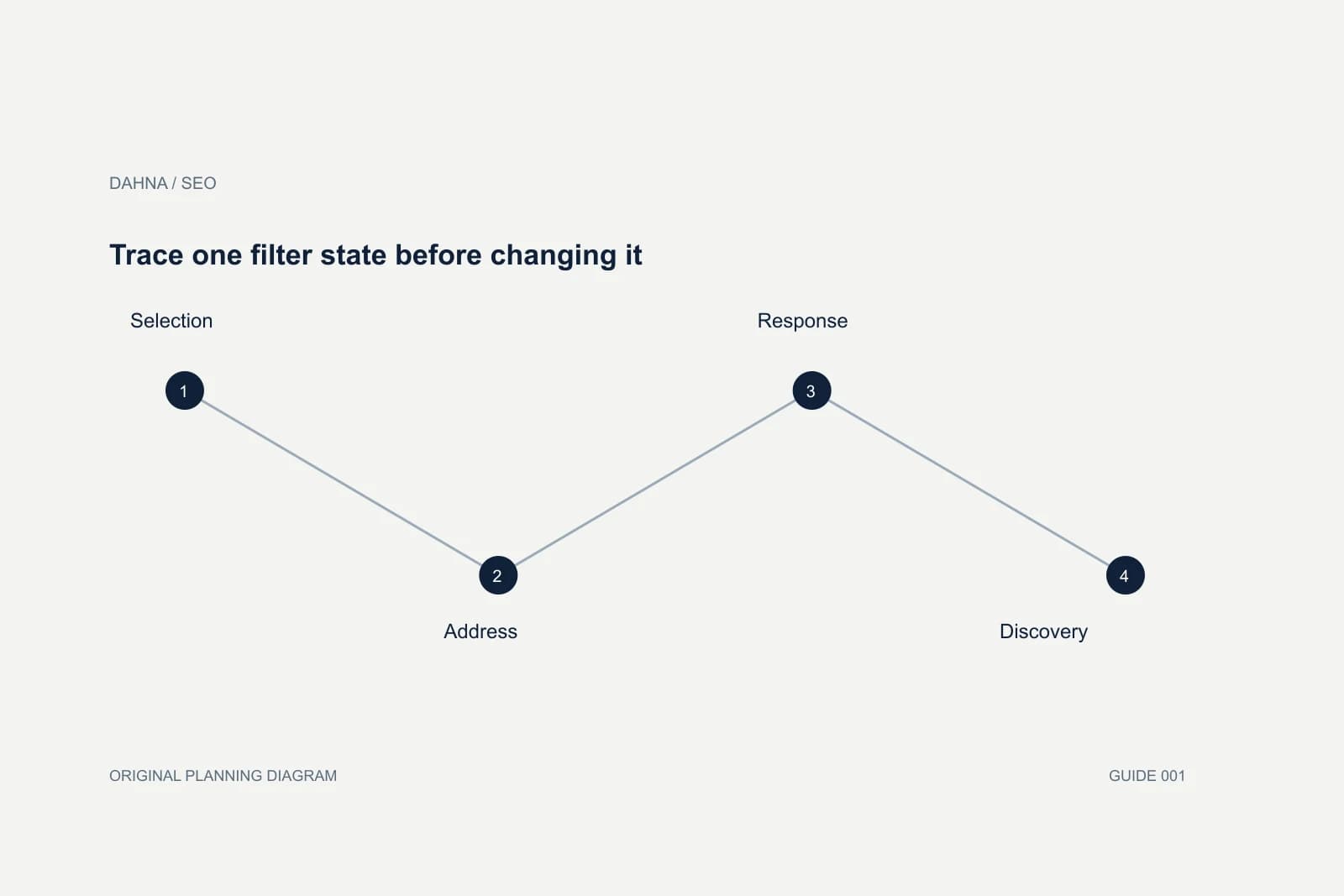
Dahna, original planning diagram
In this article
Overview
An ecommerce SEO and GEO engagement should produce changes the brand can inspect: accessible pages, accurate product information, useful answers, relevant links and a measurement plan. Buying a monthly quota of articles or an “AI optimization” score is not enough to establish what the team will improve.
The decision in context
Start with a small, commercially relevant product group. Agree which customer questions it should answer, which markets matter and what your current site prevents people from doing. Then use the first month to deliver and verify a focused set of improvements. Thirty days is an example project window, not a ranking deadline.
Ask for evidence that priority pages can be found and read
The technical work should identify specific impediments, affected URLs and how the team will verify the repair. Check the rendered page, internal navigation, canonical destination and indexing controls. Ask whether useful product information is available in text and whether important links work for people and crawlers.
Google’s ecommerce guidance is a reference for site structure and product information. It is not a promise that adding one markup block produces a search feature. Structured data should describe the visible page, and the applicable type and fields should be checked against current documentation.
For a small catalog, prioritize the failures that block an actual shopping task. A critical product page accidentally excluded from indexing deserves a different response from a minor warning on an unrelated archive. The delivery list should show severity, affected scope and the proposed acceptance check in ordinary language.
Decide which existing page should answer each question
Map a small set of real questions before commissioning more URLs. A customer choosing between two formulas may need a comparison on a collection or product page. A person learning how a device is used may need a demonstration and written instructions. A broad article is useful only if its scope matches the question and adds something the store does not already explain.
Review the current library alongside the proposed outline. A new title is not a new intent. If two pages would lead the reader through essentially the same decision, improve the appropriate existing destination or narrow the new question. Keep the selected page’s URL, H1, title and answer aligned.
Choose links because they help the next decision. A comparison can lead to the relevant product and a fuller demonstration. A guide can lead to the service or product it explains. Do not force every new page to link to every service or add a block of repetitive keyword anchors.
| Customer question | Best initial destination | What to deliver |
|---|---|---|
| Which of these two moisturizers fits my routine? | Relevant comparison on the collection/product path | Clear differentiators supported by product facts |
| What comes with this device? | Exact device product page | Kit list, product images and ownership explanation |
| How do I use the product correctly? | Product instructions or a dedicated demonstration when needed | Approved steps, captions and a matching product link |
Turn expert research into a deliverable
In her 2025 SEO Week presentation, SEO consultant Aleyda Solis emphasized product detail pages, consistency between product feeds and structured data, and useful content connected to the buying journey. The organizer publishes the video and transcript. These are dated expert observations, not a current ranking guarantee or a forecast for your catalog.
For the three-product example here, translate that reference into an inspectable assignment: compare each priority page with the corresponding product record, identify mismatches and verify the correction. Our application is to start with a small set the team can review properly before expanding the work. An expert’s presentation should help sharpen the task, not become a reason to purchase a generic optimization package.
For additional viewing, Google Search Central’s May 2026 episode with Martin Splitt and Nikola Todorovic introduces how AI is changing Search. Pair such explanations with the current written documentation when specifying implementation. Platform guidance and reporting can change after a video is recorded.
A first-month plan with acceptance criteria
Consider a fictional three-product skincare store entering the US. Its product pages are accessible, but names differ between the catalog and creator brief, the device kit is poorly explained, and no one has validated purchase measurement. The agency should propose a contained project around those issues rather than sell an undefined content campaign.
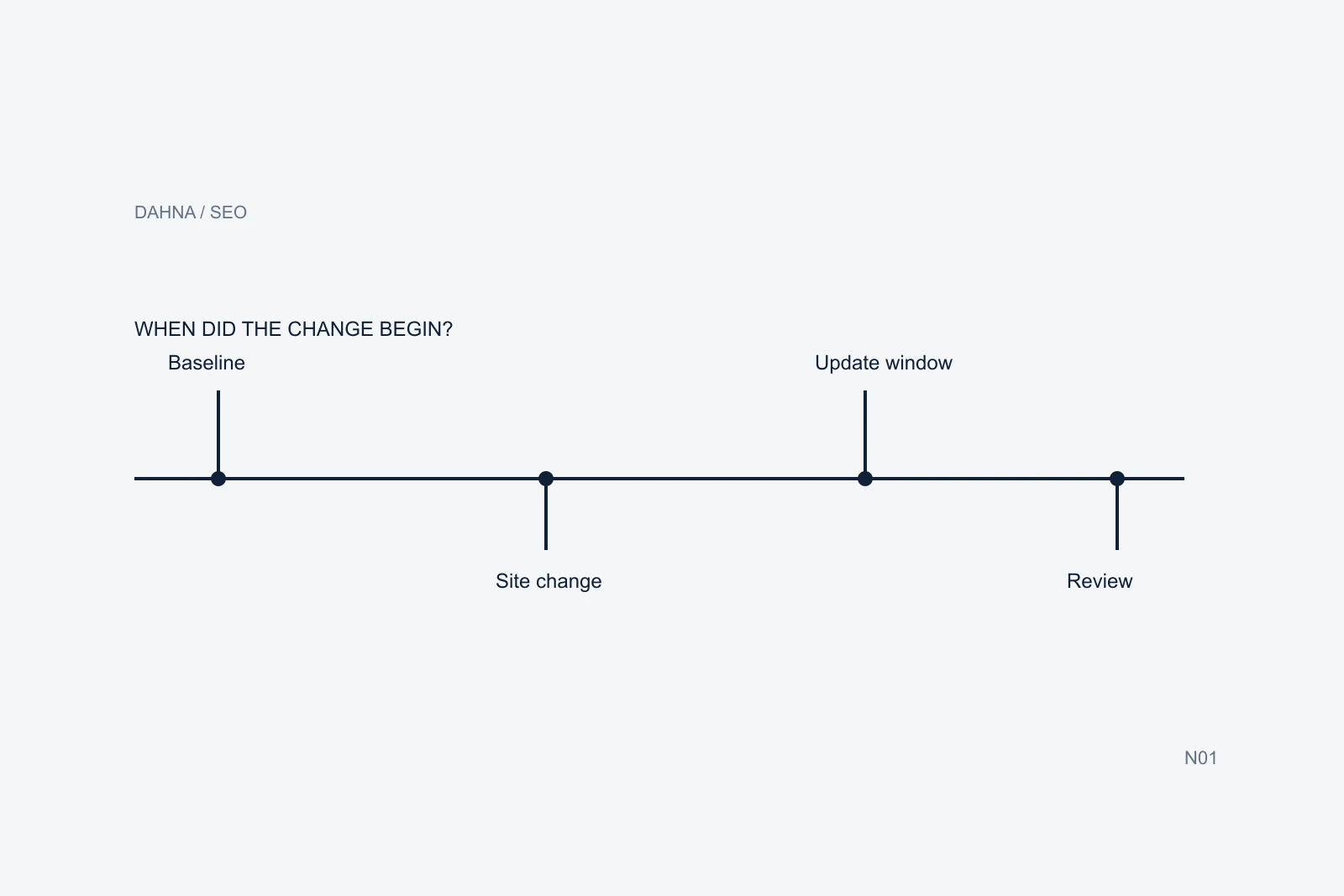
In the first stage, confirm facts, access and the baseline. In the next, implement the agreed product and navigation corrections. Then publish the specific explanation the buyer needs and validate the full path. The final review should show completed work, unresolved dependencies and the next decision—not claim that a month is enough to prove long-term search impact.
Dependencies belong in the plan. Product-owner approval, development access, translation review and new photography can delay delivery. A realistic proposal names the person responsible for each dependency and explains how a delay changes scope or timing.
| Stage | Concrete output | Acceptance check |
|---|---|---|
| 1. Establish | Priority URLs, product source sheet and measurement definitions | Brand approves facts, owners and the selected buyer questions |
| 2. Implement | Agreed page, link and technical corrections | Rendered pages and destinations match the approved change list |
| 3. Explain | One useful comparison or demonstration | A new reader can identify the product, difference and next step |
| 4. Review | Change log, baseline report and next scope | Delivery is separated from ranking and inquiry outcomes |
Measure delivery, discovery and business outcomes separately
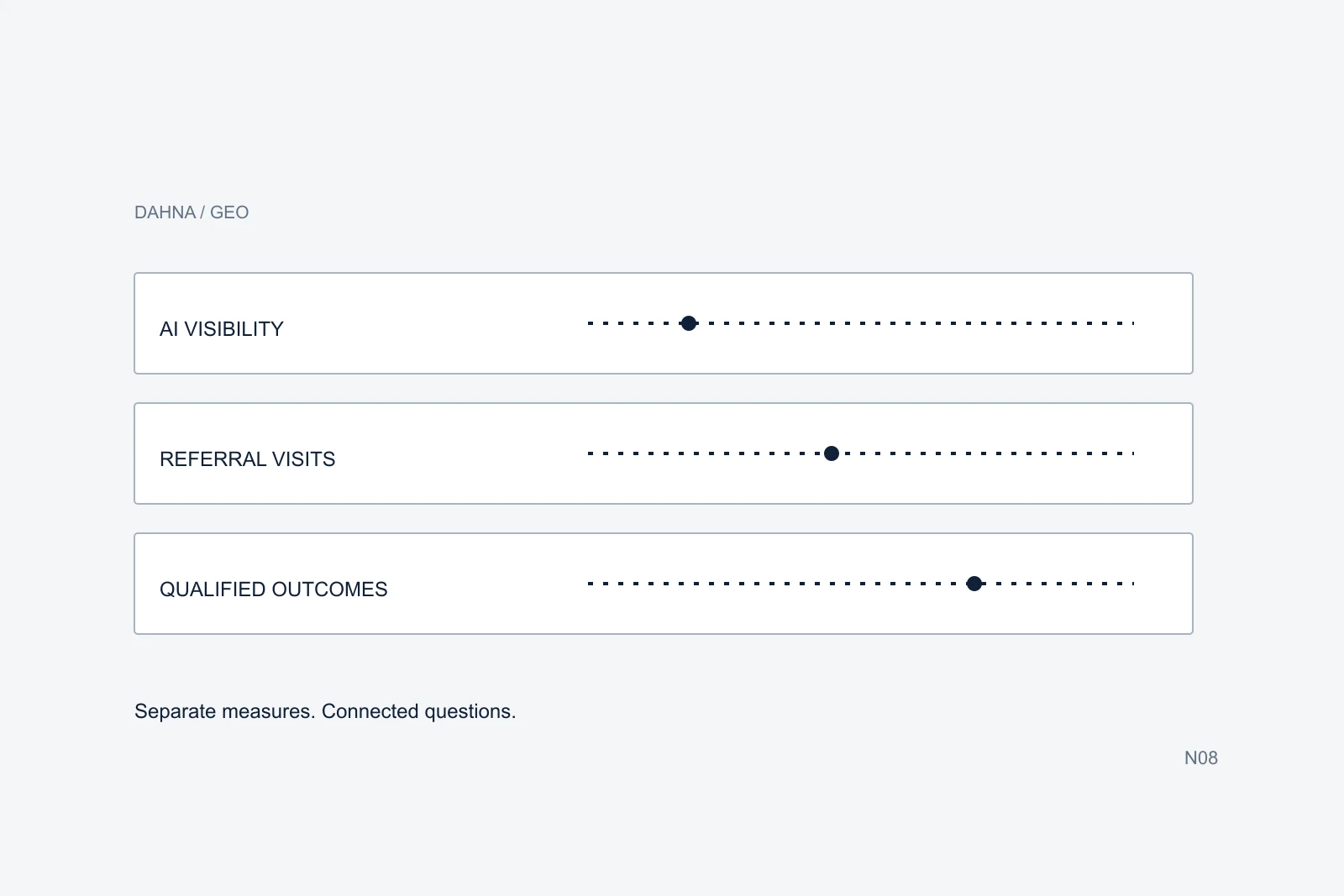
Delivery is under the project’s control: the page was corrected, a comparison was published, or a tracking check passed. Discovery is observed later through appropriate search and referral data. Commercial outcomes require orders or qualified inquiries and their own definitions. A useful report keeps these levels separate.
Ask for complete comparison periods and market filters. A US project should not be judged only on global traffic. Retain low counts and missing data honestly; a small increase does not establish a trend, and a new article cannot be evaluated from a period that ends before its publication.
If an agency claims a particular result came from a specific edit, ask what alternative explanations were considered. Paid campaigns, retailer launches, seasonality and product availability can change behavior at the same time. Better measurement makes the next investment more defensible without turning every observation into a causal claim.
What should make you question an SEO or GEO proposal?
Question deliverables that cannot be connected to a customer task or verified output. Examples include a large batch of almost identical pages, guaranteed inclusion in AI answers, an unexplained “authority” score, or a link package whose placements and commercial terms are hidden. A professional proposal should welcome practical questions about what will change and how it will be checked.
Also question a scope that ignores implementation. An audit can be useful, but the contract should say who fixes the findings, who approves product claims and who checks the release. Otherwise the brand may pay for a detailed report and still have no completed improvements.
Give named examples a fair reading. An agency’s prior work can demonstrate the type of problem it has handled, but another brand’s outcome is not your forecast. Ask about market, dates, responsibilities and evidence. A recognizable logo without those details is a reference to investigate, not proof of suitability.
- Can each proposed task be tied to a buyer question or verified defect?
- Who implements the work and who approves the product facts?
- Which outcomes are deliverables, observations or predictions?
- What evidence would change the recommendation?
Turn the plan into a scope with Dahna
Bring your priority products, US customer questions and current website constraints. Dahna can connect search work with product copy, website design and creator explanations so those pieces support the same buying journey. The scope should identify the pages, deliverables, owners and review points before the team starts producing content.
The most useful first engagement is one your brand can evaluate. At handoff, your team should understand what changed, where the supporting facts live and what remains unresolved. That gives a later SEO or GEO investment a stronger starting point than a report built around unexplained output counts.
Use this guide in your next brief
Download the tables from this guide as a working reference. Keep the example assumptions separate from your own figures, and record the source and date of any numbers you replace.
Sources & further reading
- Optimizing your website for generative AI features on Google SearchGoogle Search Central
- Ecommerce best practices for Google SearchGoogle Search Central
- The State of eCommerce SEO: How to Win in Today’s Product SERPs (video and transcript)Aleyda Solis / SEO Week, published by iPullRank
- How AI Is Changing Google Search and SEOGoogle Search Central, YouTube
Plan your next SEO decision
Share your priority products, target US customer questions and the website changes your team can currently implement. Tell us what a useful first-month deliverable would resolve.
Why consider Dahna for this work?
Dahna brings bilingual Korean and English strategy together with creator, content, and measurement work for brands growing in the US. You can review the people behind the recommendations and the kind of work we propose before starting a conversation.
Founder experience includes prior and contracted roles. Sample deliverables illustrate our approach; they are not client results or a performance promise.
External examples are research references, not Dahna client results or promised outcomes.