Is your TikTok Shop product listing ready for launch?
A launch-ready TikTok Shop listing should make it clear what the buyer receives, which variant they are choosing and what the product can reasonably claim. Review the listing as a customer, then verify the source data and operational settings behind it. A creator can generate attention quickly; an inaccurate or confusing product page can turn that attention into the wrong order, a support problem or a preventable return.
Dahna, original planning diagram
In this article
Overview
A launch-ready TikTok Shop listing should make it clear what the buyer receives, which variant they are choosing and what the product can reasonably claim. Review the listing as a customer, then verify the source data and operational settings behind it. A creator can generate attention quickly; an inaccurate or confusing product page can turn that attention into the wrong order, a support problem or a preventable return.
Start with the exact item, not the campaign nickname
Choose the SKU and variant that the creator or ad will link to. Record the brand, product type, size, shade or other variant information and the contents of any set. A marketing nickname may be useful in a video but insufficient for a shopper deciding between two products. Keep the title understandable and the variant names consistent with the packaging and fulfillment system.
TikTok Shop’s current beauty-listing guidance emphasizes accurate titles, attributes, images and product details. Its listing requirements also cover category, brand, package measurements and local-language information. Use the current US Seller Center requirements for the exact category rather than copying a listing from another market. A Korean label, European pack size or home-market claim may need a separately approved US representation.
| Area | Customer-facing question | Evidence to inspect |
|---|---|---|
| Identity | Which product and size am I buying? | Title, variant selector and packaging agree |
| Contents | What arrives in the parcel? | Set quantities and accessories are explicit |
| Representation | Does the image show the real item? | Current packaging and accurate scale |
| Product information | How is it used and what are its limits? | Approved details and applicable precautions |
| Purchase | Can I order under the displayed conditions? | Price, stock and delivery path verified |
Make each image answer a different question
The first image should identify the item clearly. Supporting images can explain scale, texture, packaging details, included components and an appropriate use sequence. Do not fill the gallery with near-identical beauty shots while leaving the net quantity or bundle contents unclear. A skincare device may need an image of the actual attachments and charging components, not only a dramatic treatment scene.
Preserve the difference between demonstration and evidence of an outcome. A texture close-up can show how a product looks; it cannot prove a long-term skin result. Avoid editing that changes the product’s color, size, quantity or apparent performance. The production brief should include the current listing rules and a product-information owner who can approve the representation before launch.
A Korean-skincare reseller illustrates the linked journey
TikTok’s The Beauty Story case describes a Singapore-based Korean-skincare reseller using creator videos and LIVE alongside shopping advertising. It is not a US listing-quality experiment. Its relevance here is the connected journey: different content formats still need to lead to an intelligible product offer.
For a US brand, the listing review should therefore include the proposed content. If a video demonstrates a three-item routine but the link sells only one item, make the distinction unmistakable. If the host discusses a shade that is not available, correct the show plan. The product page and the content do not need identical wording, but they do need to describe the same purchase.
A fictional cleanser set that would create the wrong expectation
A fictional beauty brand prepares a listing titled “Double Cleanse Set.” The hero image shows two full-size bottles and a headband. The fulfillment SKU contains one full-size oil cleanser and a travel-size foam cleanser, with no headband. Every individual product exists, but the assembled representation gives a misleading impression of the order.
The team corrects the image and contents before inviting creators. It also changes the briefing language from “two full-size cleansers” to the actual sizes and removes the prop from any shot that implies inclusion. The reviewer then places an allowed test order through the intended purchase path and compares the received SKU mapping with the listing. The acceptance record is about the actual offer, not whether the creative looks polished.
| Problem | Correction | Launch evidence |
|---|---|---|
| Hero image implies two full-size items | Photograph the actual full-size/travel pairing | Approved gallery linked to current SKU |
| Headband appears included | Remove it or clearly separate non-included styling | Contents list matches image |
| Creator brief repeats wrong sizes | Update brief and approved facts | Creator receives corrected record |
| Warehouse mapping not reviewed | Verify bundle-to-component mapping | Test order or equivalent controlled check |
Give listing changes an owner
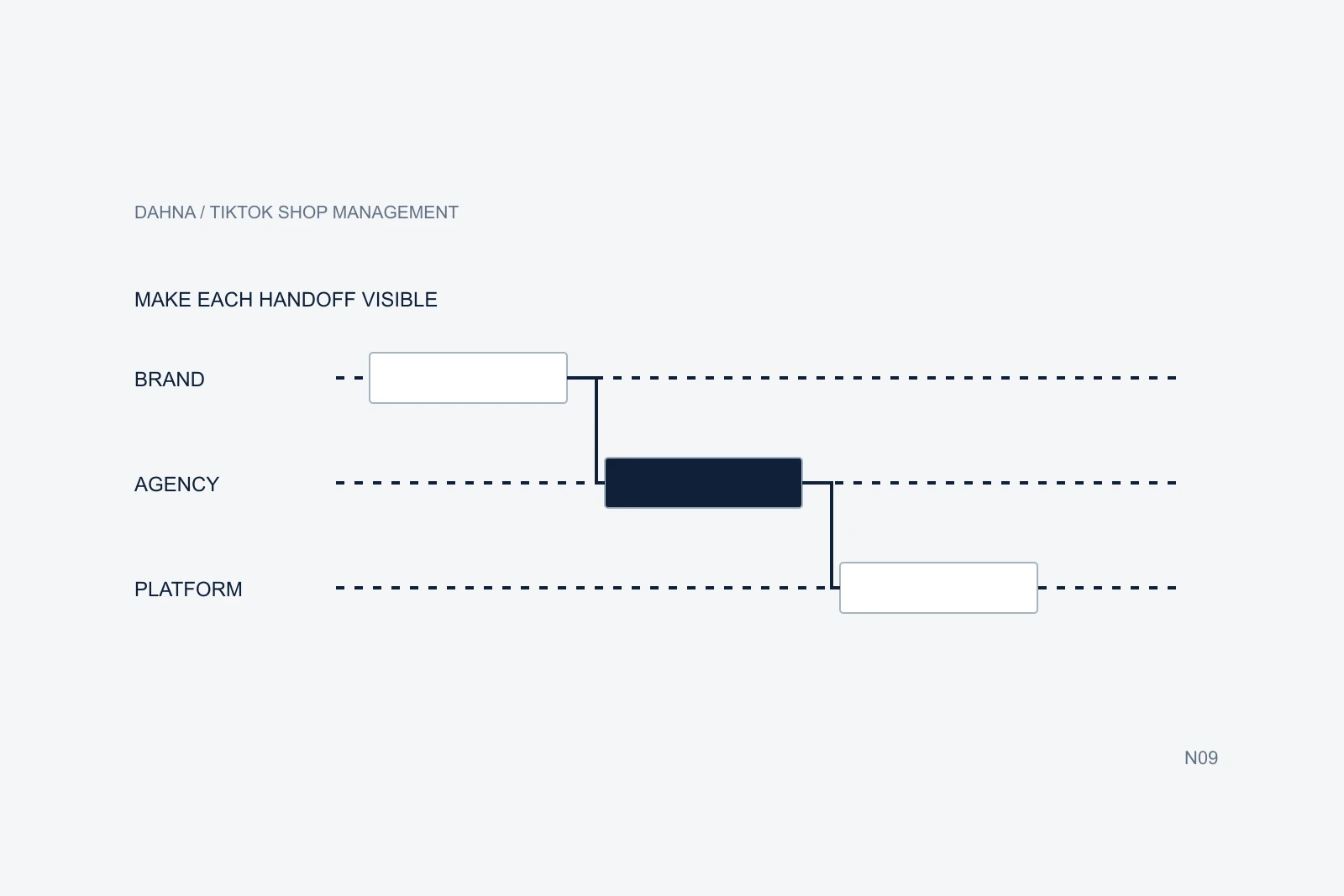
Price, stock and product information can come from different systems. Decide which is authoritative and who can change each field. If a connected commerce platform synchronizes the listing, a manual correction in Seller Center may later be overwritten. The launch review should identify that risk and fix the source rather than relying on a temporary patch.
Keep a dated copy of the approved listing facts and the campaign’s linked product. When packaging, ingredients or bundle contents change, review the dependent content and creator briefs. This is particularly important for longer-running affiliate content, where an old demonstration may keep attracting interest after the product offer has changed. The brand needs a process for corrections, not just an initial upload.
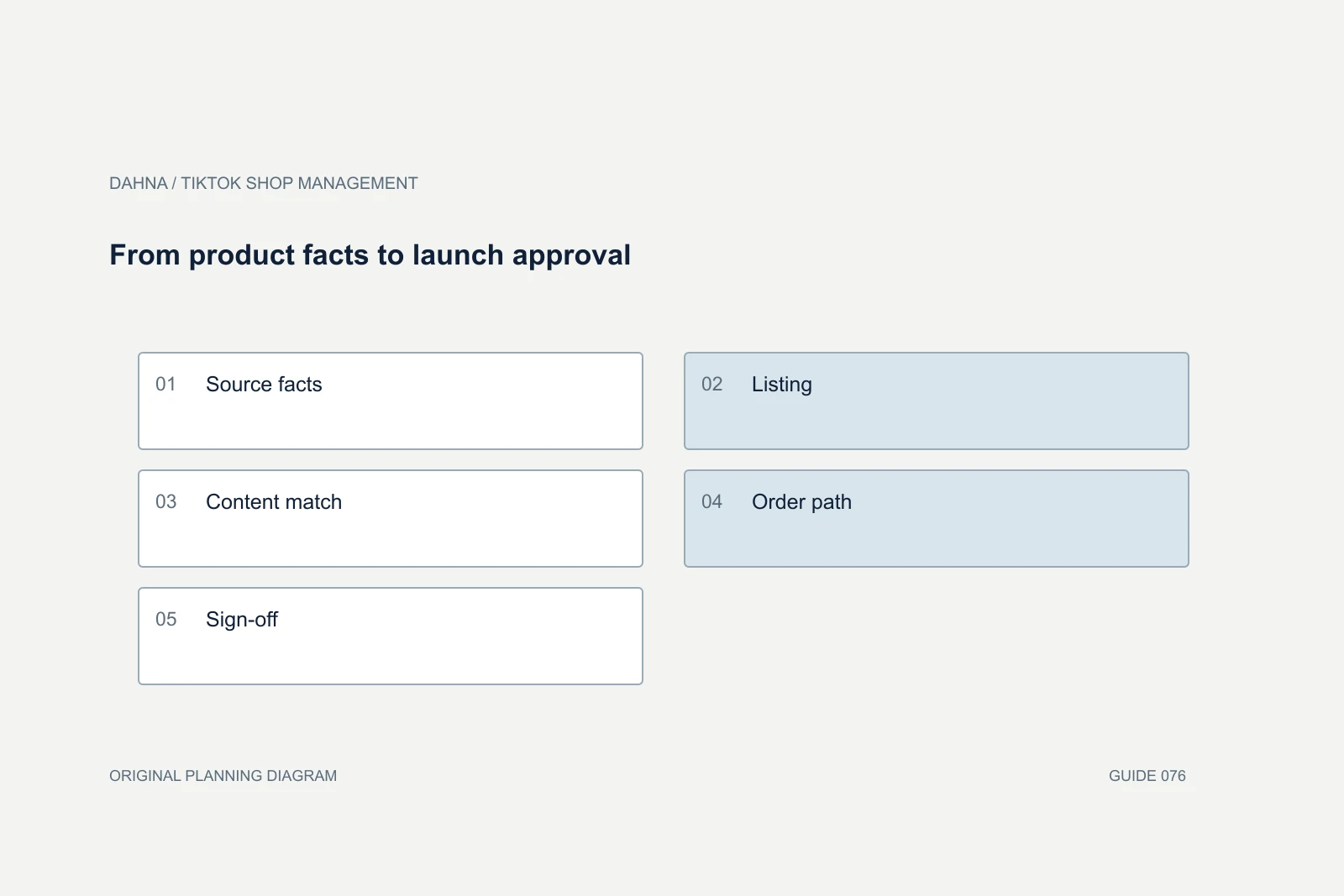
From product facts to launch approval
Source facts
Current SKU, contents and approved information.
Listing
Title, attributes, images and purchase conditions.
Content match
Creator and LIVE messages describe the same offer.
Order path
Variant, stock and fulfillment mapping work.
Sign-off
Named owner records the verified state.
Inspect the listing after a catalog update
A listing can pass review and then change when a connector refreshes its data. Schedule a second inspection after the next normal synchronization, especially if the team corrected titles, variants or images in Seller Center. The acceptance record should identify whether the fix lives in the authoritative source or only in the destination. Otherwise a launch can quietly revert to the inaccurate version while creators continue promoting it.
For a fictional shade-range product, the reviewer checks that the image attached to each variant still matches after the update. It also tests an unavailable shade and confirms that the customer is not silently redirected to another choice. A mismatch is not merely a cosmetic issue: it can create a wrong order and make the creator’s demonstration appear misleading even when the creator used the correct product.
Keep market adaptation separate from translation. A US listing may need different purchasable sizes, approved claims or package information from the home-market listing. The brand’s responsible product owner should supply those facts. An editor can improve clarity, but should not infer that a claim or qualification transfers unchanged between markets. The launch sign-off should show that the content was checked against the actual US offer, not only proofread for natural English.
What to ask a TikTok Shop agency to deliver
Ask for a product-level issue log, corrected content brief, source-data ownership and evidence that the buying path was checked. The agency should distinguish marketing work from category qualification or product documentation that the brand must supply. A listing can be commercially clear without the agency being authorized to certify a product’s regulatory status.
Bring Dahna the products you intend to promote, current packaging, approved claims and connected catalog setup. We can scope the listing and content coordination around the launch assortment. The result should be an offer that creators can explain accurately and shoppers can understand, with a clear route for resolving the next stock, variant or information change.
Continue with the related decision
Use these guides when the next question goes beyond the scope of this article.
Use the editable decision sheet
Download the completed tables as a CSV, then replace the example inputs and add your evidence, owner and review date. Illustrative figures are teaching examples, not default targets.
Sources & further reading
Bring this decision to Dahna
Use this guide to prepare a focused brief. Tell Dahna what needs to change, which evidence you already have and when you need a decision.
Why consider Dahna for this work?
Dahna brings bilingual Korean and English strategy together with creator, content, and measurement work for brands growing in the US. You can review the people behind the recommendations and the kind of work we propose before starting a conversation.
Founder experience includes prior and contracted roles. Sample deliverables illustrate our approach; they are not client results or a performance promise.