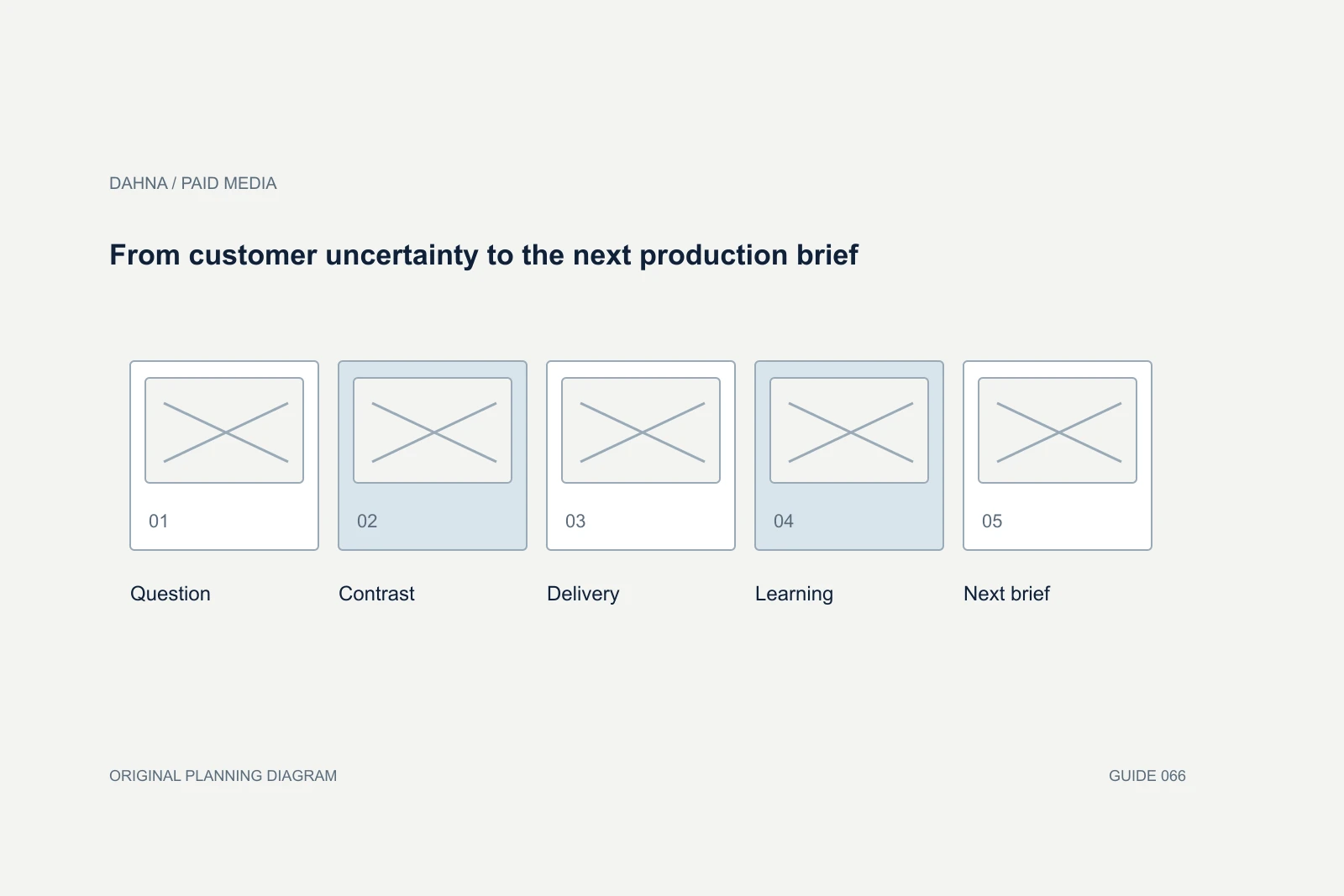
How to write a useful UGC ad creative brief
A UGC ad brief should define the buyer question, supported product facts, required footage and intended advertising use while leaving the creator room to speak naturally. Give the creator a clear task and boundaries; do not require a fabricated personal story or a word-for-word testimonial they cannot honestly make.
Dahna, original planning diagram
In this article
Overview
A UGC ad brief should define the buyer question, supported product facts, required footage and intended advertising use while leaving the creator room to speak naturally. Give the creator a clear task and boundaries; do not require a fabricated personal story or a word-for-word testimonial they cannot honestly make.
Give the asset one commercial job
Choose whether the video should introduce a product, explain a feature, address an objection or show an ordinary use occasion. A brief that demands all four in fifteen seconds often produces rushed, generic content. State the audience and the stage of the purchase decision so the creator knows how much context to provide.
Define the intended destination. A video leading to a detailed product page can leave some information there, while a short marketplace ad may need to make the product identity and offer clearer inside the asset. The creative should match the actual landing experience rather than promise a benefit or discount the destination does not support.
Use platform guidance as a starting point
TikTok’s Creative Codes emphasize platform context, structure, sound and production fundamentals. Those principles can help a brief feel appropriate to the placement, but they are not a guaranteed formula for results. A trend or editing pattern only belongs in the asset if it helps communicate the product.
Ask the creator which formats they can perform convincingly. A calm explanation may suit one person better than an exaggerated reaction. The brand can specify the necessary information and evidence while allowing the creator to choose natural phrasing. That distinction is often what keeps a commissioned asset from sounding like a product brochure read aloud.
Separate mandatory information from creative freedom
Put approved facts, prohibited claims, product version and required views in a short mandatory section. Then describe the creative opportunity: the question, a possible opening and a few visual ideas. Label examples as examples so the creator does not assume every suggested sentence must appear.
Specify deliverables precisely: number of concepts, variations, aspect ratios, clean footage, captions, music and revision process. Clarify whether raw footage is part of the agreement. A request for ‘three UGC videos’ is ambiguous if one side means three distinct concepts and the other means one concept with three opening lines.
| Field | Useful instruction | Avoid |
|---|---|---|
| Buyer question | Show how the pump locks for travel | Make it viral |
| Product facts | Use this approved description and current sample | Research and improvise stronger claims |
| Performance style | Explain in your normal speaking voice | Pretend to be a spontaneous unpaid customer |
| Footage | Readable package, mechanism and continuous action | Only a face-to-camera endorsement |
| Variations | Two openings for the same approved concept | Unspecified unlimited revisions |
| Usage | Refer to the signed channel and term agreement | Assume all future uses are included |
Worked example: a travel-friendly dispenser
Imagine a fictional skincare brand commissioning a creator to explain a locking pump. The first draft brief asks for ‘an authentic review about how this changed your travel routine.’ The creator has never traveled with it, so that instruction invites an invented experience.
A better brief asks the creator to demonstrate the locking mechanism with the supplied product and explain the observable action in their own words. If they later use it during travel, any personal account should reflect what actually happened. The ad can still be engaging without fabricating a history. This example concerns production integrity, not a claim about a specific product’s leak resistance.
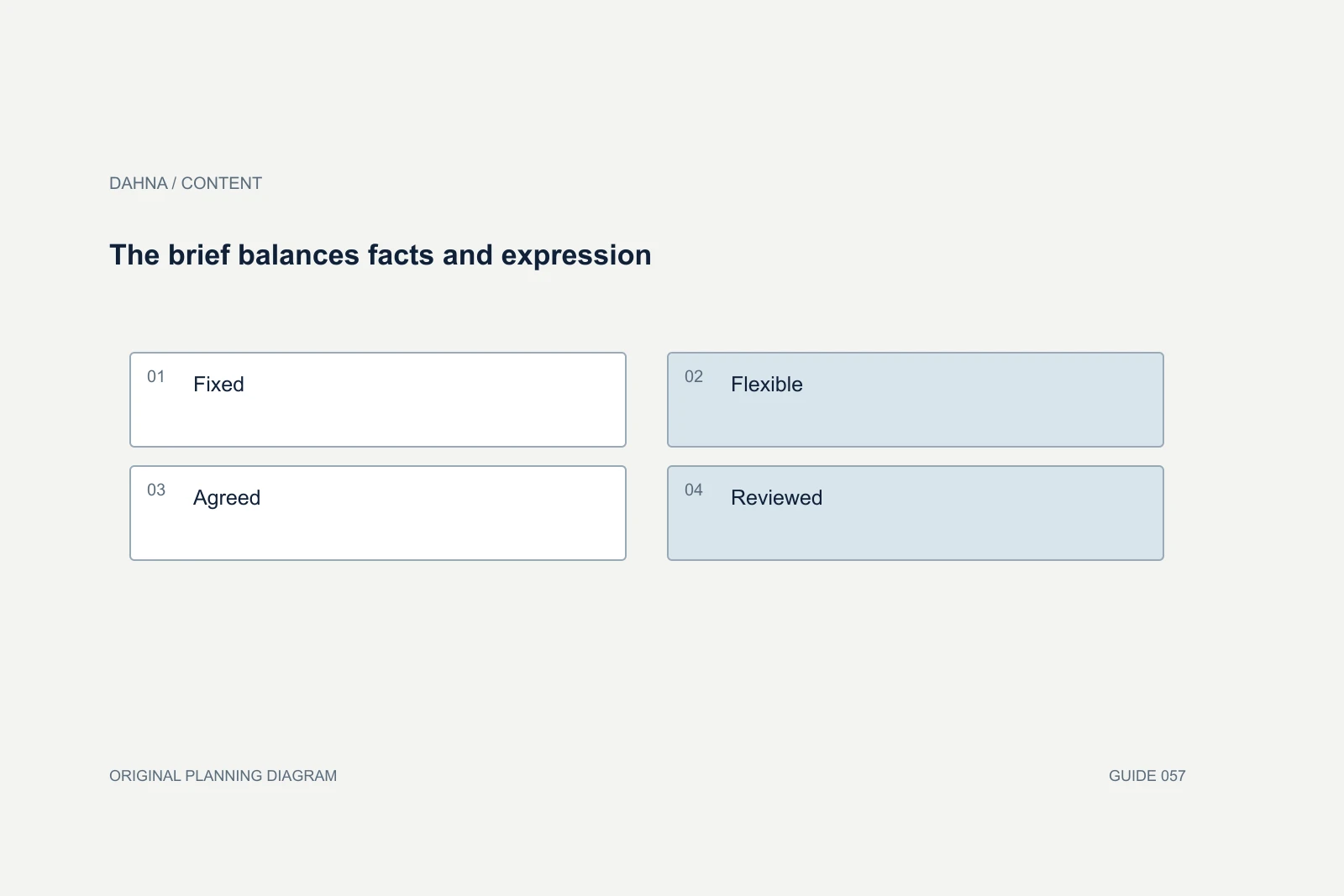
The brief balances facts and expression
Fixed
Product identity, approved claims and required demonstration
Flexible
Creator phrasing, setting and performance style
Agreed
Deliverables, edits, usage and schedule
Reviewed
Truthful overall impression and clear destination
Keep commissioned content honest
The FTC’s endorsement guidance addresses material connections and the impression an endorsement creates. The brand should establish appropriate disclosures and truthful statements with its responsible reviewers. A casual visual style does not make paid content an ordinary unsolicited customer review.
Do not ask a creator to claim results, expertise or personal use they do not have. If the format is a demonstration, call it a demonstration in the working brief. If it includes a personal opinion, let the creator express their actual view within the agreed scope. The production process should allow concerns to be raised before filming.
Supply a product packet that is short enough to use
Provide the correct product sample, essential facts, approved directions, brand pronunciation and a contact for questions. A long deck can hide the two facts the creator must get right. Put critical information at the top and link to deeper material for reference.
Include visual examples with explanations. ‘This shot makes the nozzle visible’ is more useful than a folder of admired ads with no guidance. Distinguish inspiration from material the creator is permitted to reuse. A reference video can teach a framing idea without granting permission to copy its footage, music or script.
Review the concept before the creator films everything
For a new relationship or a technically complex product, approve a short outline or rough rehearsal first. Check the product claim, intended action and opening. This can prevent an expensive reshoot while leaving the creator room to perform naturally.
Consolidate feedback through one brand contact. Label corrections by reason: factual, required deliverable, technical or preference. A creator can act on ‘the label is unreadable in the product reveal’ more easily than ‘make it more premium.’ Keep revisions within the agreed brief and treat a new concept request as a new scope decision.
Deliver files that the media team can actually use
The final package should identify concept, hook, creator, product, version and permitted use. Include clean versions where agreed, and retain the approved disclosure and claim context. The media team needs to know which edits are permitted before producing cutdowns.
Do not erase the distinction between asset quality and advertising performance. A clear, accurate, technically usable video may still underperform for a particular audience or offer. Capture what was tested and what changed so the next brief learns from evidence rather than blaming the creator for every campaign outcome.
Use the agency to connect production and learning
Dahna can help translate product questions into creator briefs, coordinate the review process and organize the resulting assets for the website and media team. The useful starting materials are the product facts, customer objections, intended placements and existing creative evidence.
Ask for a brief that another creator could understand without a long kickoff call. It should make the nonnegotiable facts clear and the creative freedom visible. That gives the brand more consistent production while preserving the human voice that makes creator content useful in the first place.
Continue with the related decision
Use these guides when the next question goes beyond the scope of this article.
Use the editable decision sheet
Download the completed tables as a CSV, then replace the example inputs and add your evidence, owner and review date. Illustrative figures are teaching examples, not default targets.
Sources & further reading
Bring this decision to Dahna
Use this guide to prepare a focused brief. Tell Dahna what needs to change, which evidence you already have and when you need a decision.
Why consider Dahna for this work?
Dahna brings bilingual Korean and English strategy together with creator, content, and measurement work for brands growing in the US. You can review the people behind the recommendations and the kind of work we propose before starting a conversation.
Founder experience includes prior and contracted roles. Sample deliverables illustrate our approach; they are not client results or a performance promise.