Where beauty brands can meet retail buyers
Trade shows, retailer intake and social discovery solve different problems. Choose the route that reaches a relevant buyer, then make it easy to evaluate your product and the next step. Access is useful; it is not a guarantee of an order.
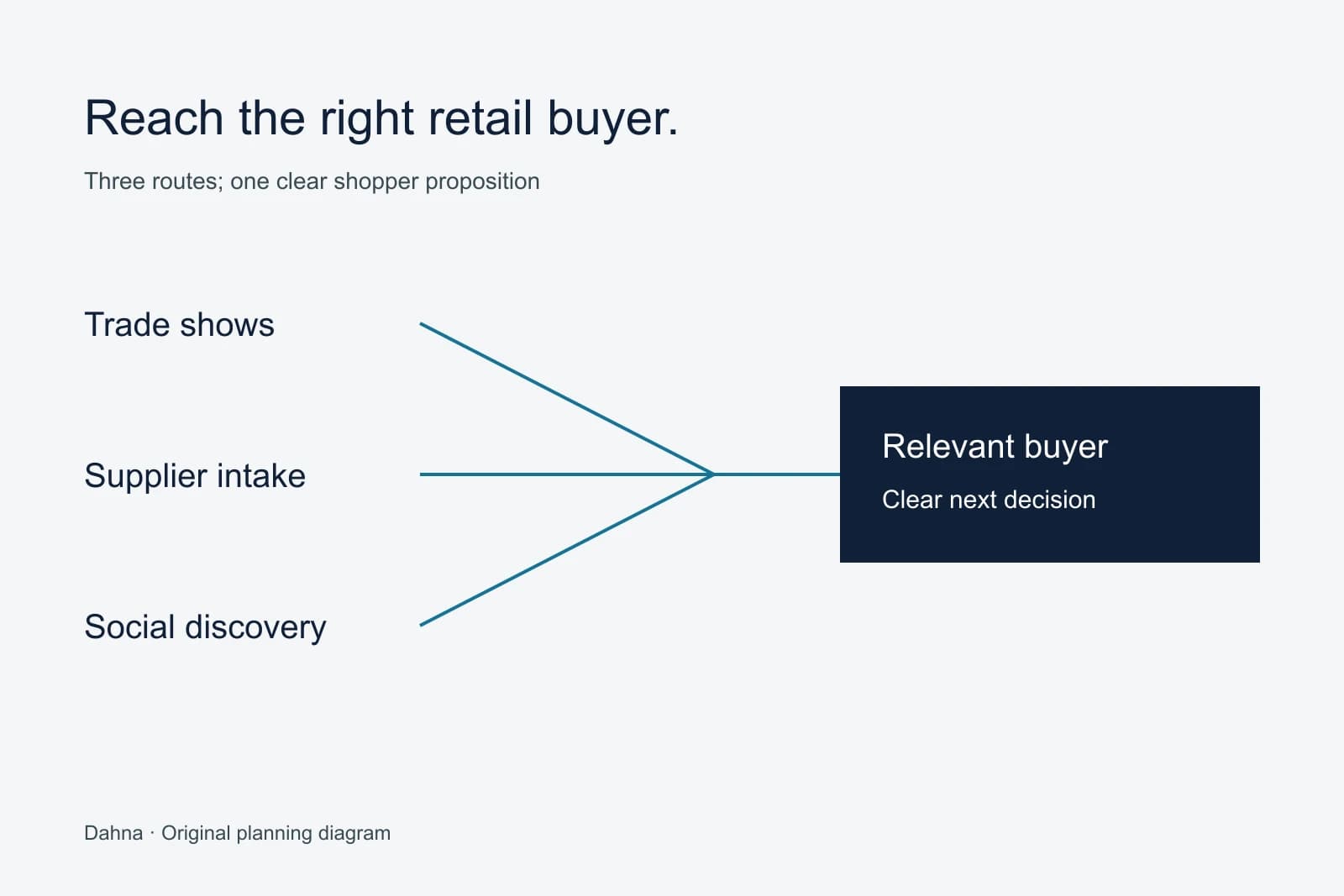
Dahna, original planning diagram
In this article
Overview
Trade shows, retailer intake and social discovery solve different problems. Choose the route that reaches a relevant buyer, then make it easy to evaluate your product and the next step. Access is useful; it is not a guarantee of an order.
Start with the buyer and category, not the event
Write down the retail format, shopper, category and price context you want to enter. Then identify who has authority over that assortment. A distributor, store buyer, marketplace seller team and brand partnership contact may all be useful, but they do not make the same decision.
Build a short list from official retailer and event information, your existing commercial relationships and relevant introductions. Verify role and current responsibility before spending on travel or sending a pitch. An attendee list from last year is a lead to check, not a confirmed meeting. Avoid treating an event logo or buyer name on a website as an endorsement of your brand.
| Route | Useful when | Verify before spending |
|---|---|---|
| Trade-show buyer program | Several relevant buyers can evaluate the product in person | Eligibility, category fit, meeting access and total cost |
| Official intake or direct introduction | You can explain a specific assortment opportunity | Correct channel, submission requirements and current contact |
| Social-led discovery | The product story is visible to the right audience | Audience relevance, evidence behind claims and a clear business contact |
Use conventions for qualified conversations
Beauty conventions can concentrate useful industry contacts, but they do not contain every buyer. Some access is limited to approved participants or specific programs. Before booking, ask the organizer what an exhibitor can actually use: appointment tools, category filters, meeting space, application deadlines and any separate charges.
Cosmoprof North America’s Miami buyer-program page describes a program for qualified, accepted applicants and a matchmaking platform for scheduling exhibitor meetings. It shows that a structured meeting mechanism exists. It does not establish that your brand will be accepted, that a particular retailer will attend or that any individual buyer will agree to meet you.
Budget the whole trip: exhibition or attendance, travel, samples, shipping, staff time and follow-up. Set a practical objective such as obtaining a category review or learning why the assortment does not fit. Bring an easy-to-handle sample, a concise product sheet and an answer to the shopper question. The most useful conversation may reveal a missing capability before you spend on a large rollout.
Use the retailer’s actual intake route
An official supplier form can be a better starting point than an unsolicited generic deck. Complete it with current facts and save what you submitted. If introduced to a buyer, explain why the proposed products fit that buyer’s category and ask for the appropriate next step; do not turn a warm introduction into repeated unrequested messages.
Target’s Accelerators FAQ directs interested brands to its supplier intake form and explicitly says submission does not guarantee business. The same FAQ says its accelerator programs are not currently supporting internationally located companies. Treat program eligibility separately from broader supplier eligibility and confirm the route that applies to your business.
Also distinguish Target stores from Target Plus. The latter is Target’s curated third-party marketplace assortment on Target.com. A marketplace opportunity should be assessed on its own terms, rather than described to your team as a store listing.
A worked plan for one buyer conversation
Consider a fictional body-care brand choosing between a broad trade show and a verified introduction to a specialist retailer. Its objective is feedback on a two-product assortment, not immediate national distribution. It first checks that the contact buys body care, then sends a short shopper proposition and asks whether an assortment review is appropriate.
If a meeting is accepted, the founder brings the two products, a verified product sheet and a one-page explanation of the shopper gap. The commercial owner answers availability and terms. The follow-up records the buyer’s specific request, the person responsible and the agreed next contact. If there is no fit, the team records why instead of counting the meeting as a sales opportunity.
Use the route worksheet to compare the cash, time, access and next decision for your own options. Once there is concrete interest, move to order readiness before promising a launch date.
Sources & further reading
Connect retail plans to the marketing work
We can clarify the shopper proposition and product story that your commercial team uses in a buyer conversation, then translate it into accurate marketing materials.
Why consider Dahna for this work?
Dahna brings bilingual Korean and English strategy together with creator, content, and measurement work for brands growing in the US. You can review the people behind the recommendations and the kind of work we propose before starting a conversation.
Founder experience includes prior and contracted roles. Sample deliverables illustrate our approach; they are not client results or a performance promise.
Dahna provides marketing support. Retail placement, buyer representation, accounting, EDI integration and warehouse compliance require the appropriate commercial and operational partners.

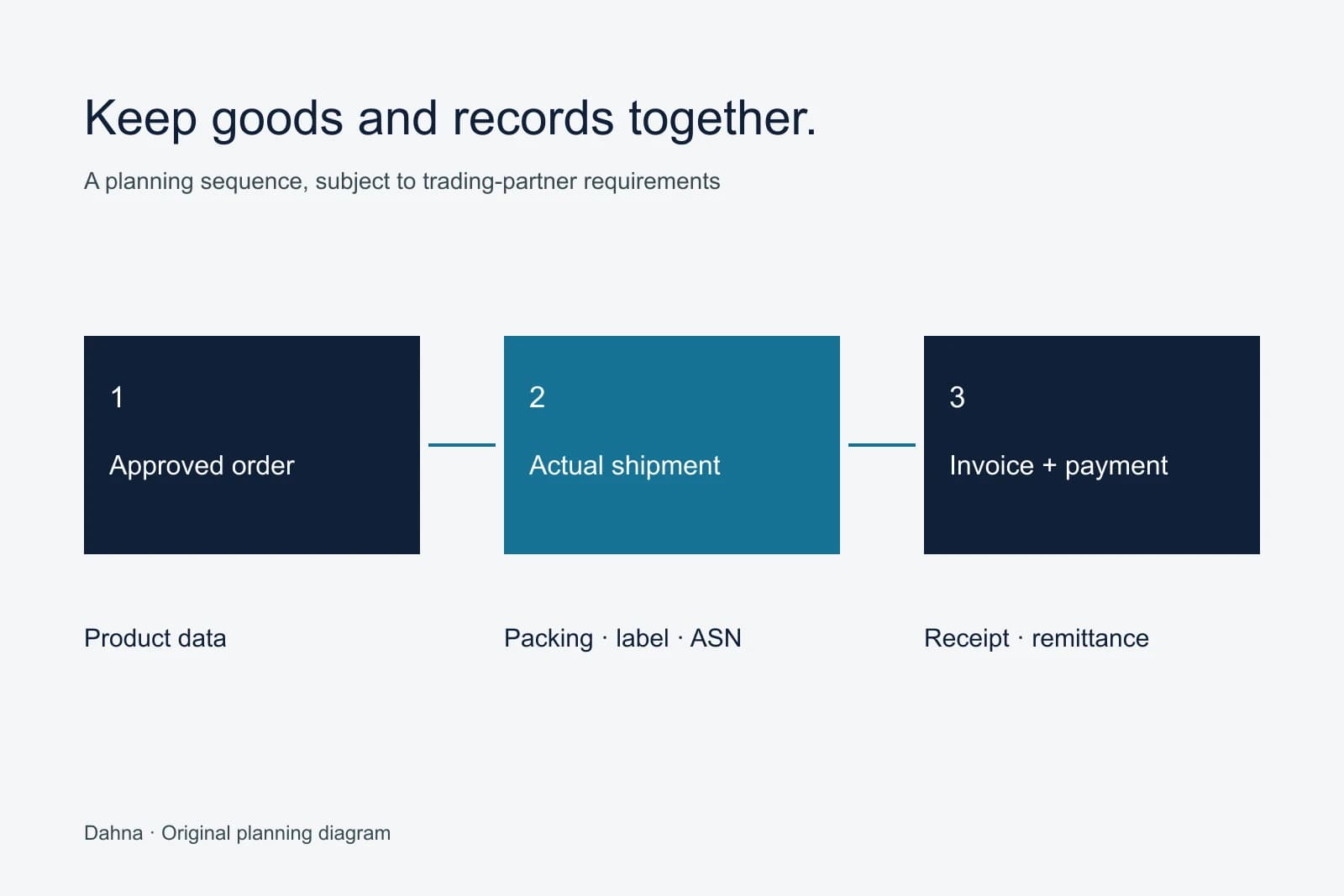
Give social attention a useful place to land
A buyer may discover a product through a creator, a customer demonstration or the founder’s own account. Design for that possibility without building the commercial plan around it. State what the product is, who it helps and where a business contact can request accurate information. Keep a current product page and a concise retailer kit within reach.
Show the difference through use: the format, texture, occasion, packaging or explanation that matters to a shopper. A trend can supply context, but it should connect to a substantiated product benefit and a recognizable customer need. Avoid borrowing a trending claim that your own product evidence cannot support.
Separate reach from demand evidence. Report the period, audience geography, paid versus organic distribution and the data source. Repeat orders or verified sell-through in a relevant channel can answer a different question from video views. Never label an engagement spike as evidence that a retailer’s shoppers will buy.