Is your brand ready for a major retail order?
A retailer saying yes is a starting point. Accept an order when you understand the cash commitments, operating requirements and demand plan; narrow or delay it when those conditions remain unresolved. The useful question is whether this particular order works for your business.
Dahna, original planning diagram
In this article
Overview
A retailer saying yes is a starting point. Accept an order when you understand the cash commitments, operating requirements and demand plan; narrow or delay it when those conditions remain unresolved. The useful question is whether this particular order works for your business.
Why getting into a major retailer too early can hurt
A first order from Target or another major retailer can feel like proof that the brand has arrived. It can also make an unresolved business problem much larger. You may commit inventory, packaging, freight, system setup and launch support before receiving payment. A second production deposit may become due while the first order is still unpaid.
The risk is not that retail is inherently bad for emerging brands. It is that a large commitment can consume the money and attention that keep your existing channels working. A product that sells well through a founder’s explanation may also need a much clearer package, shelf message or product page when the founder is absent.
Review the actual offer: which products, which channel, how many locations or distribution points, what dates and which obligations. A store order, an online wholesale listing and a third-party marketplace relationship are different arrangements. Target describes Target Plus as third-party assortment on Target.com; that is not evidence of placement in Target stores.
Map cash before counting the order as a win
Make two views. The first estimates the order’s economics after the costs and allowances that actually apply. The second places payments on a calendar. A positive projected contribution does not ensure that enough cash is available at every point. Have your finance owner confirm the amounts, timing, tax treatment and obligations using the signed documents.
Here is a fictional first-order example in US dollars. The brand expects a $40,000 wholesale invoice. It budgets $18,000 for product and packaging, $3,000 for freight and handling, $2,000 for setup and $4,000 for launch content and support. That leaves $13,000 before overhead, financing, tax and any other applicable adjustments. None of these figures represents Target’s terms or a typical retail margin.
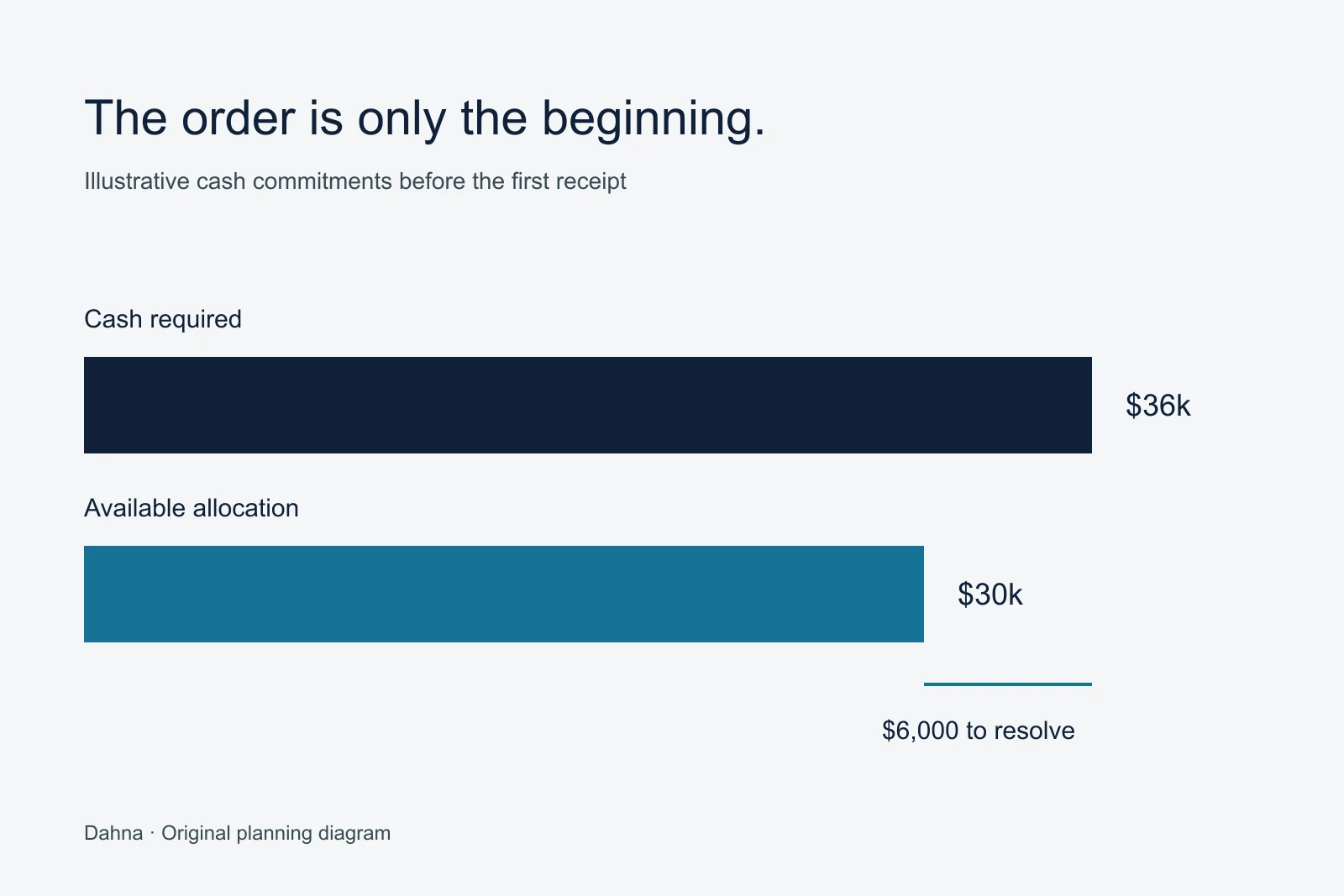
If all $27,000 of those costs falls due before the customer pays, and a $9,000 replenishment deposit is due in the same period, the modeled cash requirement reaches $36,000. With only $30,000 allocated, the plan has a $6,000 shortfall even though the first-order calculation looks positive. The next decision is to change scope, timing or funding before accepting; expected sales are not available cash.
| Commitment | Before first receipt | Owner to verify |
|---|---|---|
| Product and packaging | $18,000 | Operations |
| Freight and handling | $3,000 | Logistics |
| Setup | $2,000 | Operations |
| Launch support | $4,000 | Marketing |
| Replenishment deposit | $9,000 | Operations and finance |
| Total modeled cash need | $36,000 | Finance |
| Available allocation / shortfall | $30,000 / $6,000 | Finance |
Turn unknown terms into questions before committing
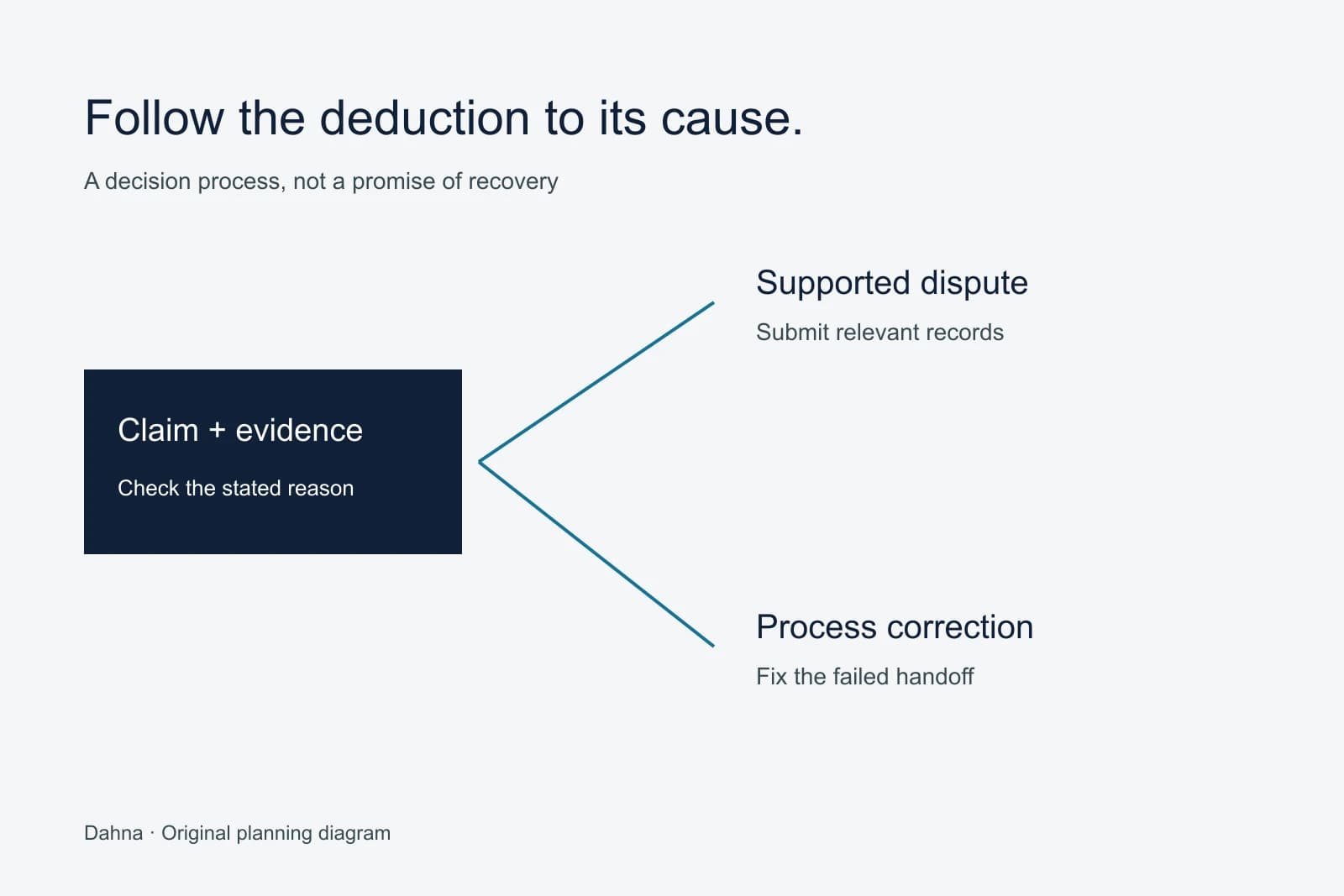
Ask the commercial and finance owners to identify payment timing, deductions, promotional commitments, returns, markdown support and cancellation exposure wherever they apply. Do not assume every retailer uses each of these arrangements. Record the controlling document and version, the person who confirmed it and the date. An unanswered term remains unknown in the model.
Run a downside case with the same obligations and a later cash receipt or slower replenishment cycle. Keep committed costs separate from discretionary spending you could pause. An attractive headline order value is not a substitute for knowing which obligations survive a delay.
Test the handoffs and the shopper demand
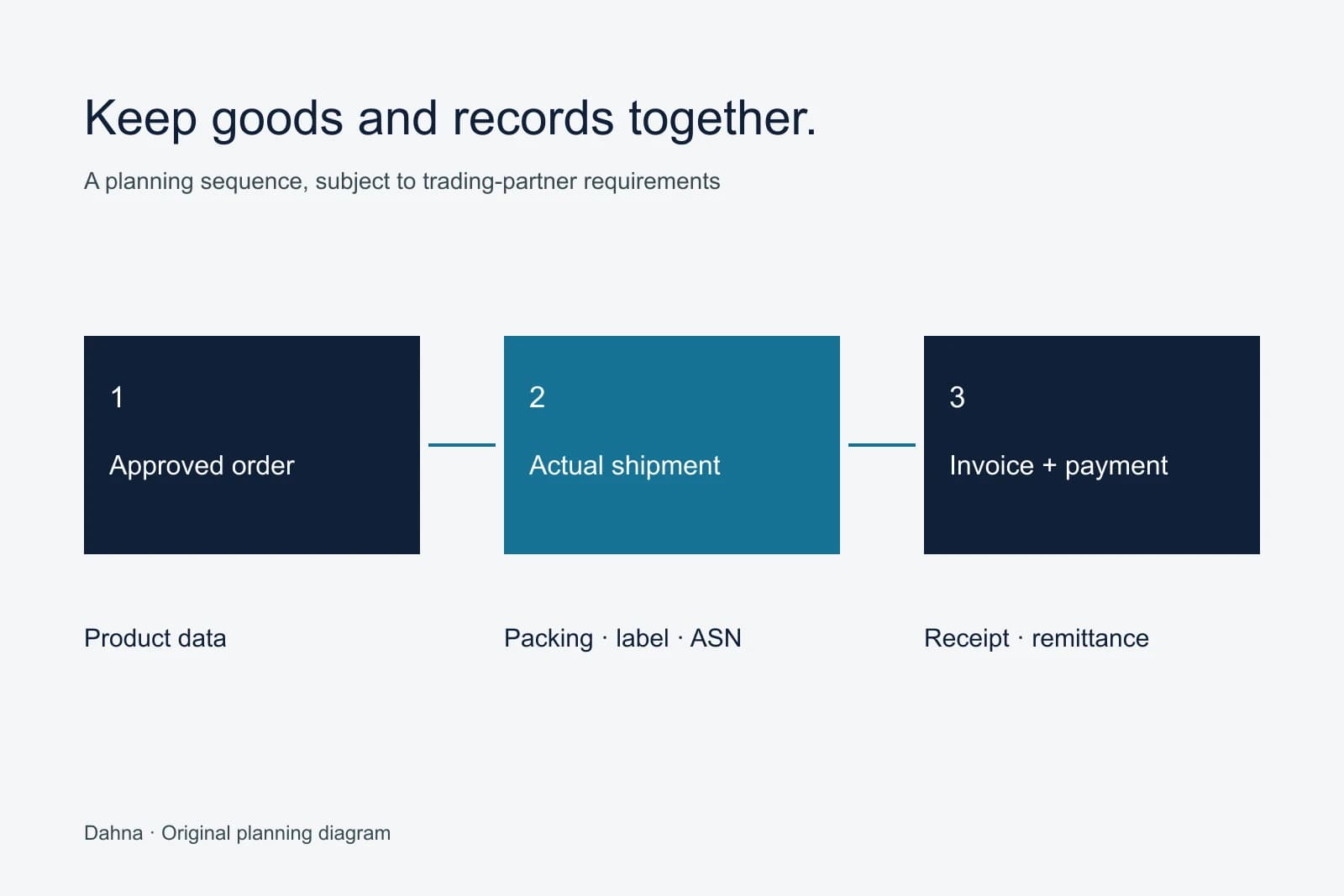
A launch needs owners for inventory availability, product data, order handling, warehouse instructions, exceptions and payment reconciliation. Target’s public supplier page lists EDI purchase-order capability, insurance and other supplier requirements. Use those as a prompt to obtain the current requirements for your own relationship, not as a complete onboarding checklist.
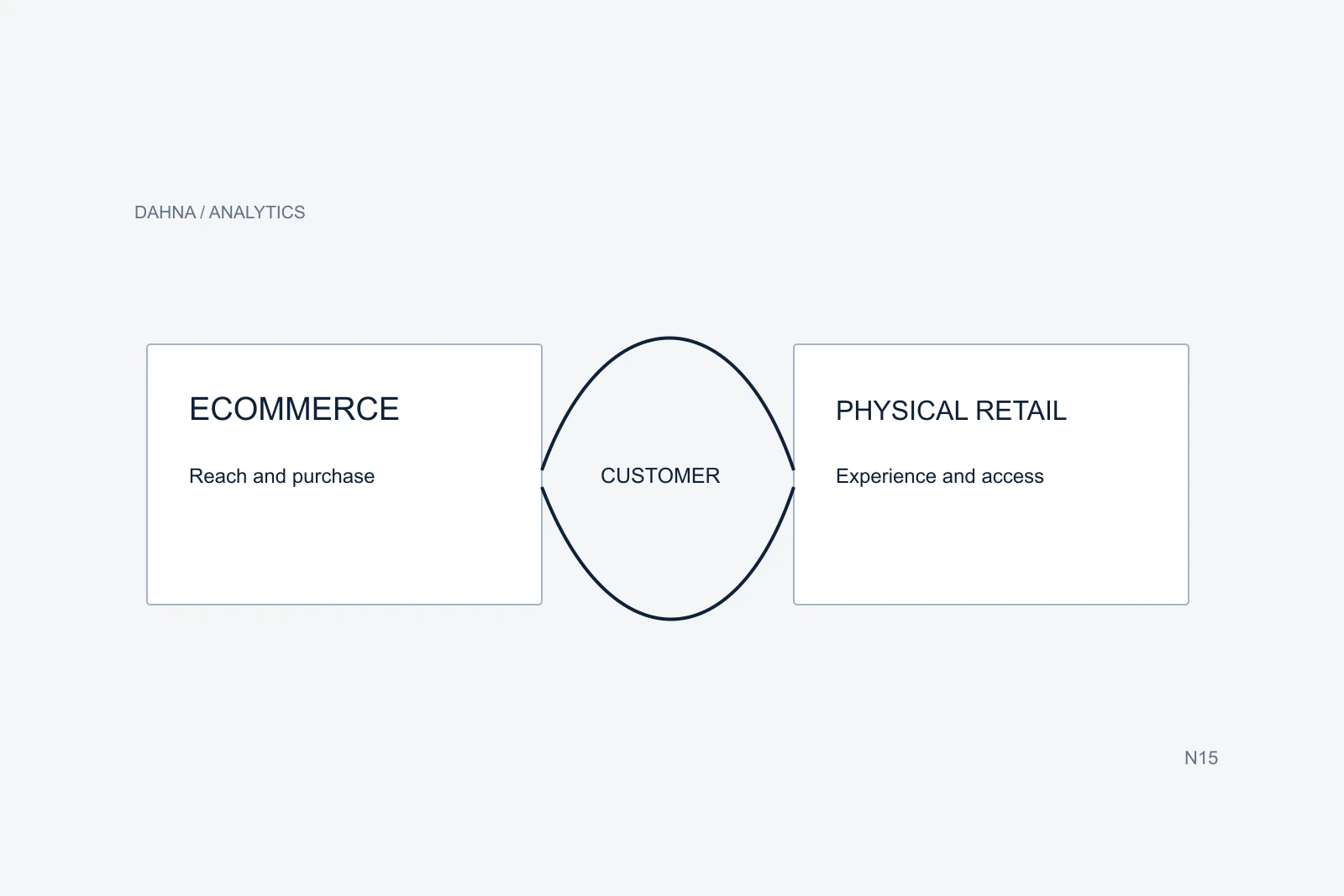
On the marketing side, identify the person who buys the product, why this assortment suits them and what will help them find and understand it. Distinguish sales into the retailer from sales through to shoppers. Ask which sell-through or stock reports you will actually receive, then choose measures you can observe. Social views alone cannot establish store-level demand.
For example, a brand with repeat online purchases from a specific shopper group might propose a narrower assortment and a focused launch rather than assuming that its full range belongs everywhere. That is a hypothesis to discuss with the buyer, supported by dated channel evidence, not a promise that a smaller launch will be accepted.
Choose: proceed, narrow the commitment, or wait
Proceed when the cash plan, operating owners and customer case are supportable for the actual commitment. Negotiate a smaller scope when a specific constraint can be resolved through assortment, geography, quantity or timing. Wait when the unknowns could materially change the decision or when the proposed order would jeopardize existing obligations.
Write the reason and a revisit condition. “Wait until the first replenishment deposit is funded and the warehouse test passes” is actionable. “We are not ready for retail” is too vague. Use the worksheet to bring the founder, finance, operations and marketing leads to the same decision.
Sources & further reading
Connect retail plans to the marketing work
We can scope the product education and launch content that a retail plan needs, using approved facts, realistic timing and a clear audience.
Why consider Dahna for this work?
Dahna brings bilingual Korean and English strategy together with creator, content, and measurement work for brands growing in the US. You can review the people behind the recommendations and the kind of work we propose before starting a conversation.
Founder experience includes prior and contracted roles. Sample deliverables illustrate our approach; they are not client results or a performance promise.
Dahna provides marketing support. Retail placement, buyer representation, accounting, EDI integration and warehouse compliance require the appropriate commercial and operational partners.