How to roll out a new brand identity across your business
Roll out an approved identity through an inventory of touchpoints, a sequence of changes and clear rules for the transition period. Digital assets can change quickly while packaging and partner materials may take longer, so the plan must explain how old and new expressions will coexist.
Dahna, original planning diagram
In this article
Overview
Roll out an approved identity through an inventory of touchpoints, a sequence of changes and clear rules for the transition period. Digital assets can change quickly while packaging and partner materials may take longer, so the plan must explain how old and new expressions will coexist.
Find the identity outside the marketing folder
Inventory the website, product packaging, transactional emails, social profiles, advertising, retailer content, presentation templates, invoices, support signatures and physical materials. Add the owner, update method, cost and lead time for each. The neglected touchpoints often reveal the old identity after the public launch.
Distinguish company-controlled surfaces from partner-controlled ones. A retailer may need an approved asset package and its own lead time. A creator’s existing post may remain historically accurate even when the brand changes. The goal is a coherent transition, not erasing every old appearance from the internet.
Burger King’s example is the breadth of implementation
Restaurant Brands International’s account of Burger King’s 2021 identity describes coordination across the logo, colors, uniforms, restaurant design, digital platforms and packaging. The example is useful because it shows how many operational surfaces an identity can touch. It is not evidence that a small brand needs a similarly large program.
For an ecommerce company, the equivalent may be much smaller: packaging, product pages, ads, customer emails and wholesale materials. Still, each surface has a different owner and production cycle. The rollout plan should make those dependencies visible before the creative team announces that the identity is finished.
Choose a transition strategy deliberately
A coordinated launch can make sense when the brand controls most touchpoints and has inventory ready. A phased rollout may be more practical when packaging stock remains or retail partners update on different schedules. State which experience customers will encounter during the transition and how questions will be answered.
Do not discard usable stock automatically for visual consistency. The business should assess cost, waste and customer confusion. If the product itself is unchanged, explain the packaging transition accurately where useful. If the formula or device changes too, keep those factual differences explicit rather than hiding them inside a branding announcement.
| Touchpoint | Dependency | Release evidence |
|---|---|---|
| Website and product pages | Approved assets, copy and preview review | Live pages checked on mobile and desktop |
| Packaging | Supplier lead time and stock decision | Correct artwork and production approval |
| Paid campaigns | New creative and landing-page consistency | Active ads point to matching experience |
| Retail partners | Partner submission process | Receipt and update status recorded |
| Customer service | Transition explanation and product facts | Team can answer packaging-version questions |
| Templates | Editable files and staff access | Old templates retired from active folders |
Worked example: packaging lags the website by eight weeks
Imagine a fictional beauty brand whose new website is ready while existing packaging will remain in fulfillment for eight weeks. The team plans an identity announcement, but customers may receive the previous package. The rollout needs a clear, factual explanation and product images that do not create a false expectation about what ships.
The brand can stage the website update, show an appropriate packaging note and coordinate the switch when inventory changes. Customer service receives the same explanation. The eight-week timing is illustrative, not a recommended schedule. The important decision is to align the promise with the item customers will actually receive.
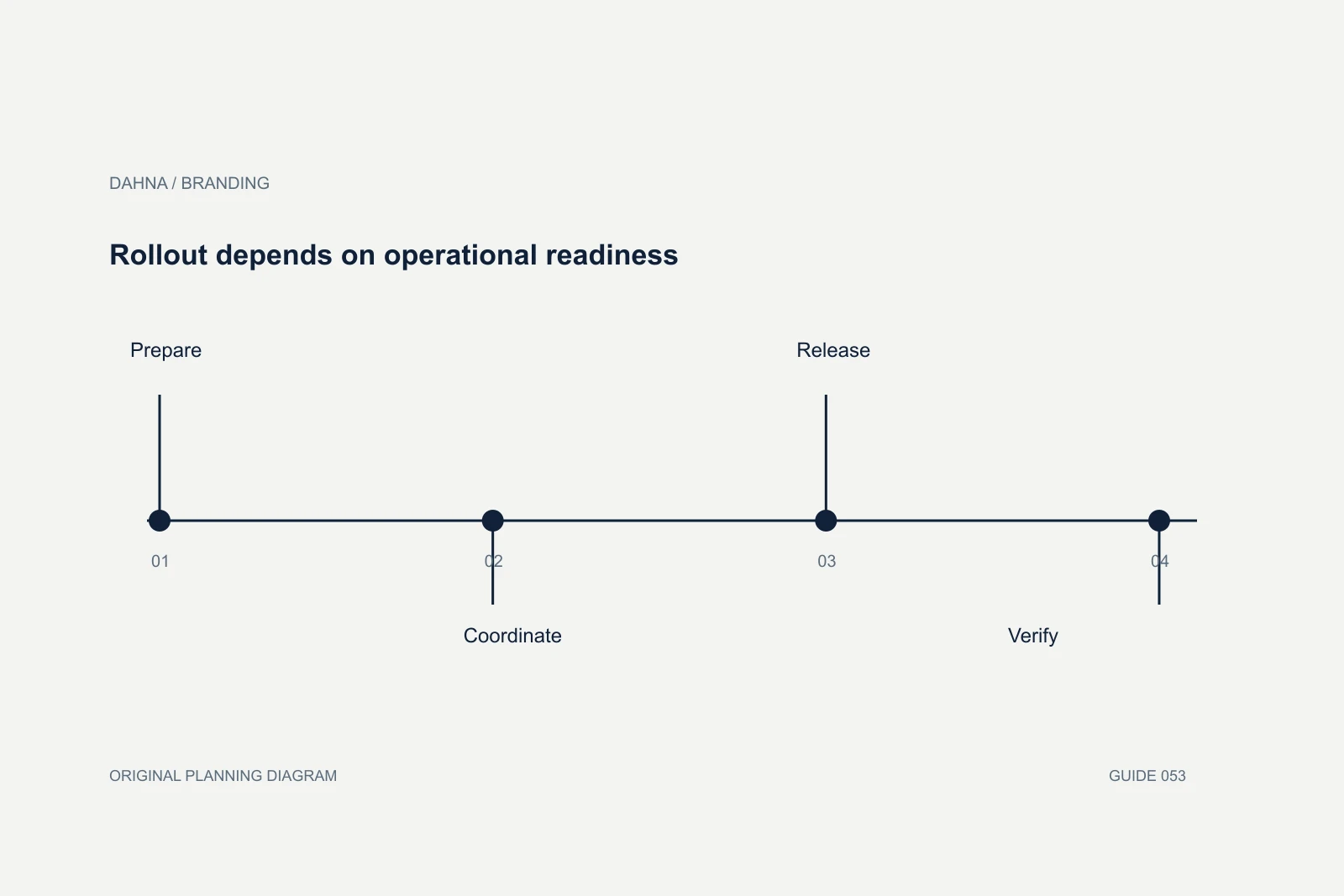
Rollout depends on operational readiness
Prepare
Approved assets and touchpoint inventory
Coordinate
Stock, partners and campaign dependencies
Release
Customer-facing surfaces change in sequence
Verify
Live experience and remaining exceptions checked
Control the active asset library
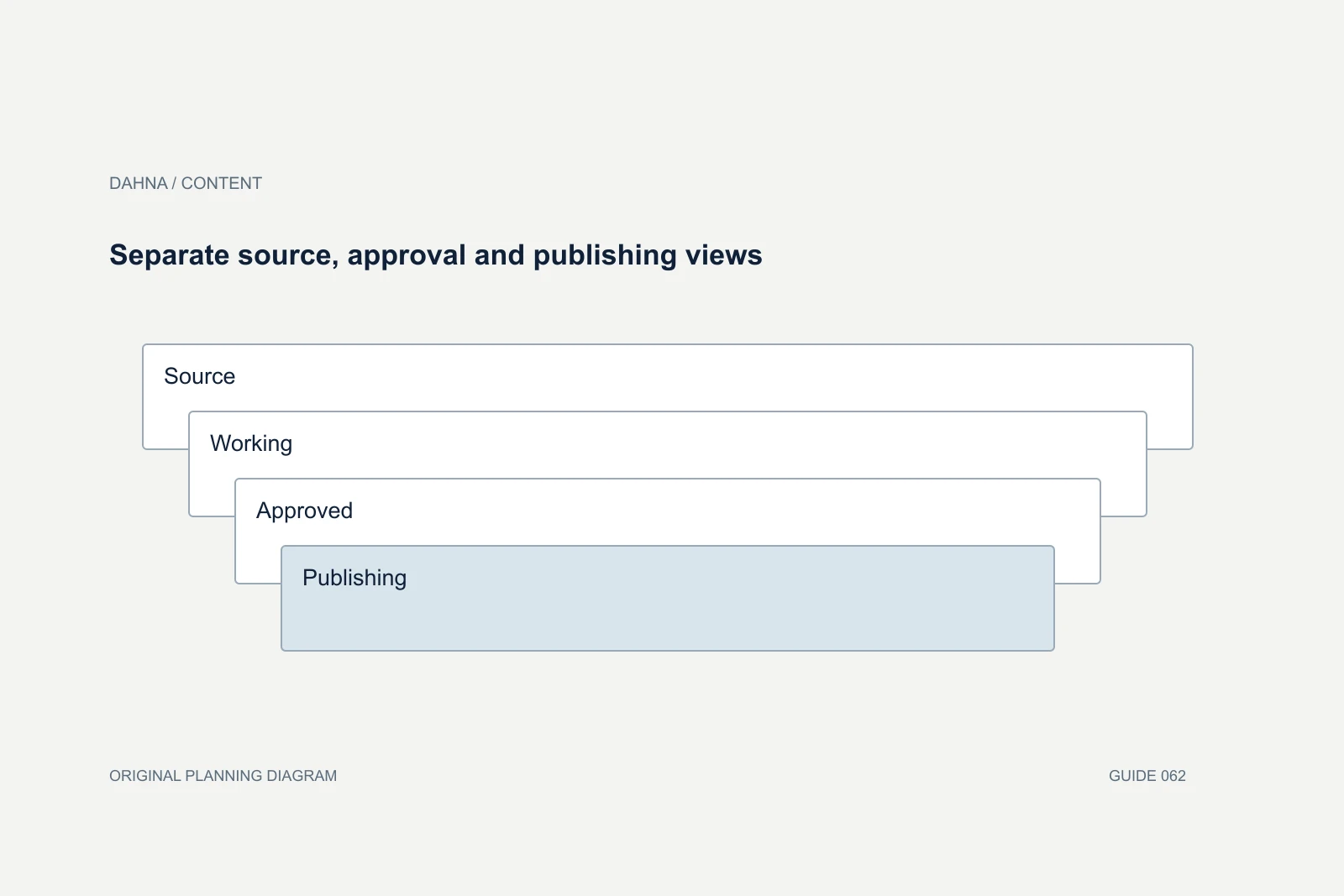
Create one clearly marked location for approved launch assets. Record versions, formats, usage notes and owners. Archive superseded files so they remain available for historical reference without appearing as the default choice for new work. A folder containing six files called final is a predictable source of errors.
Provide partners with the files they need rather than the entire working archive. Include a short explanation of what changed, the effective date and the contact for questions. If a logo or product name changes, ensure the team also updates plain text references and accessible labels, not only the visible image.
Run a customer-journey review before the announcement
Follow a real path from ad or search result to product page, cart, confirmation email and support page. Look for mismatched names, old product images, broken links and inconsistent explanations. A brand launch can be visually polished while the transactional journey still refers to a previous identity.
Assign a final approver for each surface and one launch coordinator to collect evidence. The coordinator should have an exception list with decisions, not a vague assurance that every department is ready. Keep a recovery option for digital changes that interfere with buying. An identity announcement is not a reason to accept a broken checkout.
Write a rule for old and new versions appearing together
During a phased rollout, customers may see a new website and an old package in a creator video. Decide which combinations are acceptable and which could mislead. Historical content can remain useful when its context is clear; a current product listing should accurately represent what the customer is buying. The transition rule should be specific enough for editors to apply without another approval meeting.
Prepare a short response for questions about authenticity or product changes. If only the packaging changed, say that accurately. If the formula, size or included accessories changed too, explain those differences separately. Customer service should receive the same approved facts as the website and campaign teams.
Track partner surfaces that the brand cannot update directly. Give each a submission date, contact and status, then follow up according to the agreed process. Do not mark a retailer complete because an email was sent. Where an old asset will remain for a while, assess the customer consequence and decide whether an explanatory note or another action is needed. This closes the gap between announcing a new identity and actually presenting a coherent brand across the places customers encounter it.
Finish the rollout through an exception review
After launch, track remaining partner updates, old packaging and recurring staff errors. Some historical assets should remain unchanged; others need active correction. Record the distinction so the team does not repeatedly reopen the same question.
Dahna can help connect identity files to website, campaign and content implementation. Bring the approved design, stock constraints and touchpoint owners into the rollout brief. The project is complete when customers encounter a coherent explanation and the team knows which version to use, rather than when the first announcement post is published.
Continue with the related decision
Use these guides when the next question goes beyond the scope of this article.
Use the editable decision sheet
Download the completed tables as a CSV, then replace the example inputs and add your evidence, owner and review date. Illustrative figures are teaching examples, not default targets.
Sources & further reading
Bring this decision to Dahna
Use this guide to prepare a focused brief. Tell Dahna what needs to change, which evidence you already have and when you need a decision.
Why consider Dahna for this work?
Dahna brings bilingual Korean and English strategy together with creator, content, and measurement work for brands growing in the US. You can review the people behind the recommendations and the kind of work we propose before starting a conversation.
Founder experience includes prior and contracted roles. Sample deliverables illustrate our approach; they are not client results or a performance promise.