How to organize ecommerce brands, ranges and product names
Create a separate brand or sub-brand only when customers need a meaningful distinction that the existing naming system cannot express clearly. Start by mapping the parent brand, product ranges, individual products and variants, then test whether shoppers understand the relationships without an explanation from the founder.
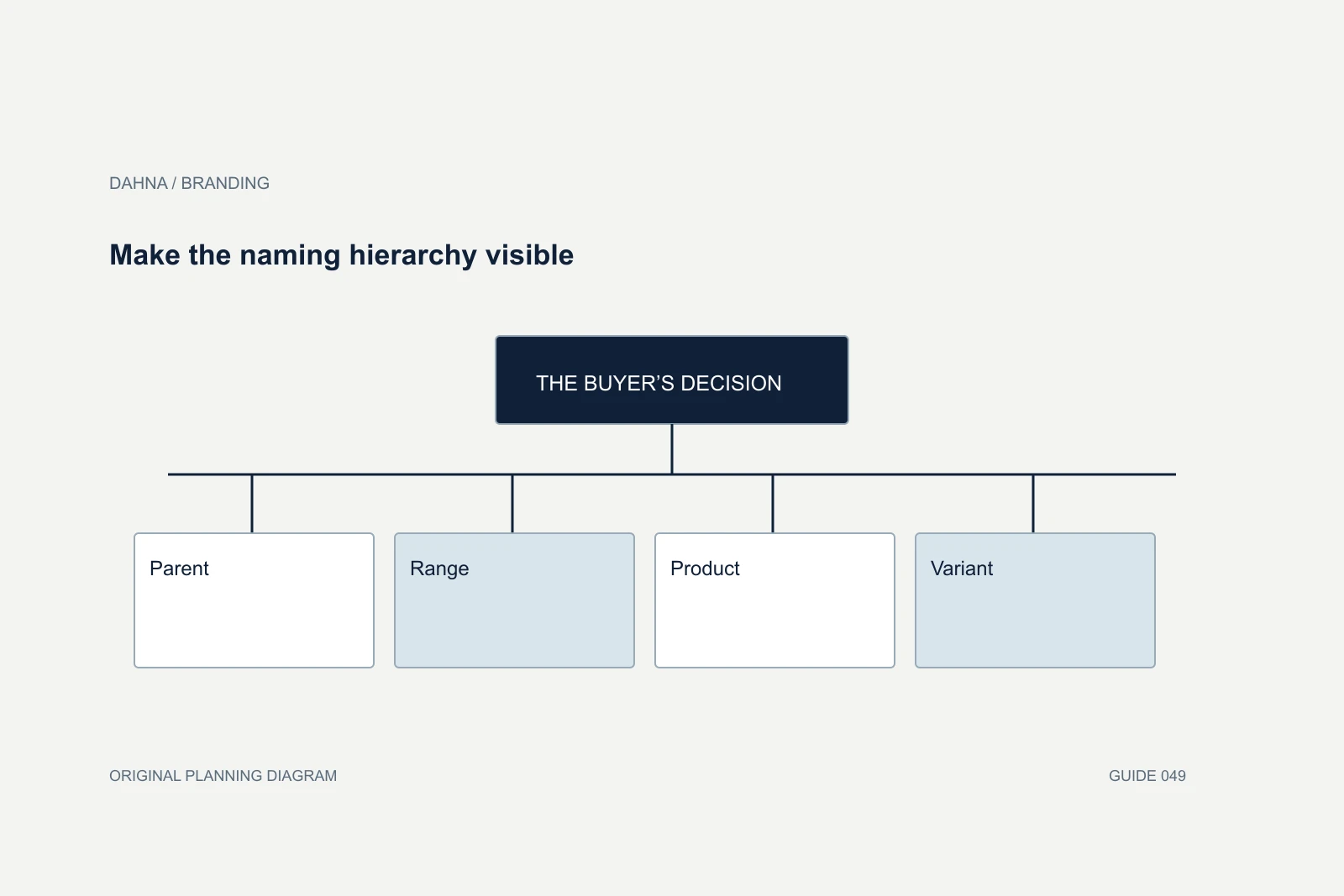
Dahna, original planning diagram
In this article
Overview
Create a separate brand or sub-brand only when customers need a meaningful distinction that the existing naming system cannot express clearly. Start by mapping the parent brand, product ranges, individual products and variants, then test whether shoppers understand the relationships without an explanation from the founder.
Name the distinction customers need to understand
A new product does not automatically need a new brand. First ask what differs: audience, use occasion, price, distribution, technology or product category. Some differences can be expressed with a descriptive product name; others may require a recognizable range. A separate brand creates more identity, content and marketing work to maintain.
Internal excitement is not enough to justify the additional layer. If the customer’s main question is simply which moisturizer is richer, two clearly differentiated product names may work better than two elaborate sub-brand stories. Architecture should help people choose and help the company maintain clarity as the catalog grows.
DECIEM illustrates a portfolio with distinct names
The Estée Lauder Companies’ DECIEM page identifies The Ordinary, NIOD and Avestan within its portfolio. That is a real example of an umbrella organization housing distinct consumer-facing names. It does not establish that an emerging brand should adopt the same structure or that the architecture caused commercial success.
Use a large portfolio as a prompt to consider responsibilities. Who funds each identity? Which name appears in customer search and on the package? What relationship does the customer need to know? A small business can decide those questions with a simple map rather than copying the complexity of a much larger company.
Compare the maintenance burden of each structure
A product line under one brand can share recognition and production systems. An endorsed sub-brand may give a range more character while keeping an explicit parent relationship. A separate brand can express a different proposition, but also needs its own audience-building and governance. These are strategic tradeoffs rather than a ladder in which more brands means greater sophistication.
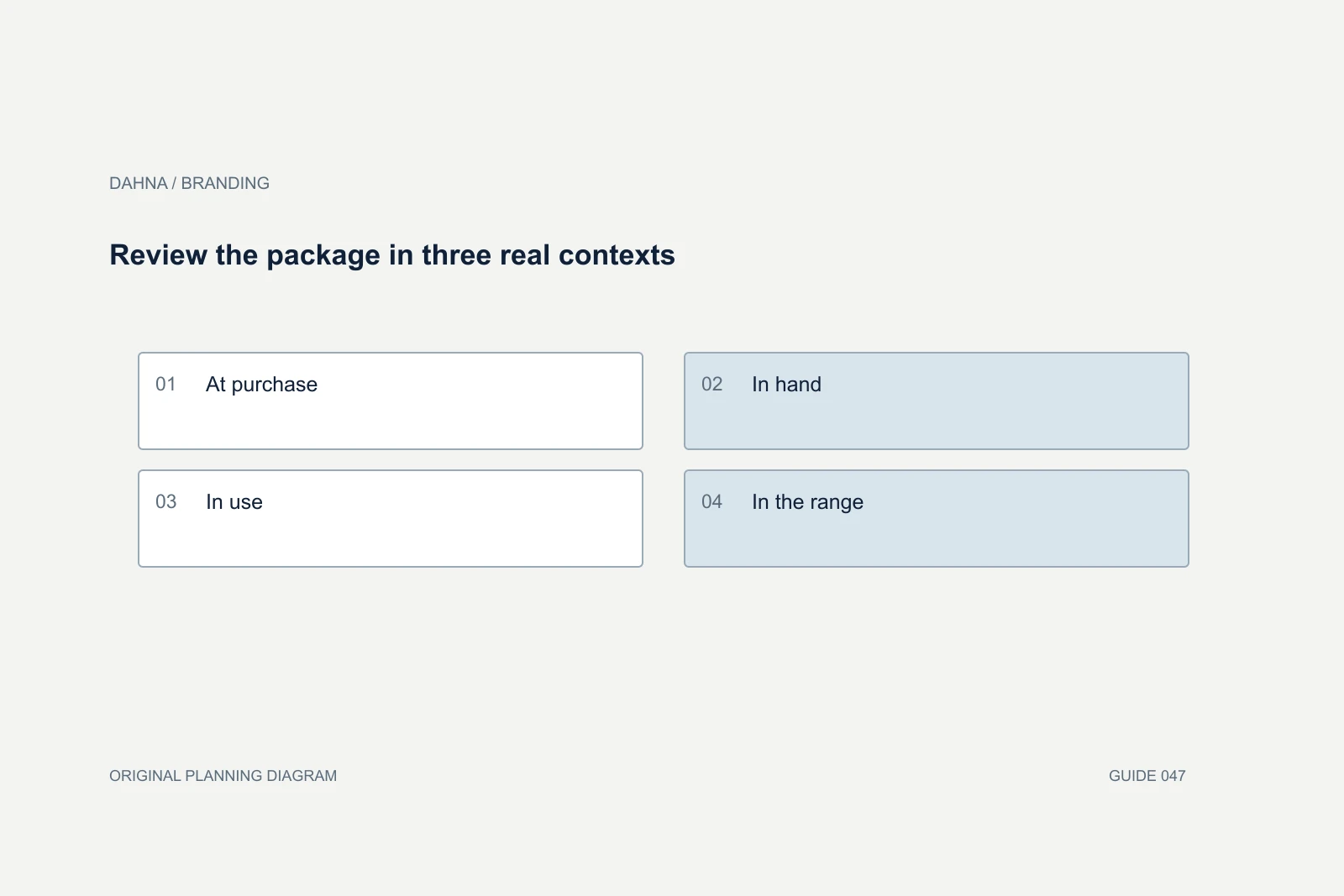
Ask the agency to show how each option works on a product page, package, ad and retailer list. The hierarchy should remain understandable when space is limited. If a product requires three logos and a paragraph to explain its identity, simplify before finalizing the design.
| Structure | When it may help | Cost or risk to examine |
|---|---|---|
| One brand, descriptive products | Related assortment serving a coherent promise | Names must distinguish products clearly |
| Named range under the brand | A meaningful family shares a use or technology | Range rules must survive future launches |
| Endorsed sub-brand | Distinct proposition benefits from parent association | Both identities need a clear relationship |
| Separate brand | Substantially different customer or proposition | Independent recognition, content and governance |
Worked example: skincare expands into a device
Imagine a skincare brand introducing a cleansing device alongside its formulas. The team proposes a separate brand because the device feels like a different category. Before approving that, it maps the customer journey: existing customers discover the device through the same routine and need to know which cleanser works with it.
A named device range under the existing brand may preserve that connection. A separate brand could be justified if the business plans a broad technology portfolio with a different audience and distribution strategy. The example does not prescribe an answer; it shows the evidence needed. The decision should consider the next several launches, not only the first product’s reveal.
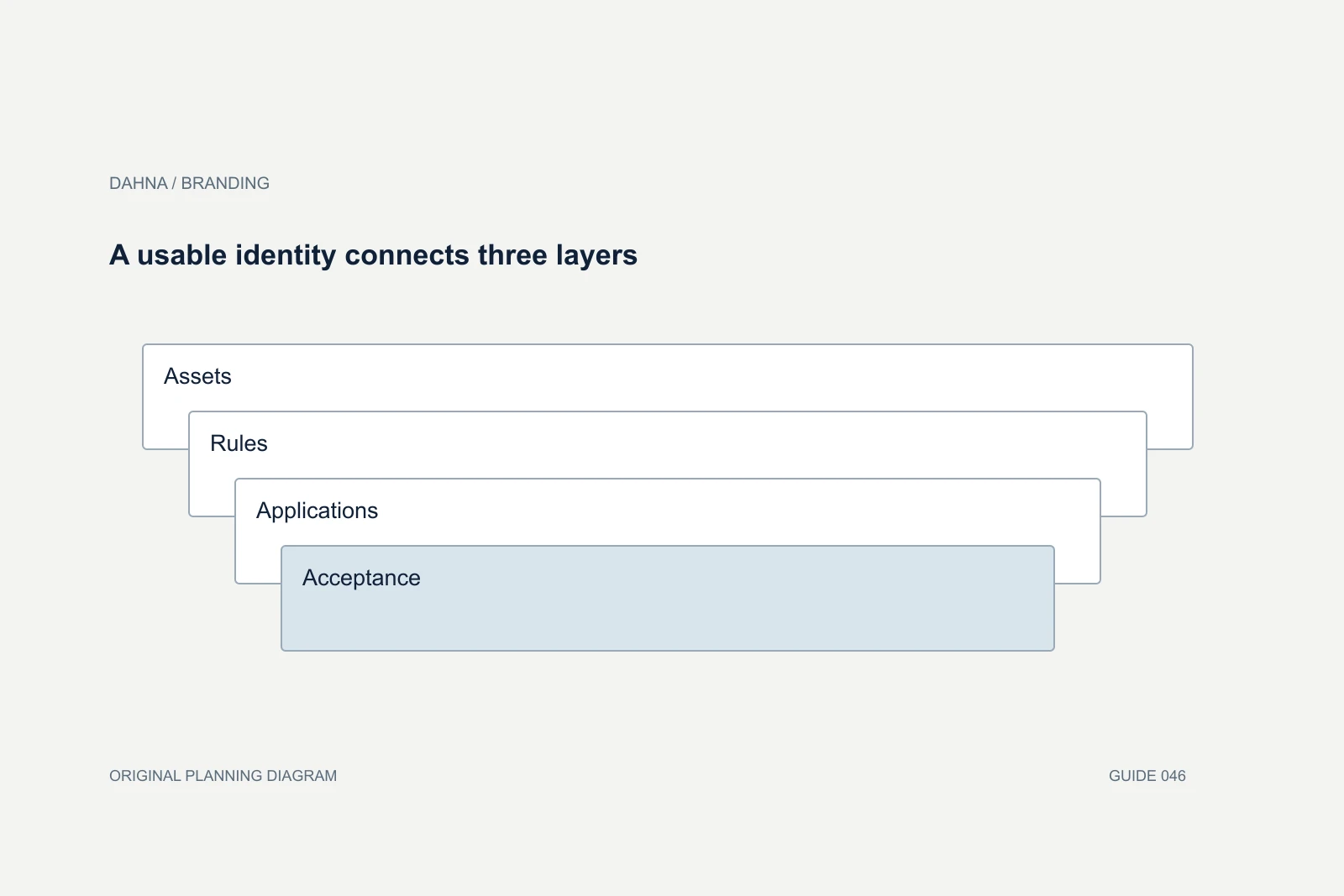
Make the naming hierarchy visible
Parent
The company or master brand
Range
A meaningful product family if needed
Product
The item’s distinct role
Variant
Size, shade or another purchase option
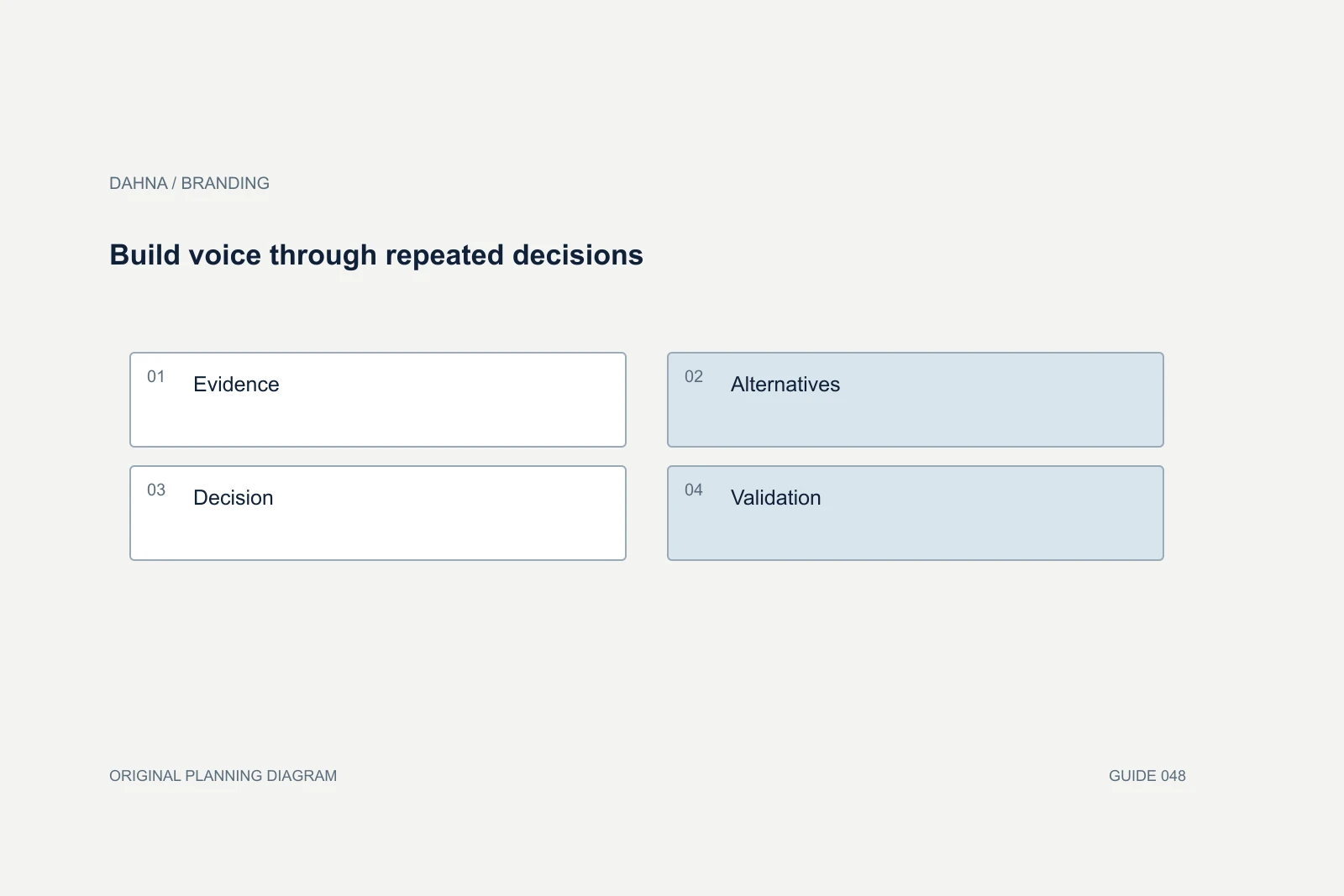
Set product-name rules before inventing candidates
Decide what belongs in the customer-facing name and what belongs in supporting description. Product type, size and variant may need consistent treatment for search, retailer listings and customer service. A poetic name can coexist with a plain descriptor if the hierarchy is clear.
Write rules for abbreviations, numerals, capitalization and translated names. Record how names appear on packaging versus a small mobile product card. Avoid encoding a claim in a name that the product cannot support. Qualified specialists should review relevant legal and regulatory questions; an architecture workshop does not replace trademark clearance or claim review.
Test understanding across the whole range
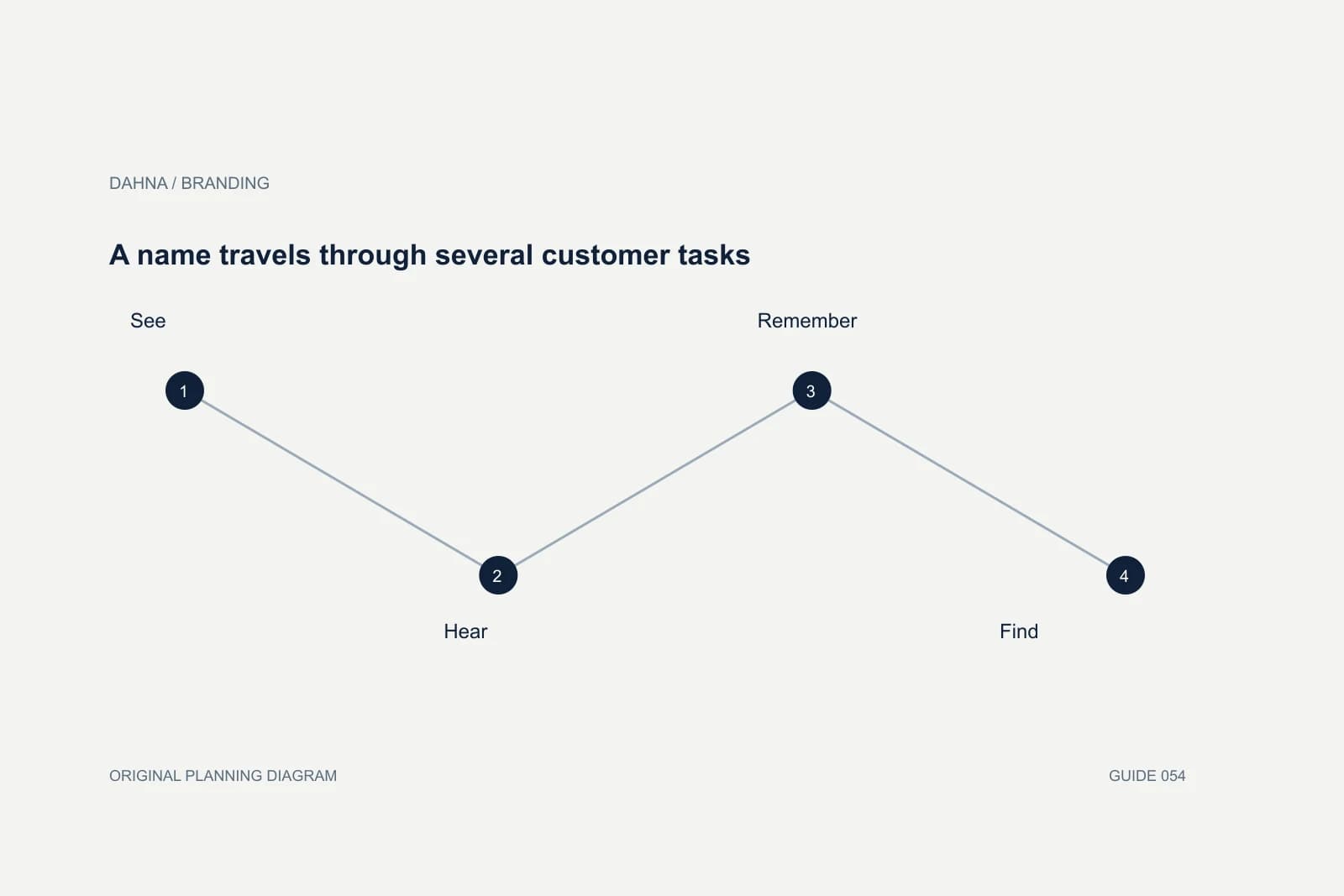
Show participants several products together and ask which belong to the same family, which they would choose for a given task and how they would refer to the product when searching again. Do not explain the hierarchy first. The task is to discover whether the structure communicates without your internal presentation.
Include unfamiliar buyers as well as existing customers. Existing customers may understand a relationship because they have seen it repeatedly, while new US customers have no such context. Record confusion between products and confusion about the parent brand separately. Those problems may require different naming or design changes.
Test the architecture against a realistic product roadmap
Map the next three plausible launches before approving the hierarchy. Include one product close to the current range, one that expands the use occasion and one that differs substantially. Ask where each belongs and what a customer would need to understand. If every launch immediately demands another sub-brand, the architecture may be creating more complexity than the business can support.
Also test a retirement. If a named range loses its hero product, does the remaining structure still make sense? A hierarchy tied too tightly to one ingredient, format or founder story can become awkward as the assortment changes. This does not mean avoiding specific names altogether; it means understanding the commitment the name creates.
Document which decisions are reversible and which carry larger consequences. Changing a descriptive collection label may be simpler than changing packaging, retailer records and an established consumer brand. The agency should make those implementation implications visible before the naming presentation is approved. A clear architecture gives the brand a consistent decision process, including a way to say that a genuinely different future business deserves separate treatment. It should not force every possible product into the current system merely to keep a diagram visually tidy.
Create a rule for the next launch
The final deliverable should include the architecture map, naming principles, approved examples and a decision process for future additions. Name the person who can authorize a new range or exception. Without that governance, every launch can gradually create another layer until the original clarity disappears.
Dahna can help connect the architecture to packaging, website navigation and campaign content. Bring the current assortment and a realistic product roadmap to the brief. A good structure makes today’s catalog easier to understand and gives tomorrow’s launch a clear place to belong.
Continue with the related decision
Use these guides when the next question goes beyond the scope of this article.
Use the editable decision sheet
Download the completed tables as a CSV, then replace the example inputs and add your evidence, owner and review date. Illustrative figures are teaching examples, not default targets.
Sources & further reading
Bring this decision to Dahna
Use this guide to prepare a focused brief. Tell Dahna what needs to change, which evidence you already have and when you need a decision.
Why consider Dahna for this work?
Dahna brings bilingual Korean and English strategy together with creator, content, and measurement work for brands growing in the US. You can review the people behind the recommendations and the kind of work we propose before starting a conversation.
Founder experience includes prior and contracted roles. Sample deliverables illustrate our approach; they are not client results or a performance promise.