How to plan content reuse across ads, product pages and retail
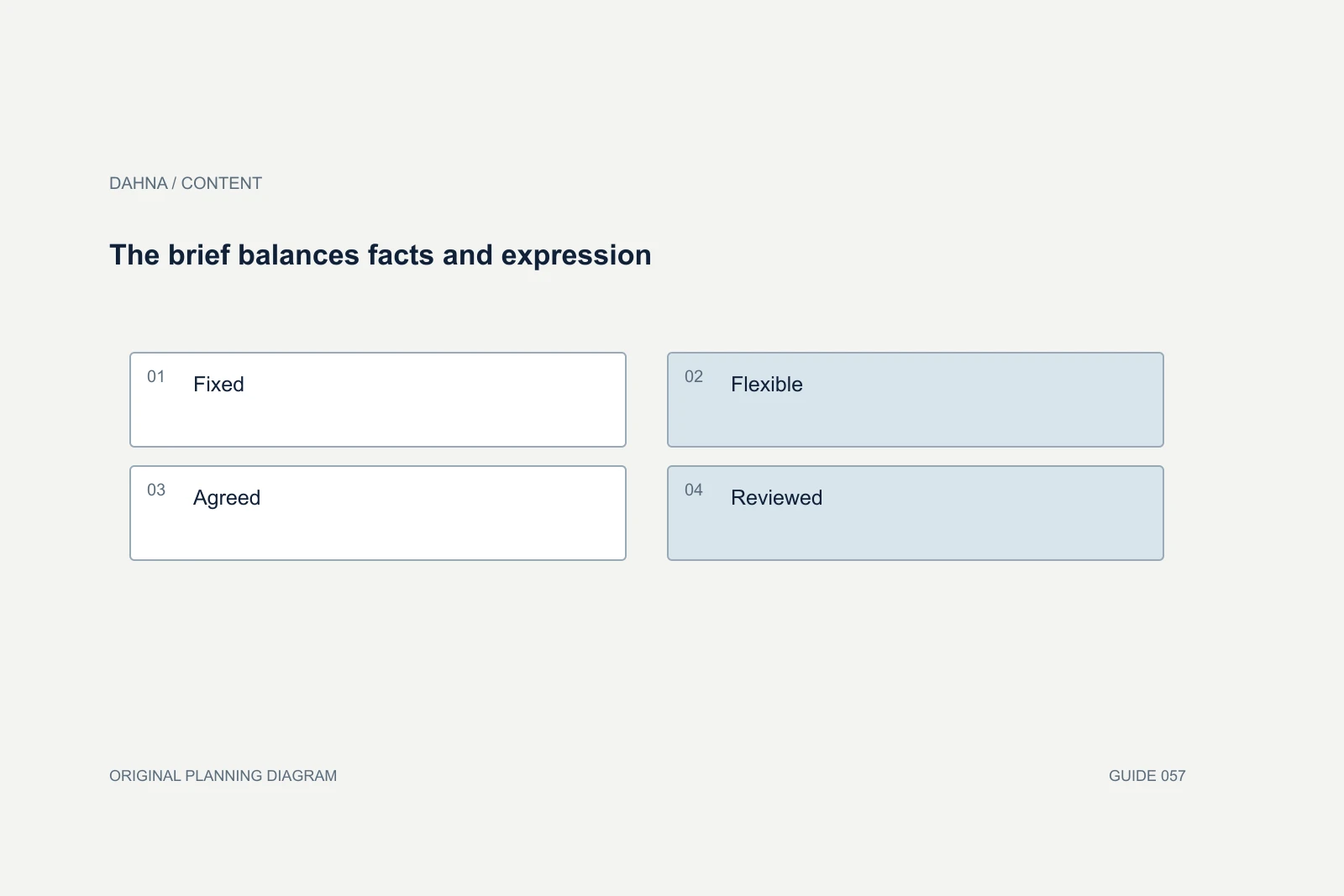
Before repurposing content, check both permission and meaning: whether the planned channel, territory, duration and edit are covered, and whether the asset still represents the current product accurately. A reuse matrix should connect each finished file to its source agreement and the specific placements the team has approved.
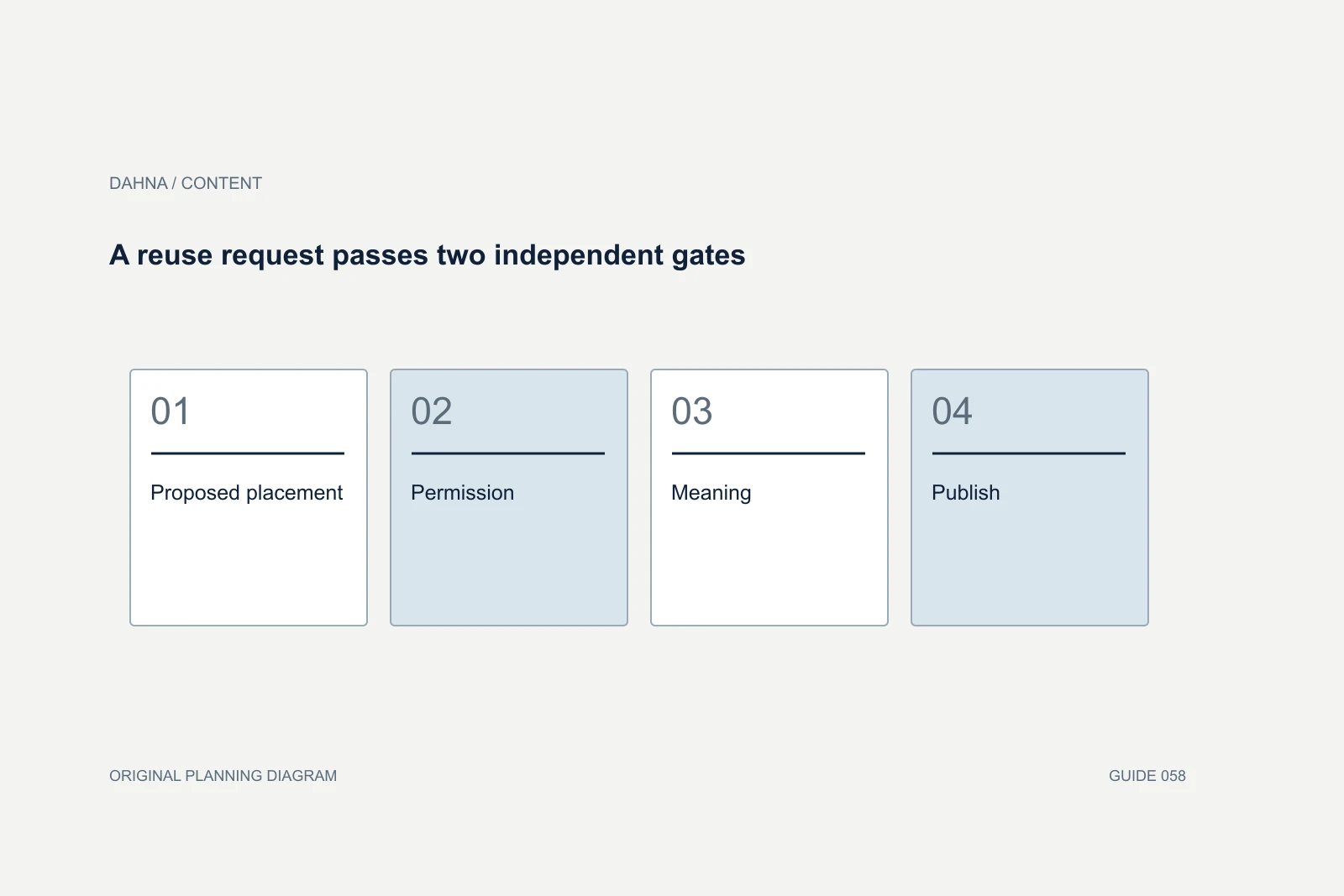
Dahna, original planning diagram
In this article
Overview
Before repurposing content, check both permission and meaning: whether the planned channel, territory, duration and edit are covered, and whether the asset still represents the current product accurately. A reuse matrix should connect each finished file to its source agreement and the specific placements the team has approved.
Permission and suitability are separate checks
A video can be permitted for a paid ad but unsuitable because it shows an old package or an expired offer. Another asset can be perfectly accurate but lack permission for the new placement. Treat those as separate approval fields so the team does not assume that a green rights status means the content is ready to publish.
Start with the proposed use: a product-page embed, a retailer listing, an email, an organic post or an advertisement. Include the territory, time period and planned changes. ‘Use everywhere’ is too broad to guide a practical review and may not reflect the agreement the business actually signed.
Keep the source agreement attached to the asset
The U.S. Copyright Office distinguishes ownership of a copy from copyright ownership. Receiving a file or paying a production invoice does not, by itself, answer every question about future use. Have the appropriate agreement owner or counsel interpret uncertain terms rather than asking an editor to infer them.
Adobe’s asset-governance documentation illustrates the operational value of permission, status and expiry fields. A small brand can apply the same principle in a spreadsheet and controlled folder; it does not need an enterprise system to record a clear decision. The important part is reliable information and an accountable owner.
Record the actual decision for each placement
Use one row per asset and proposed use when permissions differ. Include a link to the relevant agreement and the person who verified it. Avoid copying sensitive contract details into a public creative folder; the shared matrix can point to a restricted record.
Mark unknown as unknown. A blank expiry date should not silently mean unlimited use, and a missing territory should not automatically mean worldwide permission. The review process should show which assets are ready, which require clarification and which must be replaced.
| Asset and proposed use | Permission status | Content status | Next action |
|---|---|---|---|
| Creator clip → US paid ad for 60 days | Covered by recorded agreement | Current product, no expired offer | Approve the specified cut |
| Creator clip → retailer product page | Unconfirmed channel | Accurate demonstration | Ask agreement owner before reuse |
| Studio photo → new campaign | Covered use, talent term checked | Old package visible | Reshoot or explain version accurately |
| Tutorial → shortened social edit | Edit permission confirmed | Essential step would be removed | Create a different cut |
| Music-led video → another platform | Music permission unclear | Visual content usable | Replace or verify audio rights |
Worked example: a useful creator clip with the wrong offer
Imagine a fictional brand with a creator video licensed for a defined paid campaign. The team wants to move it onto a product page after the campaign ends. The video includes a spoken discount and a caption naming a limited promotion. Even if the agreement permits website use, the offer is no longer accurate.
The team checks whether an edit is allowed, whether a clean version exists and whether removing the offer changes the creator’s meaning. If the result is still misleading, it commissions a new asset. This example shows why permission alone is insufficient. It does not interpret any real creator agreement or establish a default licensing rule.
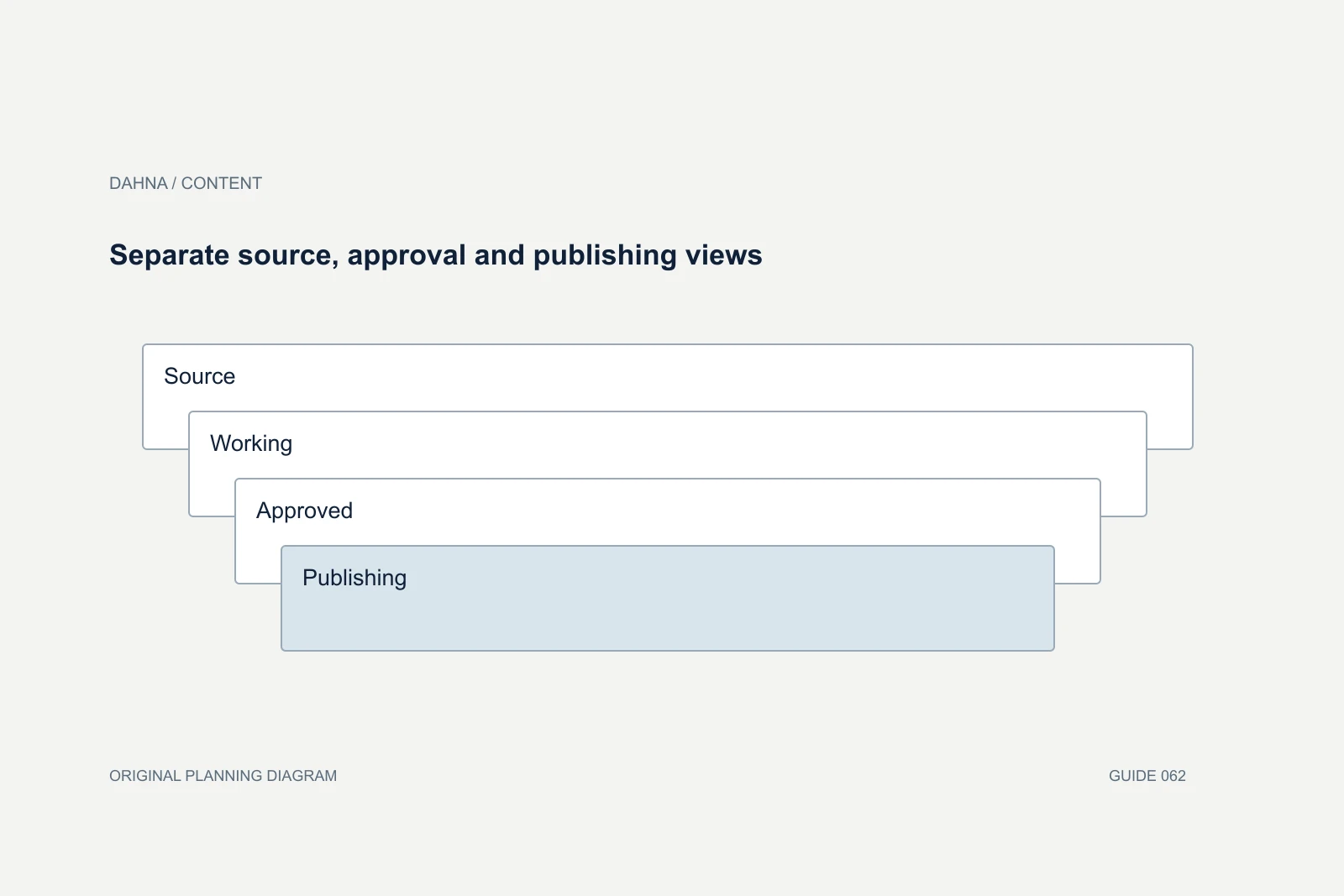
A reuse request passes two independent gates
Proposed placement
Channel, territory, term and edit defined
Permission
Agreement owner verifies the intended use
Meaning
Product, claim and offer remain accurate
Publish
Approved version and review record travel together
Check all the components inside the file
A video may contain the creator’s performance, music, a location, product imagery and graphics from different sources. Permission for one component does not necessarily answer the others. The production record should identify those layers early so a later edit does not require reconstructing the entire history.
Pay particular attention to music and platform-specific tools. A track available inside one workflow may have conditions that differ from a separate commercial placement. Verify the relevant terms for the intended use. If the team cannot establish permission, choose an appropriately cleared alternative rather than assuming a short excerpt is automatically acceptable.
Preserve context when making cutdowns
Shortening content can remove a limitation, change the apparent result or turn a measured statement into a stronger claim. Review the final cut on its own, because customers will not see the longer source version. The reviewer should ask what a reasonable viewer would understand from the new asset.
Keep product version and date information where it matters. A comparison filmed before a formula change may no longer be useful. A creator’s statement about a specific routine should not be edited into a general promise. The brand needs a new creative solution when an accurate short version cannot be made from the existing material.
Plan expiry before the asset goes live
Assign an owner to review expiring permissions and record where the asset has been published. Removing a file from a shared drive does not remove copies from ad accounts, retailer portals or product pages. The placement inventory is what makes an expiry action possible.
Set a review date early enough to choose renewal, replacement or removal without an emergency. Record who can approve additional spend and who contacts the rights holder. Keep an archive for evidence while preventing expired assets from appearing among files marked ready for new publication.
Measure reuse by useful work saved
Count the number of approved placements and the production work avoided, but also track time spent clarifying rights and correcting old content. A large library is not efficient if the team cannot determine which file is usable. The matrix should reduce uncertainty rather than become another elaborate document nobody maintains.
Review recurring friction after a campaign. If every new use requires negotiation, the next production brief can request a more appropriate scope from the start. If most assets become outdated because of offers, commission clean evergreen versions alongside promotional cuts. These are practical production decisions, not a reason to purchase unlimited rights automatically.
Make reuse part of the production brief
Dahna can help connect the intended content uses to the production plan and asset records, with agreement-specific questions handled by the responsible specialists. Bring the current files, planned placements and available permission records. The team can then identify what is ready, what needs clarification and what needs new production.
A successful reuse workflow makes the decision visible to the editor and the publisher. The final approved file should carry enough context that the next colleague does not have to guess why it was cleared or whether that clearance applies to their new campaign.
Continue with the related decision
Use these guides when the next question goes beyond the scope of this article.
Use the editable decision sheet
Download the completed tables as a CSV, then replace the example inputs and add your evidence, owner and review date. Illustrative figures are teaching examples, not default targets.
Sources & further reading
Bring this decision to Dahna
Use this guide to prepare a focused brief. Tell Dahna what needs to change, which evidence you already have and when you need a decision.
Why consider Dahna for this work?
Dahna brings bilingual Korean and English strategy together with creator, content, and measurement work for brands growing in the US. You can review the people behind the recommendations and the kind of work we propose before starting a conversation.
Founder experience includes prior and contracted roles. Sample deliverables illustrate our approach; they are not client results or a performance promise.