What original research can an ecommerce brand publish credibly?
Choose a question your brand can investigate honestly with the access it has. A documented product-use study, support-question analysis, or customer decision survey can be valuable when the method, sample, and limitations are visible. Originality comes from new evidence and a useful interpretation, not from adding a chart to familiar advice.
Dahna, original planning diagram
In this article
Overview
Choose a question your brand can investigate honestly with the access it has. A documented product-use study, support-question analysis, or customer decision survey can be valuable when the method, sample, and limitations are visible. Originality comes from new evidence and a useful interpretation, not from adding a chart to familiar advice.
Choose a question you can actually answer
A small brand may have excellent access to recurring support questions but little basis for claiming what all US skincare consumers believe. Start with the available population and records. “What confused customers who contacted our support team?” is answerable from a defined support sample. “What all shoppers want from skincare” usually requires a much stronger research design.
Write the intended decision beside the question. If the result will change a product page, packaging instruction, or content brief, the study has a practical purpose even if it never earns a media mention. If the only purpose is to generate a surprising statistic, reconsider the design before collecting data.
Pew’s work shows why methods belong beside findings
Athena Chapekis and Anna Lieb’s Pew Research Center analysis examined browsing data from 900 US adults and reported how Google search visits differed when AI summaries appeared. The published explanation states the observation period, collection process, and limitations. That transparency makes the finding interpretable rather than merely memorable.
A brand does not need Pew’s scale to adopt the habit of explaining its method. It does need to avoid borrowing Pew’s authority for a much smaller convenience sample. The lesson is methodological disclosure, not a claim that a customer survey has the same representativeness as a research panel.
Match the study type to the evidence available
A support analysis can reveal recurring confusion among people who contacted support. An observed usability session can show how participants attempt a task. A survey can describe what respondents report. A controlled product test can answer a specified performance question under its conditions. These methods are useful for different reasons and should not be described interchangeably.
For health, efficacy, safety, or regulated product claims, the appropriate study design and review may require qualified specialists. A marketing content project should not improvise clinical conclusions from customer comments or a casual demonstration.
| Method | Useful question | Main limitation to disclose |
|---|---|---|
| Support-question analysis | What questions recur in a defined ticket sample? | Only people who contacted support are represented |
| Task observation | Where do participants struggle to choose or use information? | Small recruited sample and test context |
| Customer survey | What do responding customers say? | Response and sampling bias |
| Product demonstration | What happens under stated visible conditions? | Does not establish broad efficacy |
| Qualified comparative study | How do specified products perform under a protocol? | Methods, sample, sponsor and scope require clear review |
Write the method before seeing the result
Define the sample, dates, inclusion rules, question wording, and analysis plan in advance. For a support study, decide whether multiple messages from one customer count once or several times. For a survey, decide how to handle skipped questions and whether respondents can select multiple answers. These choices affect the denominator.
Pew’s question-writing guidance explains that wording and order can influence responses. Use neutral language and test the questionnaire before launch. “How much do you love our refill?” is a promotional prompt, not a sound way to measure customer opinion. If the questions change during collection, document the change instead of combining incompatible answers silently.
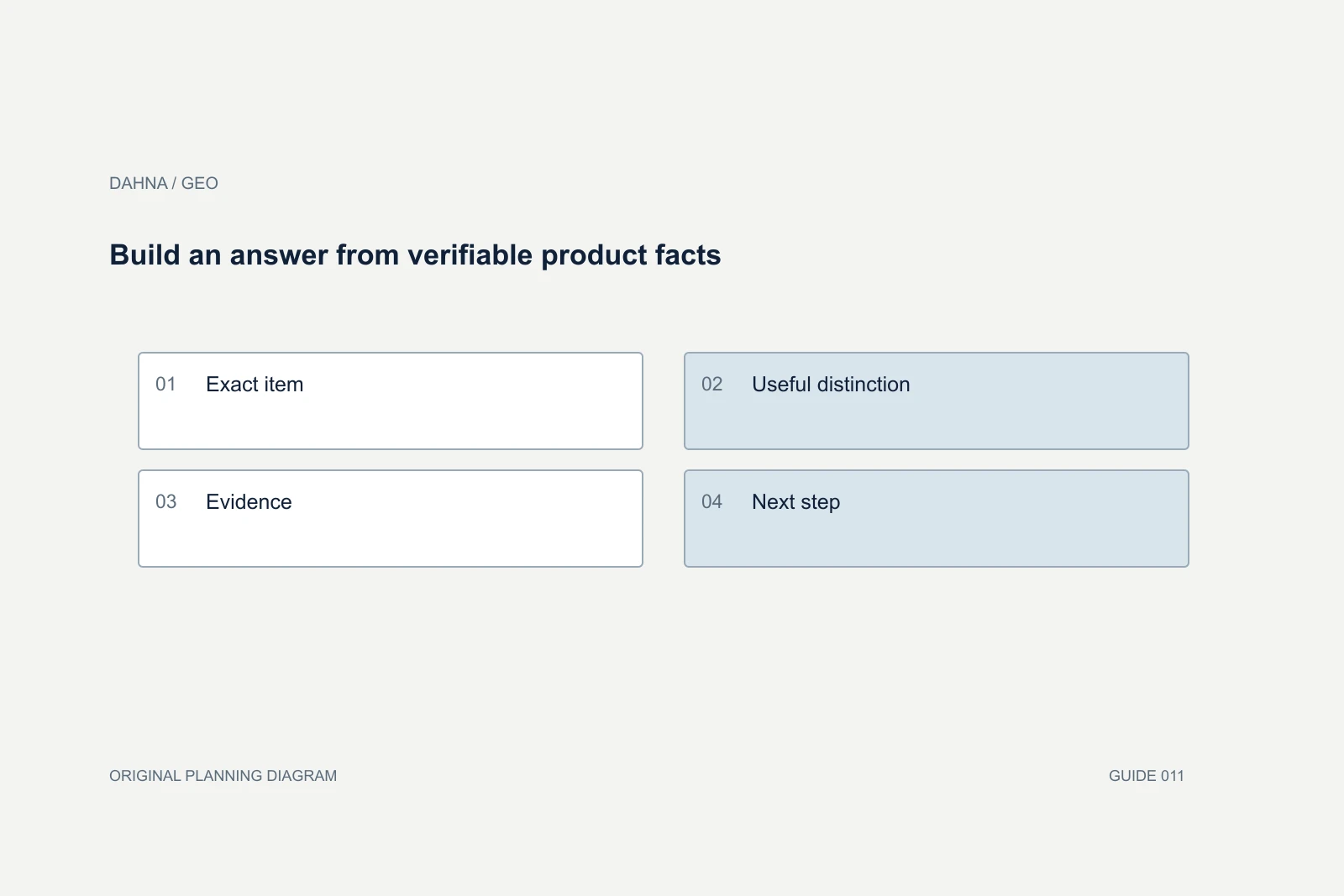
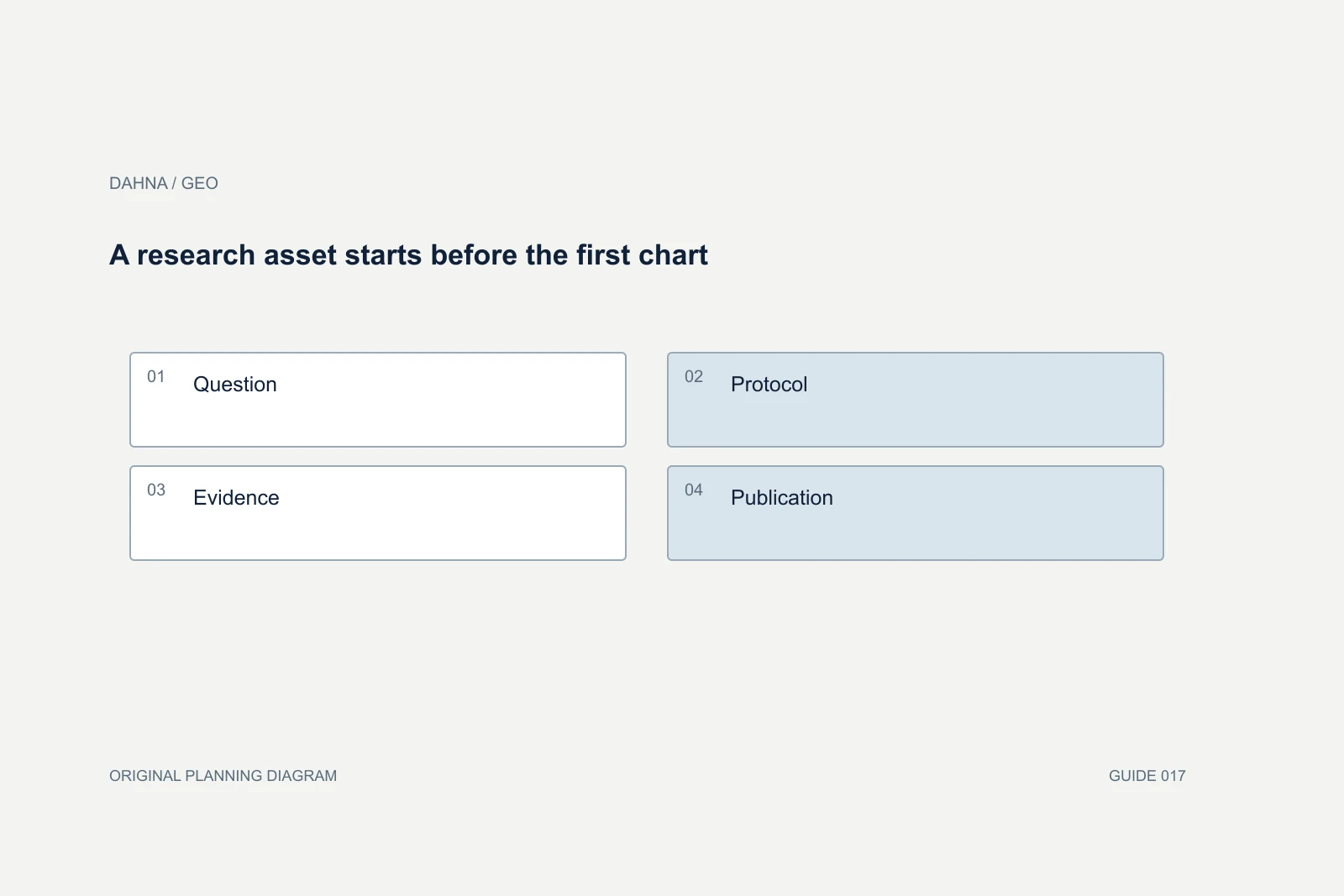
A research asset starts before the first chart
Question
Name the decision and the population.
Protocol
Set sample rules, wording and analysis.
Evidence
Collect and check the records.
Publication
Show findings, method, limits and useful next steps.
Illustrative study of refill confusion
Imagine a brand reviewing 200 support conversations from a completed quarter. It removes personal information, excludes unrelated delivery issues, and groups the remaining product questions using a documented codebook. Forty conversations involve refills; 18 of those concern compatibility. The correct statement is about that defined support sample, not that 45% of all customers are confused.
The brand publishes the categories, counting rules, and examples paraphrased to protect customers. It uses the finding to improve compatibility information and later checks whether the same question recurs in a comparable support window. The numbers are illustrative and should not be presented as Dahna or client research.
The study’s value is a concrete product-information improvement and a transparent observation others can inspect. An AI system might cite it, a journalist might find it useful, or customers might simply understand the page better. None of those outcomes should be guaranteed before the work exists.
Publish the denominator and the uncertainty
Every percentage needs a numerator, denominator, population, and time period. Label charts with units and explain whether the data describes people, orders, tickets, or responses. Do not show two bars as a causal before-and-after result if the samples differ or other changes occurred.
Include sponsorship, who conducted the work, what was actually reviewed, and access to a suitable methods summary. If AI helped categorize records, disclose that process and describe the validation actually performed. Do not claim human specialist review unless it happened.
| Element | Reader should be able to learn |
|---|---|
| Population | Who or what the evidence represents |
| Method | How records were collected and classified |
| Denominator | What each percentage or rate divides by |
| Limitations | What the study cannot establish |
| Authorship and support | Who did the work and who funded it |
| Practical implication | Which decision the evidence can reasonably inform |
Publish a small finding without pretending it is representative
A convenience sample can still reveal useful problems. Five observed shopping sessions might show that participants repeatedly miss a compatibility note. The responsible conclusion is that the tested interface caused confusion in those sessions and deserves further investigation. It is not that a fixed percentage of all US customers will make the same mistake.
Write the limitation beside the finding rather than hiding it at the bottom of a downloadable report. Give readers the task, recruitment context, number of observations, and the behavior actually seen. A short video or annotated screen sequence can make the evidence concrete when consent and usage rights permit it.
If the result will support a strong public claim, ask whether the design is sufficient before publication. A descriptive support analysis may justify improving a FAQ but not claiming that the brand has solved a widespread industry problem. A product demonstration may illustrate a process without establishing comparative efficacy.
Keep a distinction between research records and the public asset. Private customer material should be minimized and protected, while the public methods summary should contain enough information to understand the result. The content team can create a useful diagram or table from aggregated findings without exposing individual records. This preserves the value of original evidence while keeping the claim proportional to what was actually studied.
Commission a useful study, not a headline
Dahna can help turn a product or customer question into a research brief, organize approved data, and design the resulting explanation and visuals. The scope should identify where specialist research or claims review is needed. Bring the business decision and the records you are authorized to use, with private customer details handled appropriately.
If the available evidence supports only a narrow conclusion, publish that narrow conclusion clearly. A modest finding with a sound method is more useful than a dramatic claim the brand cannot defend.
Continue with the related decision
Use these guides when the next question goes beyond the scope of this article.
Use the editable decision sheet
Download the completed tables as a CSV, then replace the example inputs and add your evidence, owner and review date. Illustrative figures are teaching examples, not default targets.
Sources & further reading
Bring this decision to Dahna
Use this guide to prepare a focused brief. Tell Dahna what needs to change, which evidence you already have and when you need a decision.
Why consider Dahna for this work?
Dahna brings bilingual Korean and English strategy together with creator, content, and measurement work for brands growing in the US. You can review the people behind the recommendations and the kind of work we propose before starting a conversation.
Founder experience includes prior and contracted roles. Sample deliverables illustrate our approach; they are not client results or a performance promise.