How to brief a founder story video customers will care about
A founder story video should connect a specific experience or decision to the product customers can buy today. Brief the interview around evidence, tradeoffs and concrete moments, then edit a clear story that helps the audience understand the brand without turning every answer into a sales claim.
Dahna, original planning diagram
In this article
Overview
A founder story video should connect a specific experience or decision to the product customers can buy today. Brief the interview around evidence, tradeoffs and concrete moments, then edit a clear story that helps the audience understand the brand without turning every answer into a sales claim.
Choose what a customer should understand afterward
A founder may have a fascinating personal history, but the viewer still needs a reason to listen. Define the connection to the buying question: why this product exists, why a particular design choice matters or how the brand serves a specific situation. The video can be personal without including every milestone in the company’s history.
Write a one-sentence audience takeaway before the interview. For example, the viewer should understand why the founder chose a refill format and what that means in ordinary use. This guides the questions while leaving room for a more interesting story to emerge.
Emily Weiss offers a useful interview reference
Into The Gloss identifies Emily Weiss as its founder and dates the publication’s beginnings to 2010. Its historical interview with Weiss gives a first-person account in a recognizable editorial format. The reference is useful for the form of a founder conversation, not as evidence that an interview alone built Glossier’s business.
For your brand, look for the concrete observations behind the origin story. What did the founder notice? What did they try? What changed after feedback? These questions produce details a viewer can assess, while broad declarations about passion and disruption often sound interchangeable across companies.
Ask for moments, choices and proof
Prepare open questions that invite a specific answer. ‘Tell me about the first prototype you rejected’ is more likely to produce a story than ‘Why are you innovative?’ Follow with what happened, who was involved and what evidence remains. Ask permission before using private names or sensitive business details.
Include a question about a tradeoff. A founder who can explain why the brand chose one benefit and accepted a limitation gives the audience a more useful account than a string of universal superlatives. The limitation should be described accurately, without creating a claim the product team has not reviewed.
| Prompt | What it can reveal | Evidence to prepare |
|---|---|---|
| What problem did you notice personally? | A specific starting situation | Contemporaneous notes or an accurately dated account |
| What did the first version get wrong? | Learning and product judgment | Prototype or approved development image |
| What did you choose not to do? | A meaningful tradeoff | Decision context and current product implication |
| What customer question changed the product? | Connection to real use | Anonymized, permissioned feedback |
| What remains difficult? | An honest current boundary | Approved explanation without confidential detail |
Worked example: a founder who kept changing the package
Imagine a fictional skincare founder whose draft story says the brand was created to make daily care simpler. The interviewer asks for one decision that demonstrates that idea. The founder describes rejecting a beautiful cap because it was awkward to open with wet hands. The team has a prototype and a current package that show the difference.
That detail gives the editor a story with a visible consequence. The video can connect the decision to the current product without claiming that the package works identically for everyone. The example is illustrative; it is not a Dahna client story or a claim about a named brand’s development process.
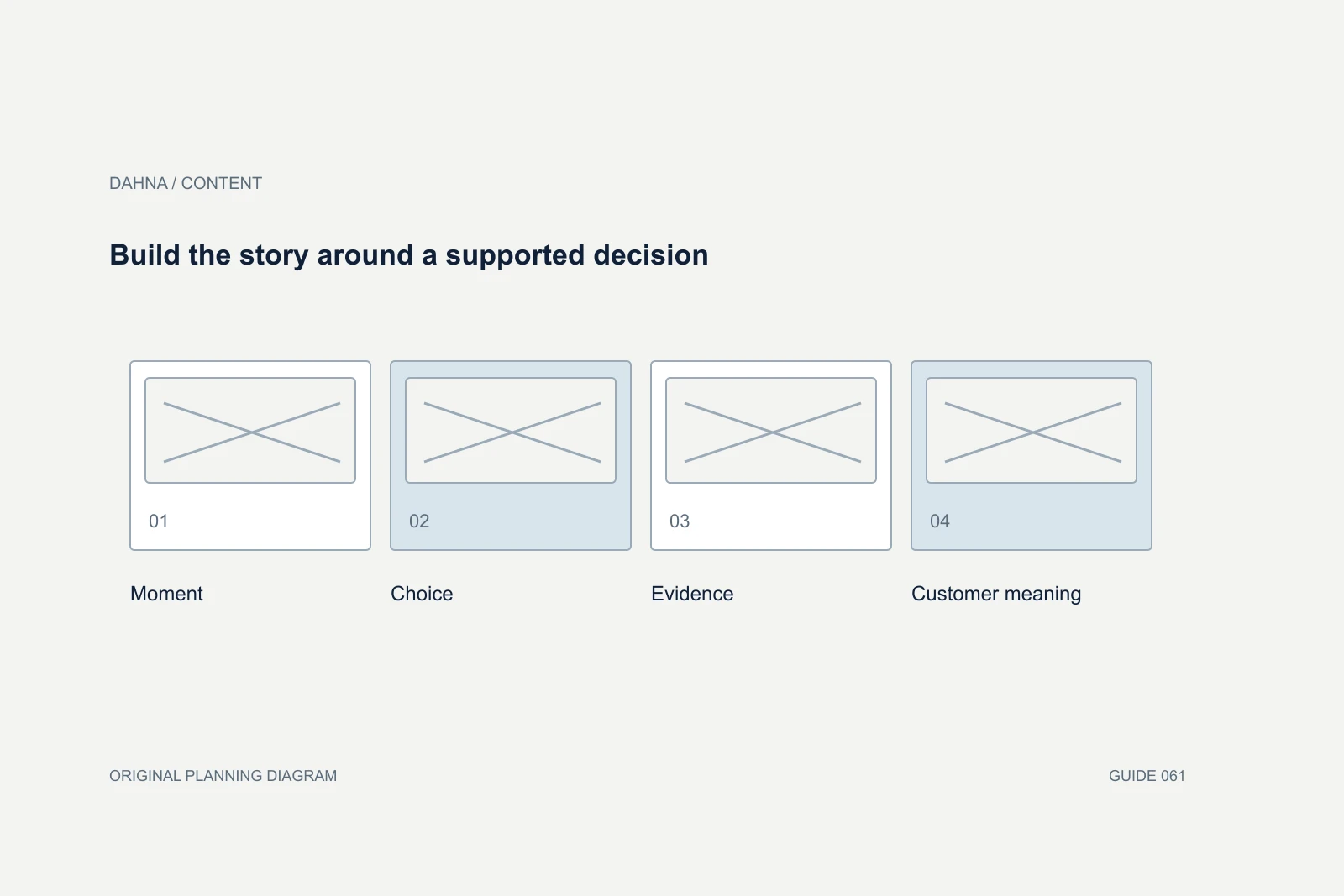
Build the story around a supported decision
Moment
A specific problem or observation
Choice
What the founder tried and changed
Evidence
A product, prototype or documented detail
Customer meaning
Why the decision matters in use
Prepare the founder without scripting a personality
Share the themes and practical logistics, but avoid requiring a memorized monologue unless the format calls for it. A founder can prepare dates, product names and supporting materials while still answering in their own words. Ask them to flag topics they cannot discuss so the interview does not create avoidable surprises.
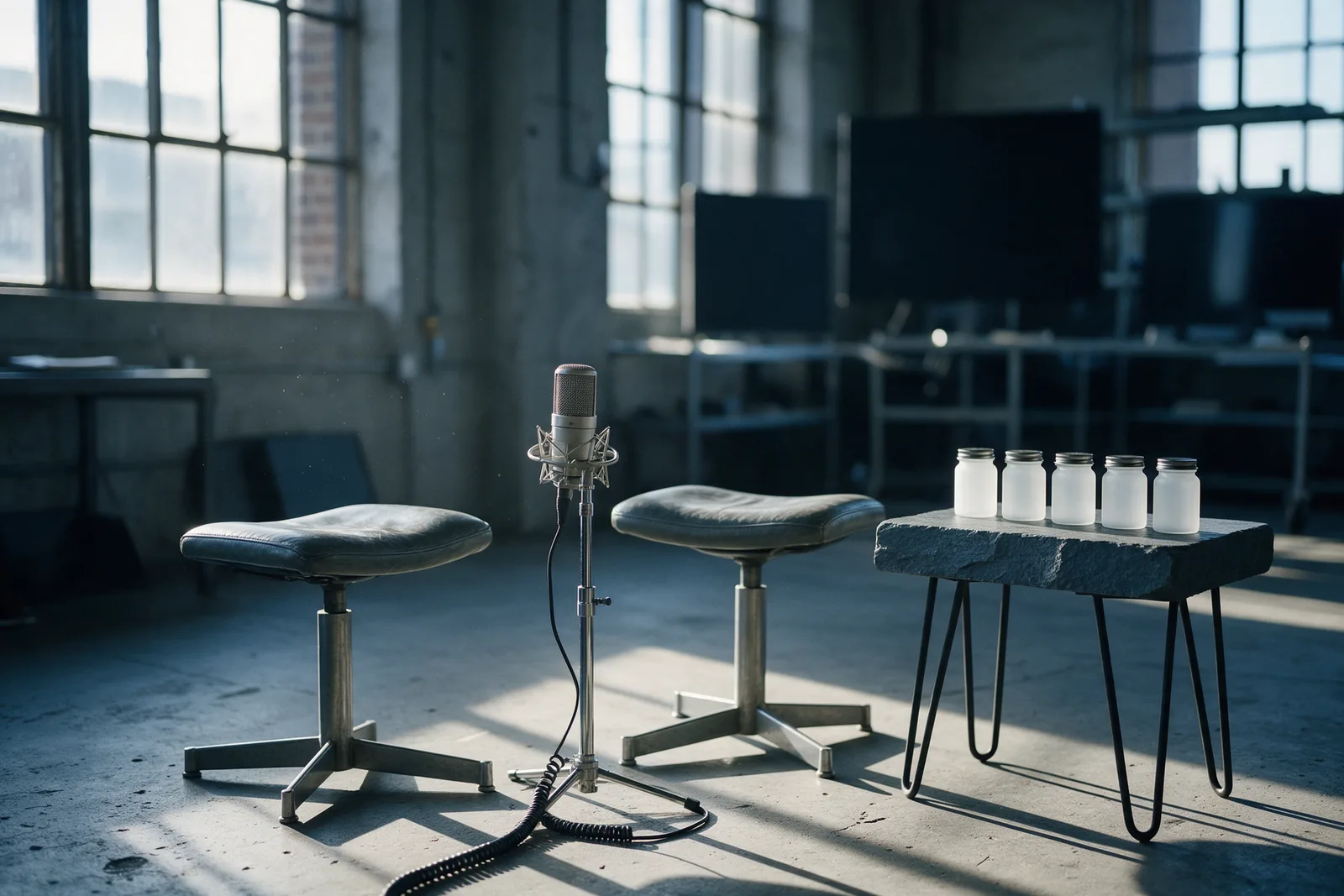
Choose a setting connected to the story and suitable for clear sound. Bring relevant objects or images that can help the founder explain a decision. A prototype on the table can produce a more natural answer than asking someone to perform enthusiasm directly into a lens.
Verify factual statements after the interview
Transcribe the conversation and mark dates, numbers, product claims, named people and statements about customers. Have the appropriate owners check them. Memory can be sincere and still imprecise, especially when a founder compresses several years into one sentence.
Distinguish personal recollection from documented fact in the edit where necessary. Do not strengthen a tentative answer by removing the words that express uncertainty. If an anecdote contains confidential supplier information or an identifiable customer, obtain the appropriate permission or choose a different example. A compelling story should not depend on publishing material the brand is not entitled to share.
Let the audience follow a simple causal story
A useful edit often moves from observation to choice to consequence. Keep enough context for the viewer to understand why the decision mattered. Avoid a montage of disconnected inspirational lines that sounds polished but explains nothing about the product.
Use supporting footage to clarify, not to imply events that never happened. If a scene is recreated, do not present it as archival documentation. A current manufacturing shot may illustrate a process, but it should not silently stand in for the exact moment the founder is describing. The edit needs the same factual care as the interview.
Plan a main story and focused excerpts
A longer website piece can hold context that a short social excerpt cannot. Identify self-contained moments for shorter versions, such as one design decision or one useful lesson. Review each excerpt on its own so the meaning remains intact after surrounding explanation is removed.
Include captions, a transcript where appropriate and clear product or brand identification. Record which statements need context and which visuals require permissions. The asset library should make it easy for the next editor to reuse an approved excerpt without searching the full interview or guessing whether a claim was cleared.
Review for clarity, honesty and relevance
Ask whether the final video helps a new customer understand something meaningful about the brand. Check that the founder sounds like themselves, the product facts are accurate and the supporting images match the story. A flattering portrait is not necessarily a useful customer explanation.
Dahna can help shape the interview brief, production plan and editorial structure. Bring the founder’s key decisions, supporting materials and the customer question the story should answer. That gives the production a human center and a concrete purpose, while keeping the founder’s experience distinct from unsupported marketing claims.
Continue with the related decision
Use these guides when the next question goes beyond the scope of this article.
Use the editable decision sheet
Download the completed tables as a CSV, then replace the example inputs and add your evidence, owner and review date. Illustrative figures are teaching examples, not default targets.
Sources & further reading
Bring this decision to Dahna
Use this guide to prepare a focused brief. Tell Dahna what needs to change, which evidence you already have and when you need a decision.
Why consider Dahna for this work?
Dahna brings bilingual Korean and English strategy together with creator, content, and measurement work for brands growing in the US. You can review the people behind the recommendations and the kind of work we propose before starting a conversation.
Founder experience includes prior and contracted roles. Sample deliverables illustrate our approach; they are not client results or a performance promise.