What permissions do you need before running a creator’s Spark Ad?
Before running a creator’s post as a Spark Ad, align the platform authorization with the commercial agreement. The code or account permission makes delivery technically possible; the agreement should establish what the brand may do, for how long and under which conditions. Check the actual post, product statements, music, destination and end date before the media team spends against it.
Dahna, original planning diagram
In this article
Overview
Before running a creator’s post as a Spark Ad, align the platform authorization with the commercial agreement. The code or account permission makes delivery technically possible; the agreement should establish what the brand may do, for how long and under which conditions. Check the actual post, product statements, music, destination and end date before the media team spends against it.
Keep technical access and commercial permission together
TikTok describes Spark Ads as advertising that uses organic posts from the brand’s account or an authorized creator account. The format retains a relationship with the original post, including engagement generated through promotion. This makes the identity and condition of that post part of the campaign, not merely a source file sitting in an editor’s folder.
Record the exact post URL and creator account, then attach the agreed campaign dates and usage conditions. A message saying “yes, you can use it” can leave important questions unanswered: which market, which product, whether edits are allowed and whether the permission covers a second campaign. Resolve those questions before authorization so the creator and buyer are working from the same brief.
| Field | Example of a clear entry | Why it matters |
|---|---|---|
| Original post | Exact creator handle and post URL | Prevents using a different version |
| Paid window | Named start and end dates with time zone | Connects media schedule to permission |
| Market and destination | US campaign to the approved product page | Defines the commercial context |
| Changes | List permitted edits or require new approval | Avoids altering the creator’s meaning |
| Extension | Owner, notice period and agreed process | Prevents an accidental overrun |
Be explicit about what the fee buys
A creator may charge for producing the video, posting it, allowing paid amplification or some combination of those services. Separate them in the scope. The brand should also know whether exclusivity, additional edits, raw footage or reuse elsewhere are included. An inexpensive authorization can become an expensive engagement if the campaign needs rights that were never discussed.
Ask who handles audience comments during the paid period and how factual corrections will be made. If the creator changes a caption, removes a post or raises a product concern, the media team needs an agreed contact path. The agreement should be reviewed by the appropriate commercial or legal owner where necessary; an agency’s operational checklist does not itself decide the legal meaning of a contract.
A usable post can still contain an unusable sound
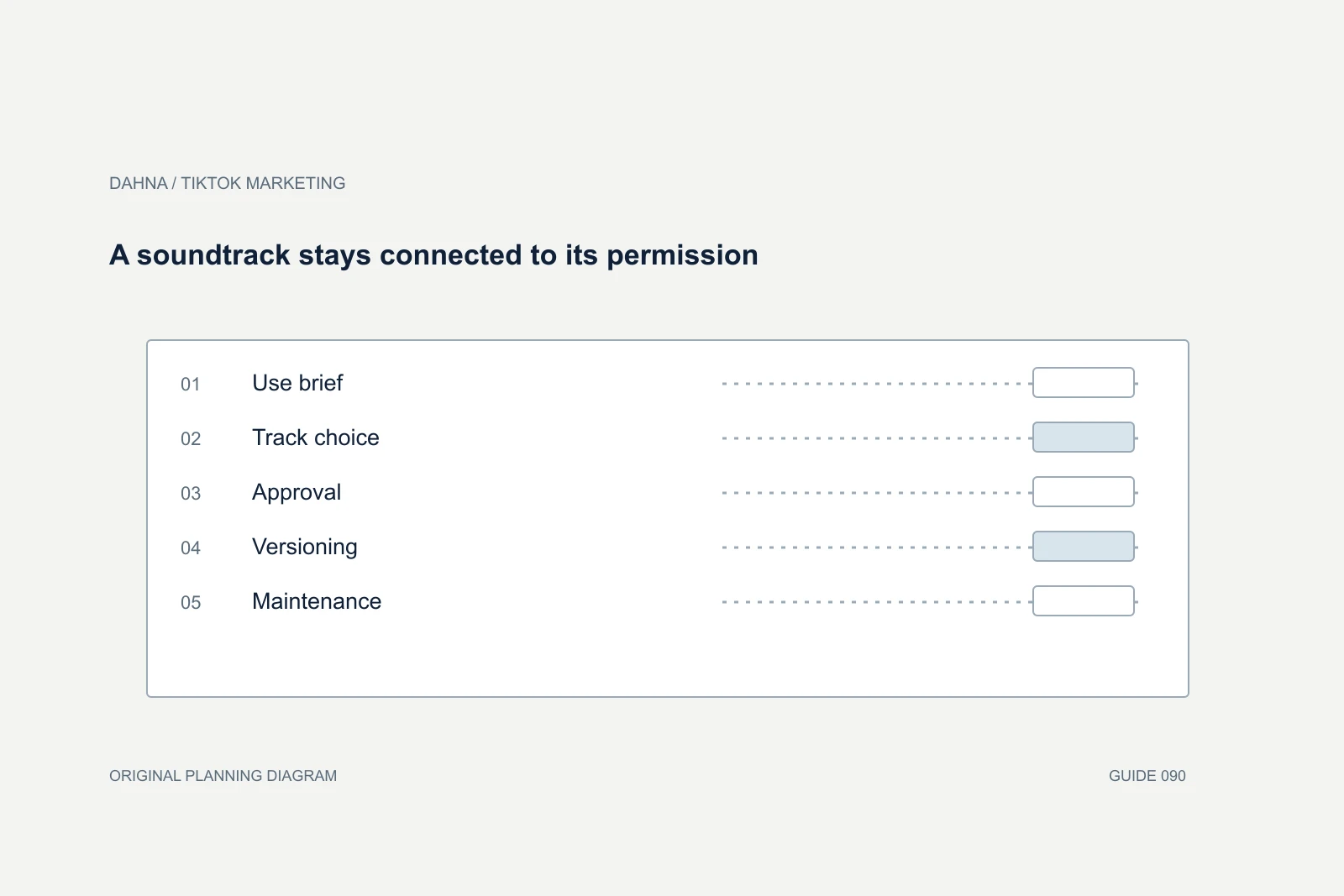
TikTok’s Commercial Music Library guidance asks businesses to select the relevant region and usable placements. A sound’s availability in a personal organic post should not be treated as proof that a brand can use it in advertising. Confirm the actual soundtrack’s permitted commercial use for the planned campaign and retain the supporting record.
Check other embedded material too: clips, photos, recognizable third-party content and claims made in on-screen text. A creator’s permission to amplify their performance does not automatically establish every other permission the brand may need. If the music must be changed, consider how that affects the post and whether a new version or approval is required. Resolve this while there is time to produce an alternative.
e.l.f.’s launch illustrates the role of creator amplification
TikTok’s Soft Glam Concealer case describes e.l.f. using Spark Ads alongside creator activity and premium placements in the UK. It is a useful example of organic-style creator work becoming part of paid distribution. The campaign’s reported results cover a combined program, not the isolated effect of obtaining Spark authorization.
For a smaller US launch, the practical lesson is to prepare promising posts for possible paid use while respecting the creator’s commercial choice. Do not wait until a video gains attention to discover that the music, permissions or destination cannot support the campaign. Equally, do not demand blanket perpetual rights from every creator when a defined test window would answer the brand’s immediate question.
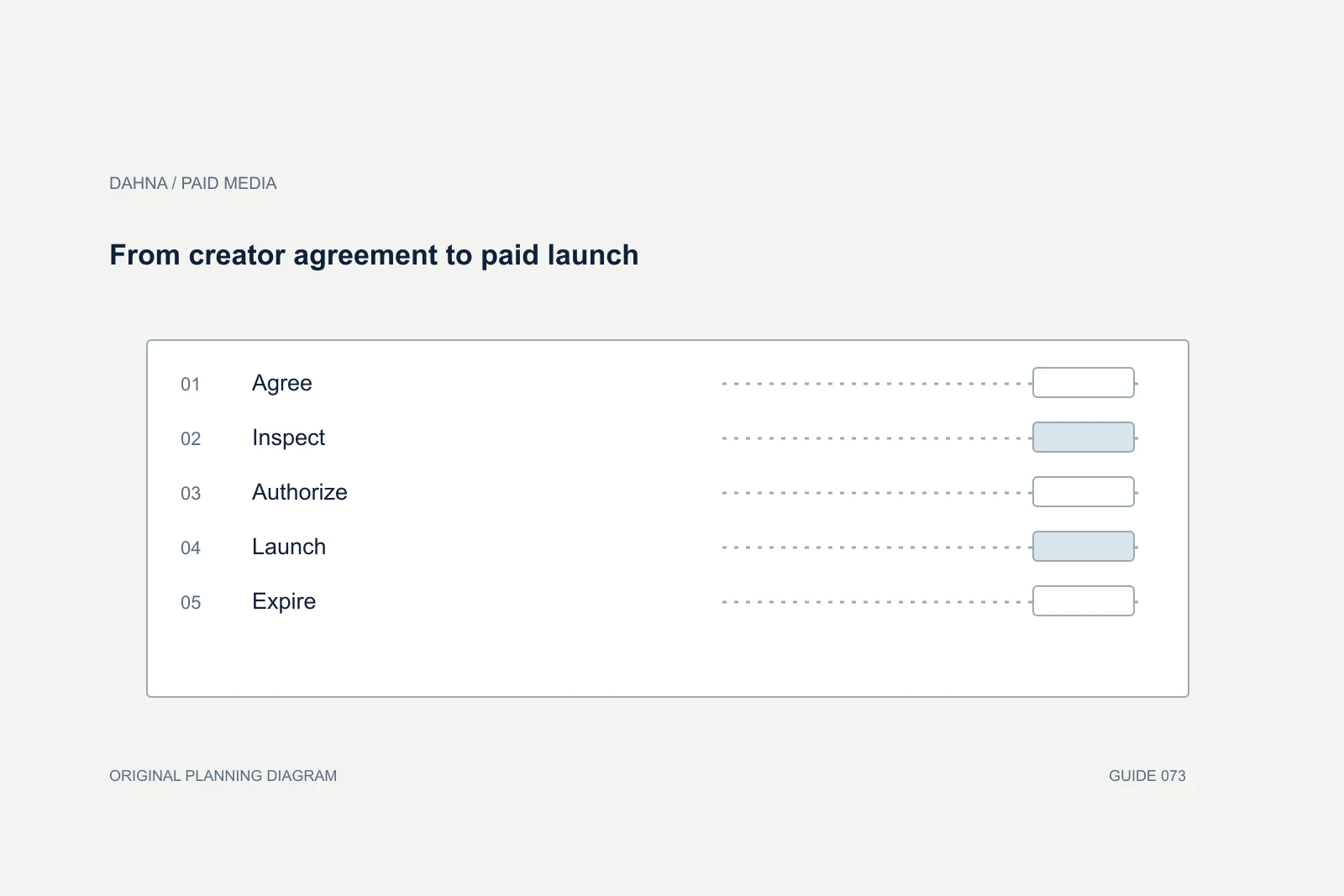
From creator agreement to paid launch
Agree
Define deliverable, window, market and fee.
Inspect
Check the exact post, claims and soundtrack.
Authorize
Verify the platform permission matches the scope.
Launch
Test the destination and record delivery ownership.
Expire
Stop or extend through the agreed process.
A fictional thirty-day campaign with a late start
A fictional sunscreen brand agrees to a thirty-day paid window beginning on a specified date. The media team receives access, but the US product page is delayed for ten days. If the agreement uses fixed calendar dates, the team should not assume that it can run thirty delivery days starting whenever the page is ready. It needs an agreed amendment or a shorter campaign within the original window.
The planning sheet should therefore distinguish authorization availability, contractual dates and actual delivery dates. Set reminders early enough to request an extension, confirm its cost and stop spend if permission expires. A successful ad is not an exception to the agreement. The same discipline applies when a creator code remains technically usable after the brand’s approved commercial window has ended.
| Event | Recorded date or rule | Owner |
|---|---|---|
| Commercial permission begins | Agreed calendar start | Brand and creator |
| Destination becomes ready | Ten days after planned start | Website team |
| Media decision | Shorten delivery or agree a written extension | Media buyer and brand |
| Pre-expiry review | Before the authorized end | Account owner |
| Campaign stop | End of approved commercial window | Media buyer |
A successful post may need a different commercial brief
A creator’s video can become unexpectedly popular before the brand has decided how much paid distribution it wants. Do not let that urgency compress the permission review into a rushed request for unlimited use. Describe the immediate test, the intended market and the dates, then agree on an extension process if the test justifies more activity. A clear small scope can be easier for both parties to assess than a vague claim that the brand needs everything forever.
The creator may also want to preserve how the post appears to their audience. Discuss material changes to the caption, destination or product context before the media team acts. If the original post discusses a single product, redirecting paid viewers to a different offer can change the meaning of the endorsement. The technical system’s ability to attach a destination does not make every commercial use consistent with the agreed creative.
Keep the payment and authorization records connected so a future account manager can distinguish a current permission from an expired one. If the relationship ends, the brand should know which ads to stop and which separately licensed assets remain available. This is an operational acceptance requirement: the team should be able to answer it from the record without relying on the memory of the person who negotiated the original post.
What the media team should receive
The launch handoff should contain the original-post link, current authorization, rights record, approved destination, tracking convention and escalation contacts. Review the ad as a customer sees it, including the account identity and product promise. A permissions spreadsheet is useful only if it identifies the exact asset being delivered.
Bring Dahna the proposed creators, posts and intended campaign dates. We can help coordinate the production and media requirements so a useful post can move into a defined paid test without confusion. Ask for expiry tracking and a clear change process as part of the scope. The goal is a campaign the brand and creator both understand, with evidence that the permissions match the actual delivery.
Continue with the related decision
Use these guides when the next question goes beyond the scope of this article.
Use the editable decision sheet
Download the completed tables as a CSV, then replace the example inputs and add your evidence, owner and review date. Illustrative figures are teaching examples, not default targets.
Sources & further reading
Bring this decision to Dahna
Use this guide to prepare a focused brief. Tell Dahna what needs to change, which evidence you already have and when you need a decision.
Why consider Dahna for this work?
Dahna brings bilingual Korean and English strategy together with creator, content, and measurement work for brands growing in the US. You can review the people behind the recommendations and the kind of work we propose before starting a conversation.
Founder experience includes prior and contracted roles. Sample deliverables illustrate our approach; they are not client results or a performance promise.