How to audit the experience after an abandoned cart
Audit where the recovery link takes the shopper and whether the original products, offer and checkout state still make sense. Separate a technical failure from a voluntary pause or a changed purchase decision. Fix broken return paths and suppress inappropriate messages before increasing reminders or discounting every basket.
Dahna, original planning diagram
In this article
Overview
Audit where the recovery link takes the shopper and whether the original products, offer and checkout state still make sense. Separate a technical failure from a voluntary pause or a changed purchase decision. Fix broken return paths and suppress inappropriate messages before increasing reminders or discounting every basket.
A cart and an abandoned checkout are not the same event
A person can add a product to a basket, inspect delivery costs and leave without beginning checkout. Another can enter contact information, encounter a payment failure and stop. A third can complete the purchase through a different session. Those journeys should not be treated as one identical audience simply because an analytics report labels them abandonment.
Write down the platform's definition of the recovery record and the events that create or close it. Confirm which channels are included and whether the store has enough information and permission to contact the person. Marketing, customer service and the platform owner should agree on those boundaries before reviewing message timing.
The first audit task is therefore a state map: basket created, checkout begun, payment attempted, order completed or unresolved. Map the messages that can fire at each stage. If two tools both send reminders, the customer may receive duplicate or contradictory instructions. Inventory the active automations before adding another flow.
Use platform evidence and customer questions differently
Shopify's abandoned-checkout documentation describes recovery behavior and the use of payment-event details when investigating failures. It also notes conditions that can prevent a recovery message from being sent. Those details support a technical audit of the actual store; they do not provide a universal recovery rate or prove that more messages will help.
A Reddit post from a customer-support lead asks how to improve abandoned-checkout recovery and interpret average rates. It is useful evidence of a practical team question: who owns the problem, what should they inspect and what does success mean? The replies are anecdotes and should not be converted into performance benchmarks for a brand's forecast.
A more useful first question is whether the customer can resume the intended purchase successfully. Open the link in the conditions a real recipient may use: on a phone, after a delay, with an expired offer, with a sold-out variant and after the order has already been completed elsewhere. Each state can reveal a different repair.
Inspect the promise from message to checkout
Capture the exact message, destination URL and resulting basket together. If the message names a shade or device kit, confirm that the same item is selected. If it promises a discount, verify the code, eligibility and expiration in the destination. A link that opens a generic homepage may technically work while failing the recovery task.
Preserve useful context without exposing personal information. A recovery URL can contain sensitive or account-specific state, so it should not be pasted into public bug reports or general analytics fields. Use controlled test records and redact tokens in the review sheet. The implementation owner should determine how the link is generated and how long it remains valid.
When circumstances change, explain the change. A sold-out variant needs an honest availability message and a clearly labeled alternative path. An expired promotion should not remain in the reminder as though it can still be redeemed. The team should decide whether the message is suppressed, revised or sent with an accurate explanation before it reaches the customer.
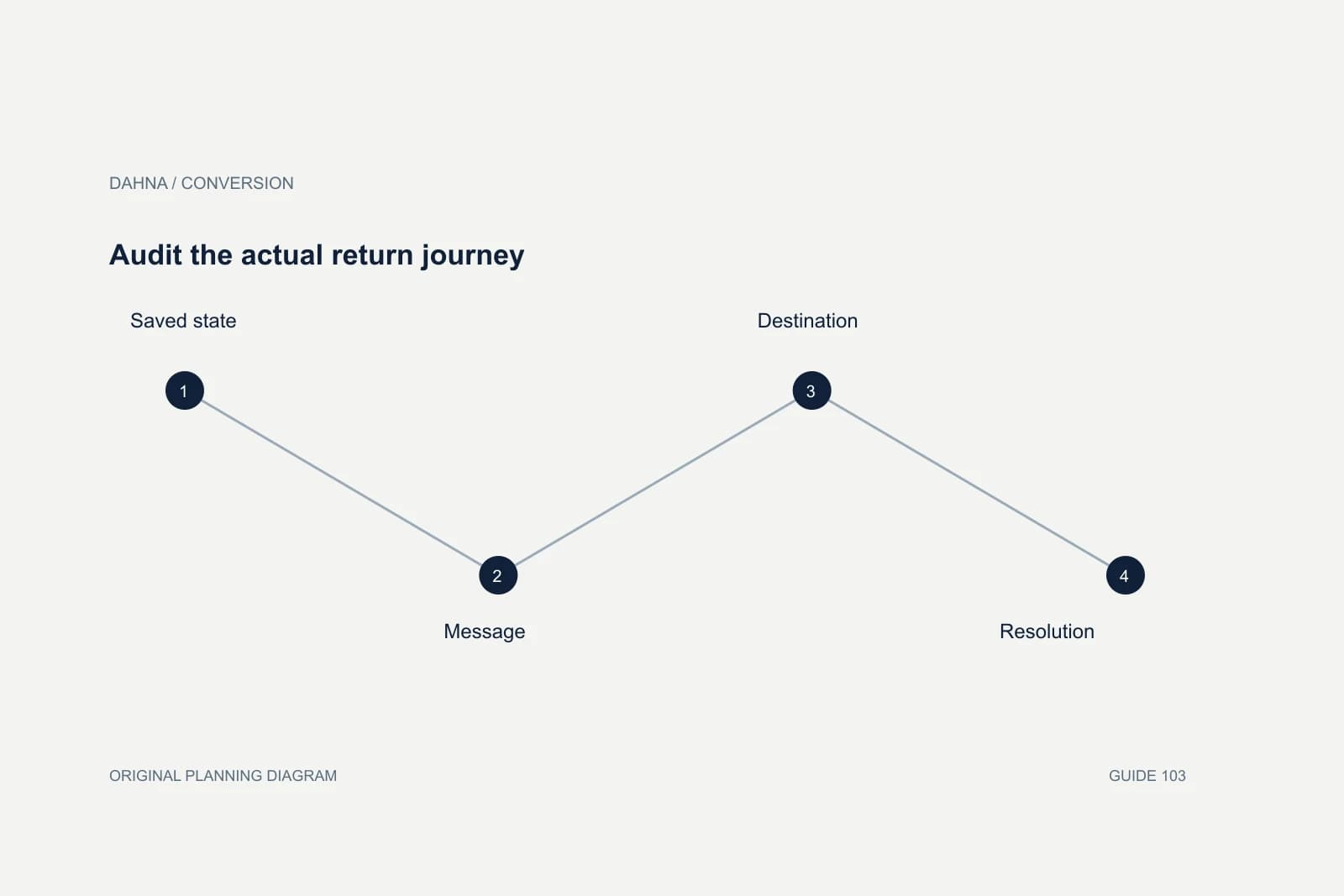
Audit the actual return journey
Saved state
Which product, offer and customer stage were recorded?
Message
What does the reminder promise now?
Destination
Does the link restore a usable, accurate purchase state?
Resolution
Order, assistance or a clear explanation of changed conditions
A completed recovery acceptance matrix
Consider a fictional brand promoting a lip tint with a weekend code. A shopper begins checkout on Sunday and returns from a reminder on Tuesday. The shade is still available, but the code has expired. The audit finds that the message still advertises the weekend saving while checkout rejects it. Adding another reminder would repeat the contradiction rather than improve recovery.
The corrective work includes the message's eligibility logic, the offer explanation and the route to assistance. The business must decide whether to honor the expired offer or stop promising it; the agency should not make that commercial decision silently. Once the rule is approved, test both a valid and expired code to confirm the behavior.
Also test a completed order, a sold-out shade, a failed payment and a customer who removed one item. These cases expose stale state and missing suppression. Record the expected customer experience and the owner of the repair. A broad instruction to “optimize abandoned carts” is too vague to tell the team when the work is complete.
| State at return | Expected experience | Repair owner |
|---|---|---|
| Offer expired | Accurate terms and clear next action | Promotion and messaging owners |
| Variant sold out | Honest availability; alternative labeled | Merchandising and website |
| Order already completed | No inappropriate purchase reminder | Automation owner |
| Payment failed | Safe explanation or assistance route | Payments and support |
| Basket changed | Current valid contents, no surprise additions | Checkout implementation |
| Two tools send reminders | One coordinated message sequence | Marketing operations |
Separate recovered orders from incremental orders
A platform may attribute an order to a recovery message because the person clicked the link and purchased. That is useful operational reporting, but it does not show that the order would never have happened without the message. Some people were going to return anyway, and a blanket discount can reduce the contribution of those purchases.
If the commercial question is whether a reminder or incentive causes additional contribution, use an appropriately designed holdout where feasible. Define eligibility, assignment, observation window and how orders are matched. Keep the experience audit separate: a broken link can be fixed without waiting for an incrementality experiment.
For routine monitoring, track delivery eligibility, link success, changed-state errors, completed orders and support contacts using consistent definitions. Review duplicate messages and reminders after purchase. A lower send volume may be a good outcome when it reflects better suppression of inappropriate messages. The goal is a useful return experience, not the largest possible number of reminders.
A scoped project should end with repeatable checks
Ask for the automation inventory, state map, controlled test records, acceptance matrix and a clear handoff. Include the boundaries of the project: message-to-checkout continuity, offer validity and suppression may fit a focused conversion engagement, while a broader retention program requires a separate scope and owner.
The handoff should identify which changes require retesting. New promotions, checkout extensions, payment providers and inventory rules can all alter the recovery path. Keep the test cases small enough that the brand can rerun them before a major campaign. Otherwise a corrected experience can quietly break when the next offer launches.
Dahna can discuss the website, content and measurement work needed to repair that path. Bring the current messages, active tools and examples of the states customers encounter. Use controlled or anonymized records in the brief so the team can investigate the problem without circulating private customer links.
Continue with the related decision
Use these guides when the next question goes beyond the scope of this article.
Use the editable decision sheet
Download the completed tables as a CSV, then replace the example inputs and add your evidence, owner and review date. Illustrative figures are teaching examples, not default targets.
Sources & further reading
Bring this decision to Dahna
Use this guide to prepare a focused brief. Tell Dahna what needs to change, which evidence you already have and when you need a decision.
Why consider Dahna for this work?
Dahna brings bilingual Korean and English strategy together with creator, content, and measurement work for brands growing in the US. You can review the people behind the recommendations and the kind of work we propose before starting a conversation.
Founder experience includes prior and contracted roles. Sample deliverables illustrate our approach; they are not client results or a performance promise.