Is your ad creative tired—or is something else changing?
A rising acquisition cost does not by itself prove creative fatigue. Check whether the same audience is seeing the same message more often, whether response is weakening, and whether price, stock, delivery or tracking changed. Refresh the creative when the evidence points to the message or its exposure. Fix the buying path when that is where the deterioration begins.
Dahna, original planning diagram
In this article
Overview
A rising acquisition cost does not by itself prove creative fatigue. Check whether the same audience is seeing the same message more often, whether response is weakening, and whether price, stock, delivery or tracking changed. Refresh the creative when the evidence points to the message or its exposure. Fix the buying path when that is where the deterioration begins.
Recover the conditions under which the ad worked
Find the original creative file and the period the team considers successful. Record the spend, audience, placement, offer, product availability and reporting settings from that period. Then select a recent comparison window with similar weekdays and enough time for conversions to appear. Comparing an ordinary Monday with a promotional weekend can manufacture a fatigue story before anyone has examined the ad.
Keep raw counts beside ratios. A purchase rate moving from three orders to two is a different kind of evidence from a sustained decline across thousands of visits. Check whether the original success came from a short discount, a founder’s announcement or existing customers returning. If those conditions disappeared, the ad may still communicate clearly; the commercial context changed.
Look for a pattern, not a magic frequency number
TikTok’s web-auction guidance discusses frequency, reach and response indicators when assessing fatigue. Those signals are useful together, but they do not create one universal expiration date for every ad. A replenishment reminder, an unfamiliar device demonstration and a launch announcement ask different things of the viewer.
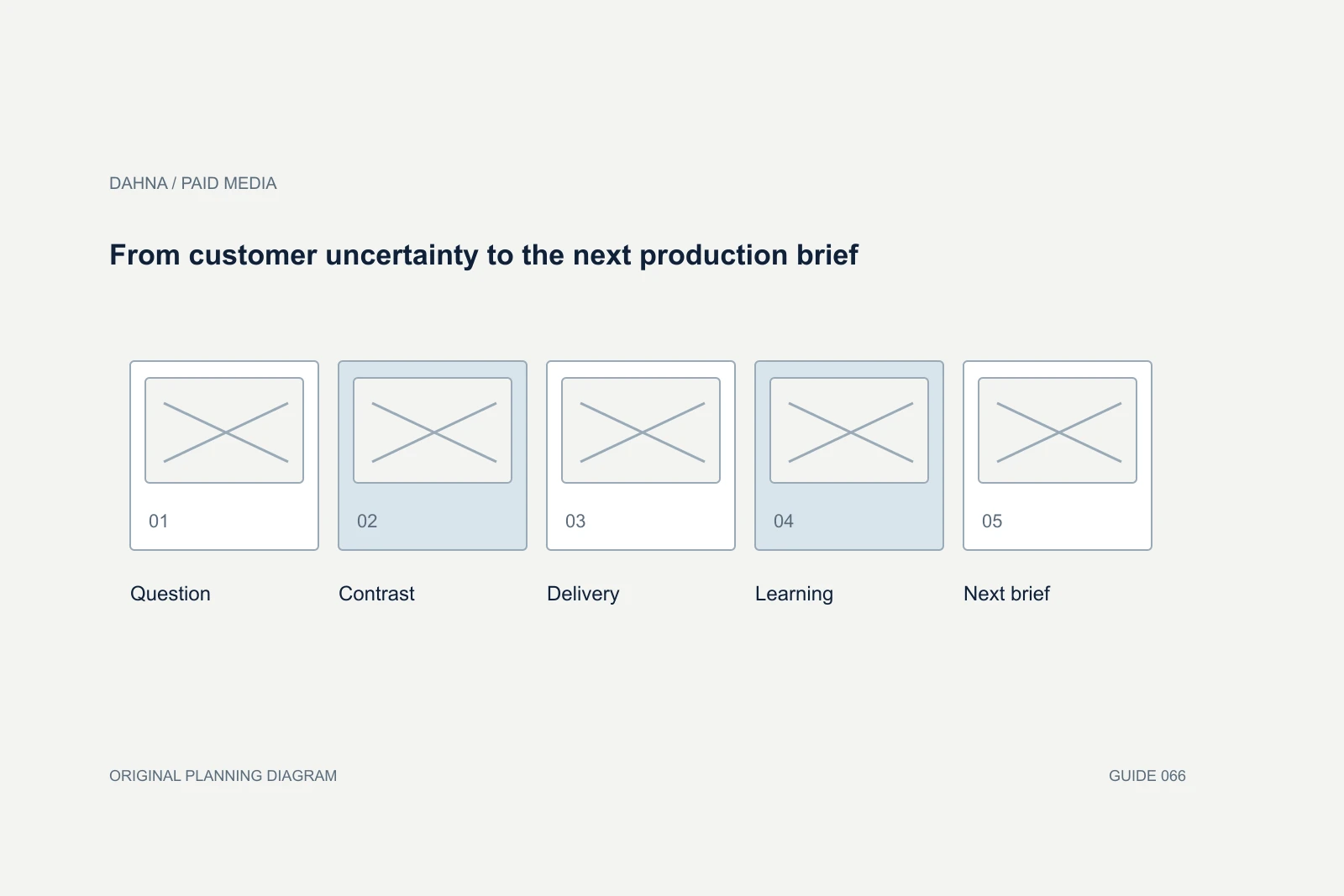
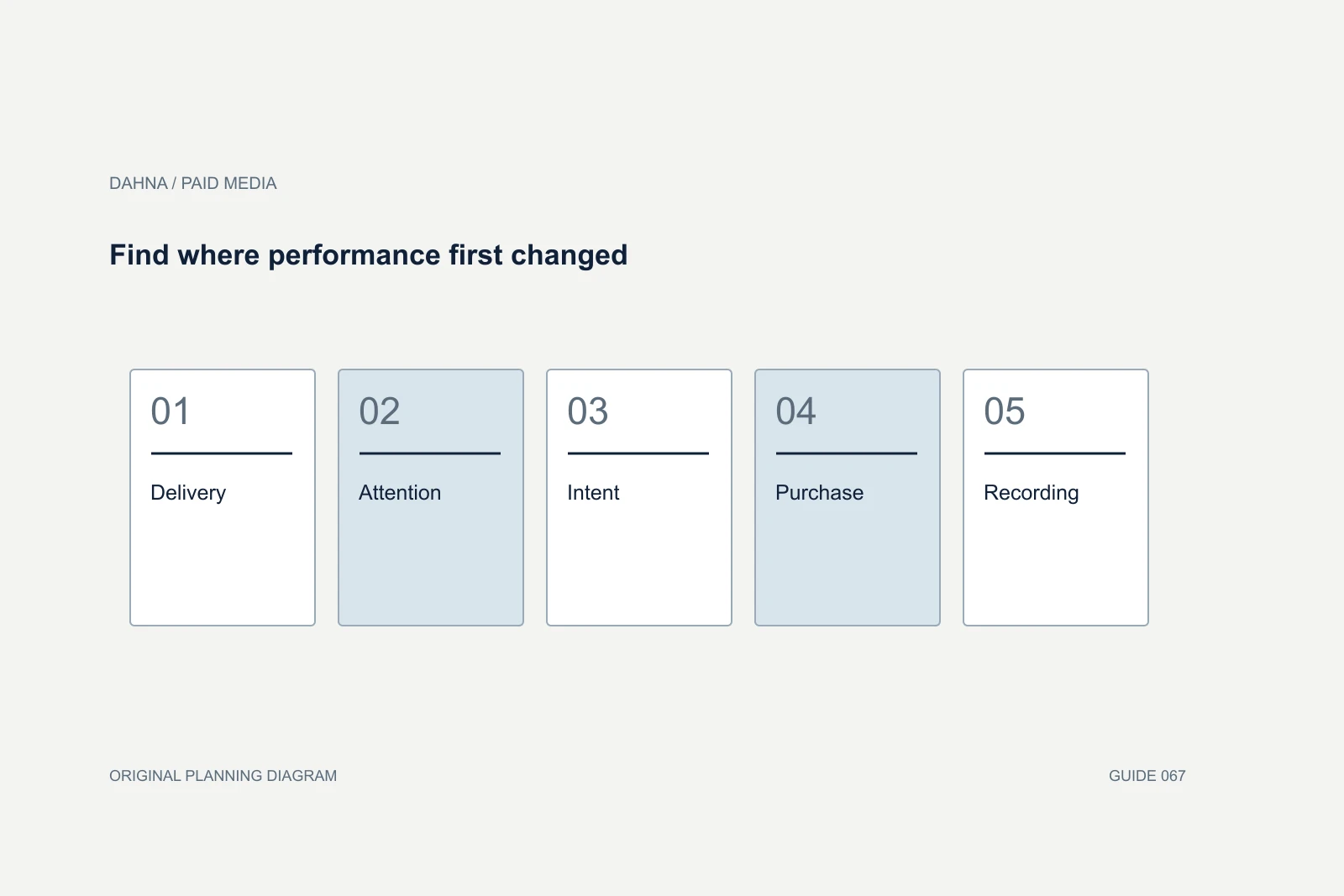
Build a short diagnostic sequence. First inspect delivery: did exposure become more repetitive or did the placement mix change? Next inspect response: did viewers stop paying attention or clicking? Finally inspect the purchase path: did interested visitors become less likely to buy? The earliest clear deterioration gives you a better starting point than replacing every asset whenever the blended ROAS falls.
| Observed pattern | Plausible explanation | Next check |
|---|---|---|
| Frequency rises; click response falls | Repeated exposure may be weakening interest | New audience reach and a controlled creative refresh |
| Click response stable; checkout completion falls | Buying-path or offer problem | Price, shipping, stock and checkout errors |
| Reported purchases fall; store orders stable | Measurement definition or delivery issue | Event changes and reporting delay |
| All creatives weaken together | Shared commercial or auction condition | Offer calendar, competition and audience mix |
A fictional serum ad that looked exhausted
Imagine a serum video whose reported acquisition cost rises from $22 to $34 over two comparable weeks. The brand initially orders ten new hooks. A closer review shows that the click rate is almost unchanged, but a popular size has sold out and the remaining product costs more. The landing page still opens on the unavailable size. The original message is sending people to a weaker buying experience.
The immediate action is to update the destination and availability promise, then observe the repaired path. The team can still prepare a new concept, but it should not credit a later recovery entirely to the new video if the page and stock were fixed at the same time. Record each change and its timing. That small discipline prevents the next review from generating another confident but unsupported creative lesson.
Find where performance first changed
Delivery
Reach, frequency and placement mix.
Attention
Viewing and click response by asset.
Intent
Relevant product-page and cart behavior.
Purchase
Stock, delivered price and checkout completion.
Recording
Event quality and reporting definitions.
Why a brand case study cannot set your refresh calendar
In TikTok’s historical e.l.f. account, Tinuiti combined formats and continued testing as the program developed. The named brand is useful evidence that creative sits inside an ongoing acquisition program. It does not establish that every beauty ad should be replaced after a particular number of days.
A calendar can reserve production capacity, but the actual brief should describe the observed problem. If the same demonstration still converts relevant traffic, retain it as a reference while introducing a genuinely different answer. If a claim has become inaccurate because packaging or the formula changed, replace it immediately for accuracy regardless of performance. Marketing efficiency never makes an outdated product representation acceptable.
Choose the smallest change that answers the diagnosis
A new opening can test whether the current argument is being overlooked. A new proof sequence can test whether the argument is understood but unconvincing. A new customer situation can test whether the idea has reached the limit of the audience it speaks to. These are different production assignments. Ask the editor to label which one they are making, rather than producing an untraceable mix of all three.
Preserve a comparison where feasible. If the account supports a suitable split test, use it; otherwise describe the refresh as an operational observation. Avoid changing the offer, landing page, targeting and creative simultaneously unless the business needs a coordinated rescue. When it does, evaluate the new package as a package and keep the causal claims modest.
| Finding | Production request | Keep stable |
|---|---|---|
| Texture questions increased | Show amount and spread in one continuous demonstration | Price and destination |
| Opening has weak response | Begin with the product-use situation | Main explanation and proof |
| New packaging now ships | Reshoot the actual shipped bottle | Approved product claims |
| Popular size unavailable | Correct availability in ad and page | Do not disguise this as a hook test |
Watch for fatigue in the offer, not only the footage
Sometimes the audience still understands the ad but no longer finds its reason to act compelling. A “launch offer” that has run for months can lose credibility even when the footage remains clear. Repeated discounts may also change which customers respond. Before commissioning another visual treatment, inspect whether the message’s time-sensitive premise is still true and whether the price context has changed. The correct repair may be a more durable product argument rather than a louder version of the same urgency.
A fictional brand repeatedly advertises a starter kit as a limited introduction, although it has become a permanent product. The media team notices weaker response and proposes faster editing. A better brief first removes the inaccurate temporal claim, then tests the kit’s actual value: what is included, who the routine suits and how the sizes compare. The revision is valuable even before any performance test because it restores an accurate promise.
Keep audience expansion separate from creative replacement in the change log. If the refreshed ad also reaches new people at a different price, its recovery cannot be attributed solely to novelty. A careful report can say the new package improved observed performance while leaving the mechanism uncertain. That honesty preserves useful learning and prevents the production team from being asked to repeat an effect it never isolated.
Make the fatigue review a purchasing decision
The report should recommend one of three practical actions: retain the asset with monitoring, refresh a defined part of the message, or pause it while a shared problem is repaired. Attach the evidence and the cost of the proposed production work. The budget decision becomes clearer when the team can see whether it is buying another edit or investigating a different customer objection.
Bring Dahna the original files, change history, asset-level delivery and storefront timeline. A useful engagement joins creative and media review so that neither team diagnoses the other’s work from a single dashboard number. Agree on who can pause an inaccurate ad, who fixes product information and when the next review occurs. That ownership is especially valuable when a Korean or European brand has US media running while the home-office team is offline.
Continue with the related decision
Use these guides when the next question goes beyond the scope of this article.
Use the editable decision sheet
Download the completed tables as a CSV, then replace the example inputs and add your evidence, owner and review date. Illustrative figures are teaching examples, not default targets.
Sources & further reading
Bring this decision to Dahna
Use this guide to prepare a focused brief. Tell Dahna what needs to change, which evidence you already have and when you need a decision.
Why consider Dahna for this work?
Dahna brings bilingual Korean and English strategy together with creator, content, and measurement work for brands growing in the US. You can review the people behind the recommendations and the kind of work we propose before starting a conversation.
Founder experience includes prior and contracted roles. Sample deliverables illustrate our approach; they are not client results or a performance promise.